LANSING — The Federated Polish Home of Lansing is much more than just a social gathering spot for those with Polish roots living in Greater Lansing.
It’s a cultural gem that celebrates those immigrants’ heritage.

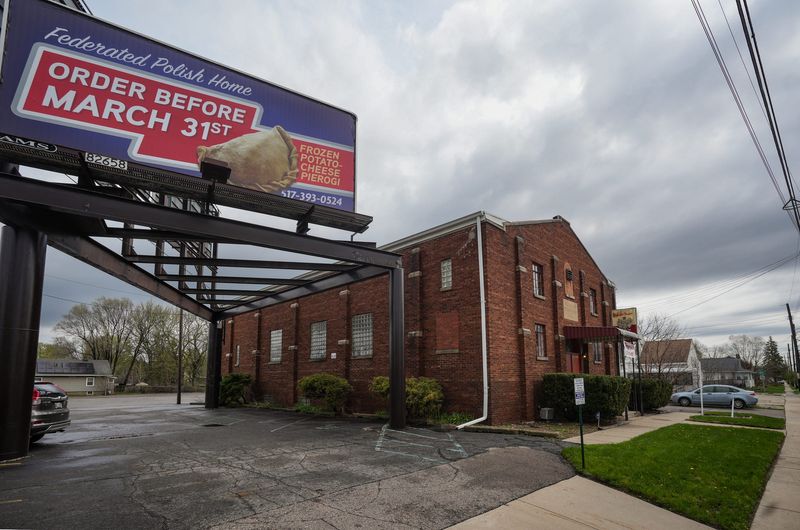
Sometimes mistaken as an old church, the two-story brick building at the northeast corner of West Mount Hope Avenue and South Martin Luther King Jr. Boulevard houses three different national Polish organizations — the Polish Falcons of America, the Polish National Alliance and the White Eagle Association.
The building oozes the rich history and traditions of Greater Lansing’s Polish community. But their members are aging and the numbers are smaller.
Mary Narodowiec, 72, of Holt said she sometimes worries about the club’s future.
“Members are all getting older, and the younger generation doesn’t want to join or (they) move away,” Narodowiec said. “But we’ve got a few trickling back in, which is a good sign.”
The building’s story began in the basement in 1928, during a time when language barriers and cultural differences made life difficult for many Polish immigrants who had moved to the Lansing area to create a better life.
“Growing up, Polish people were looked down on and not accepted,” Narodowiec said.
With many immigrants missing the rich food, customs and camaraderie of their homeland, the Polish Falcons of America Nest No. 652 was formed.
They dug a basement with a bar and a social room. Families from the Polish community began gathering there for music, dancing, food and networking.
In 1938, the Polish National Alliance (PNA) joined the Falcons and together added a second-story to the basement bar and banquet room. About 10 years later when the White Eagle Association joined the two clubs, the Federated Polish Home of Lansing was born.
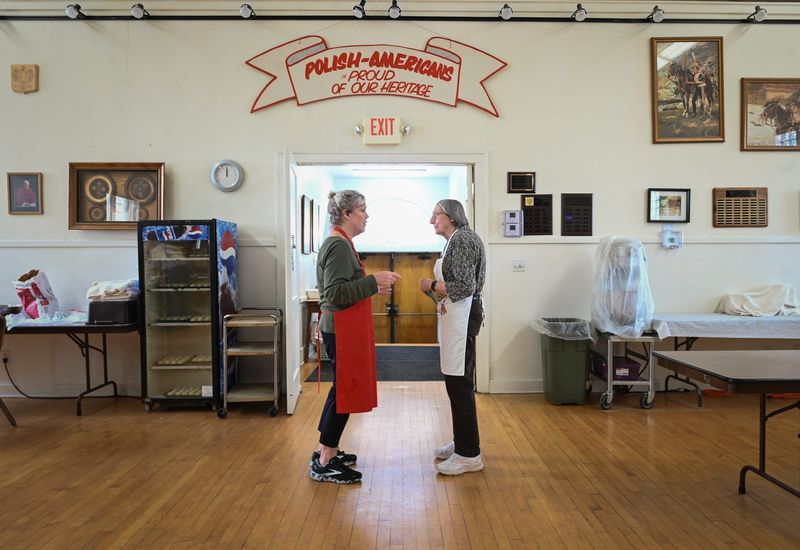
When you enter the building, there’s a large wooden dance floor with a stage. Polish flags and other historical ephemera are displayed in glass cases lining the stage. There is a full-service kitchen, stage, dance floor and balcony on the main level. Many years ago, polka bands began playing there and the hall has been used for hundreds of weddings and graduation parties over the decades.
“Not much has changed over the years,” Joyce Brennan, Director of the Federated Polish Home and President of the Polish Falcons said.
Each May, members of all three organizations make pierogi to raise funds (Pierogi Days) for their clubs. And every October, during Polish-American Heritage Month, they held Pulaski Days, a cultural celebration honoring Revolutionary War hero General Casimir Pulaski during which traditional Polish foods like kielbasa and golabki are served.
These events are not limited to those in the Polish community. They invite others to come celebrate with them and learn about the culture.
Each week there are Polish language classes. During the Easter season, families can learn the craft of the famous traditional Polish Easter egg art, called pisanki.
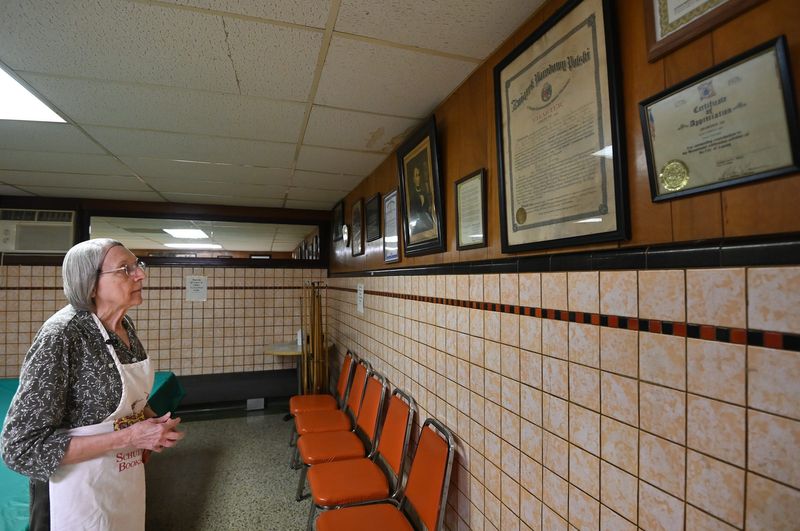
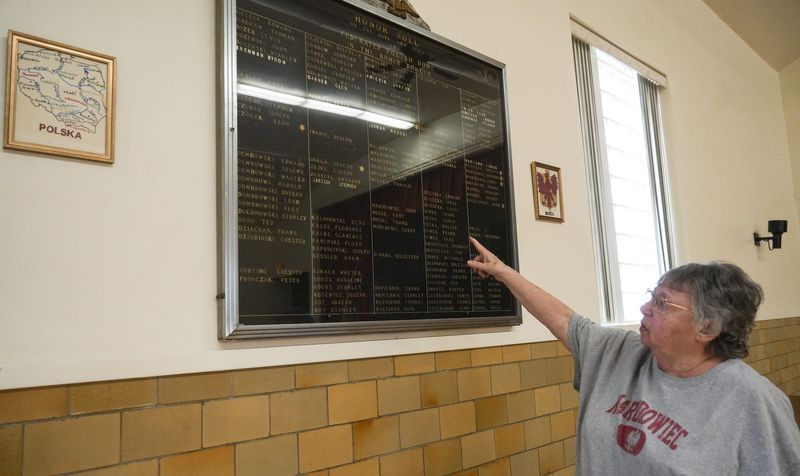
In the basement of the hall there’s a bar adorned with historical photos and maps. Adjacent is a large dry bar and conference room area with rows of cabinets chock full of Polish history, language and arts books. There’s a memorial plaque with the names of Polish-American U.S. military veterans from the area and a map of Poland with members’ surnames written from the provinces in Poland where families emigrated from.
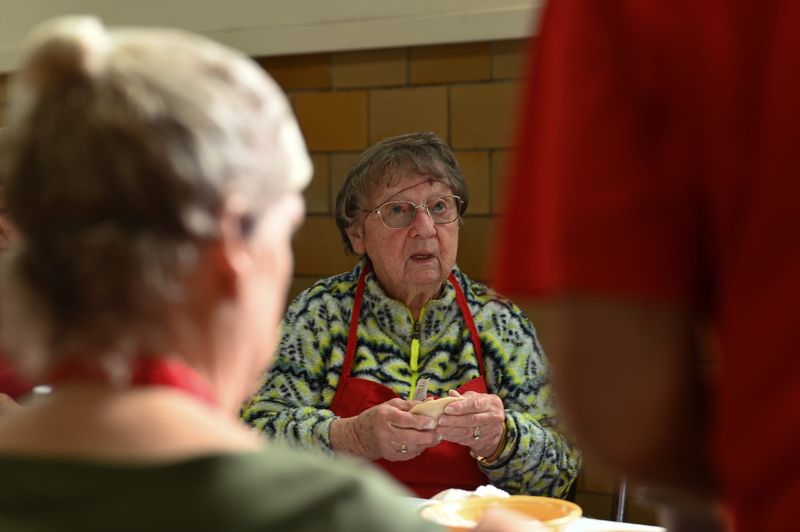
“I’ve lived life at the Polish Hall from Day 1,” said Joann Slabonek, 88, of Grand Ledge, as she rolled a pieróg with a small army of fellow volunteers recently.
Slabonek is the hall’s eldest member.
“Everybody used to come to the Polish Hall for the banquets,” she said. “The weddings were wonderful, many lasted possibly two days. We had beautiful polka music and everybody danced. I love it and it’s important to continue to promote Polish culture and heritage. A lot of people don’t realize how important their culture is and they’re not living it like they should.”
Emily Kostrzewski-Sauter, 38, of Grand Ledge is one of the club’s youngest members.
“My family is Polish,” Kostrzewski-Sauter said. “My grandparents used to bring my parents and all of us here. I love meeting all sorts of people here, I love hearing the stories and learning about my culture. I wouldn’t ordinarily meet these people in my day-to-day life. I’m here today volunteering because sales from these pierogi help fix up the hall and that can help us put on more events and teach people about Polish culture.”
It’s been a few years since the Federated Polish Home has hosted both annual events. Each featured a banquet with food, dancing and other cultural activities. Organizers hope to bring the celebrations back, but they need more members. For now the annual pierogi fundraiser continues. This year they made about 7,500 pierogi and raised just over $12,000, which helps keep the hall operating.
Brennan remains optimistic about the hall’s place in Lansing’s Polish community. She points to the club’s next potluck and bingo social event on Saturday, May 30.
“We encourage anyone who’s interested in Polish culture to join us,” Brennan says. “It’s a special place and a good time.”
Visit https://www.facebook.com/groups/1008025880613227 to learn more about the Federated Polish Home of Lansing.
This article originally appeared on Lansing State Journal: Federated Polish Home of Lansing rich with culture, steeped in traditions
Reporting by Matthew Dae Smith, Lansing State Journal / Lansing State Journal
USA TODAY Network via Reuters Connect