After a turbulent 2025, U.S. electric-vehicle market share stabilized in the first three months of 2026 at 5.8% — consistent with Q4 2025, the first quarter without government incentives ended by Congress and President Donald Trump. EV sales swings from the United States to Norway to China have consistently tracked government support, industry analysts say.
Even before the U.S. government pulled the plug on the $7,500 sales subsidy late last year — causing a brief, Q3 run to 10.5% market share — EV sales, as The Detroit News reported, had stabilized at about 8% of the market. Without the Damocles Sword of 2026 government EV mandates overhead, manufacturers are reassessing the EV market — or leaving it altogether.

Absent the threat of billions in state-and-federal fines, brands like Volkswagen, Honda, Ram, and Ford have dropped planned electrics. Meanwhile, mega-brands and luxury makers like Chevy, Toyota, Hyundai, Audi, BMW and Mercedes have stayed the course on parallel ICE/EV lines.
Perhaps a leading indicator of the electric market’s plateau is U.S. EV market leader Tesla, which while still dominating the segment, has canceled its iconic S/X models to focus on robots — whether robotaxi or humanoid.
“EV market share stalled at 8% nationally in the fall of 2024 — almost a year before the Trump administration changed federal incentives,” said veteran analyst Karl Brauer, whose company, iSeeCars, tracks EV sales data. “Manufacturers were already getting nervous well before Trump was elected.”
While China — with the world’s largest reserves of battery-related minerals — has pushed EVs, Brauer points out, the United States has the world’s largest oil reserves and sales of gas-powered vehicles here benefit from lower consumer prices and superior range. He expects EV market share between 5-8% going forward.
Here is a look at the winners and losers in the EV market.
Winner: Tesla
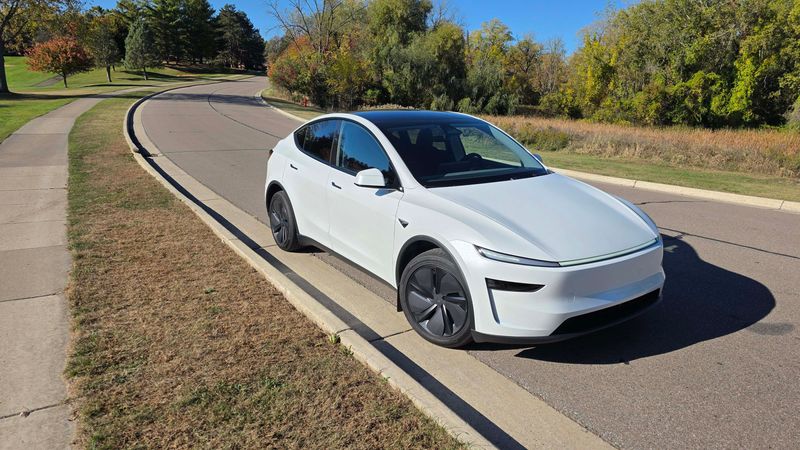
Despite ditching its top-drawer, low-volume S sedan/X SUV models to open manufacturing space for humanoid robot production, Tesla is in a league of its own. In Q1 2026, its EV market share jumped to 58% from 46% in 2025, reversing years of decline as other brands charged into the segment.
Though Tesla’s volume declined by 4.6%, the segment declined 28% overall year over year. The EV OG made battery-power cool last decade with face-flattening power — and a proprietary Supercharger network integrated with vehicle software for worry-free travel while competitors struggled with inconsistent, third-party networks.
EV residual sales prices are poor compared to their internal-combustion-engine peers. But as EVs flood the used car market, the majority are Tesla Model Ys and Model 3s — benefiting budget-conscious buyers new to the segment.
“Tesla is a separate animal,” said Brauer. “Tesla buyers are generally pretty loyal — if not fanatical — and outside forces don’t have as big an effect on them: gas prices, incentives, economic concerns.”
In a concession to Tesla’s market dominance, other automakers are paying the brand to allow their buyers Supercharger access, putting more money in the Austin-based company’s pocket.
Loser: Auto startups
Tesla’s growth from 2008 startup to the maker of the best-selling U.S. luxury vehicle in 2018 (the Model 3, surpassing perennial leader Lexus RX) inspired a wave of rookies not seen for a century.
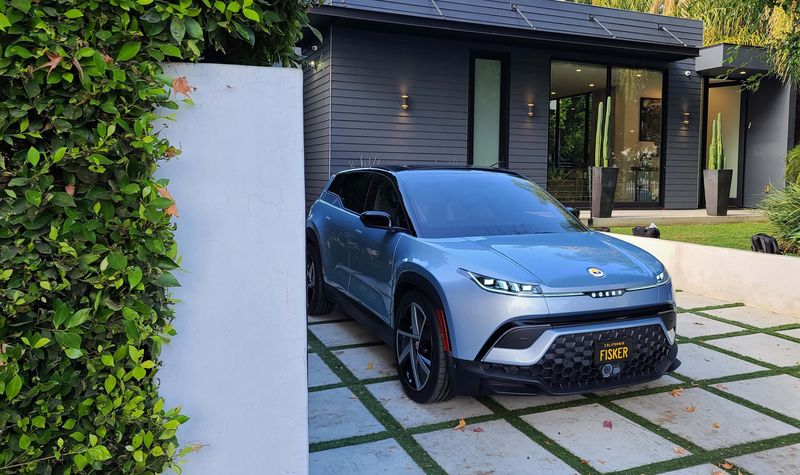
Startup brands like Fisker, Faraday, Atlis, Mullen, Qiantu, Bollinger and Nikola saw the opportunity in segments as varied as supercars (Faraday, Qiantu) to heavy-duty trucks (Atlis, Bollinger). In addition to retail buyers, startups were buoyed by the promise of ICE bans by 2035 in 17 states including California, the largest U.S. market.
But as consumer demand failed to materialize, subsidies fell away, the 2025 Congress nixed states’ authority to set EV mandates, and startups shut their doors or reorganized.
Auto analyst Rebecca Lindland, managing director of automotive and mobility for HarrisX, was global director of communications for Fisker Inc., which filed for Chapter 11 bankruptcy in 2024: “We are in a highly competitive, high capital-intensive industry,” she said. “You are looking at the absolute minimum of a billion dollars to start and recouping that — and then making a profit — is incredibly difficult.”
The Fisker Ocean, designed by charismatic ex-BMW/Aston Martin designer Henrik Fisker, was a looker. “As good as the vehicle was,” continued Lindland, “it’s servicing the parts, it’s building a brand — it required unbelievably deep pockets.”
With access to the deep pockets of Jeff Bezos, Volkswagen and Volvo, respectively, fledgling startups Slate, Scout and Polestar are still in the game. As are Rivian and Lucid.
Winner: Rivian, Lucid
The Silicon Valley-based luxe-makers have burned through billions but are still standing with award-winning, eye-catching, growing model lines. Rivian, the first electric pickup maker to market with the R1T in 2021, just launched its $55K, compact R2 EV SUV aimed at the Model Y.
The $82K Gravity EV — Lucid’s second model after the stunning Air sedan — just took home 2026 World Luxury Car of the Year at the New York Auto Show.
Significantly, both brands —with pricey products aimed at deep-pocketed customers — stand to gain from the exit of Tesla’s Model S/X.
“Buyers who want those cars don’t care about incentives, and they don’t care about political atmosphere,” said analyst Brauer. “They just want those cars.”
Part of the political atmosphere has been a backlash against Tesla founder Elon Musk, who received a bailout from the Obama administration in 2009, for supporting the Trump administration. The vandalizing of Tesla dealerships and customer cars intimidated buyers, while the brand’s hard-core green base rebelled. Tesla bumper stickers reading “I BOUGHT THIS BEFORE ELON WENT CRAZY” litter California.
“There are EV buyers out here who are not buying a Tesla from Elon,” said Orange County-based Brauer. “Lucid and Rivian are your obvious alternatives.”
Winner: Legacy mega-brands
Startups failed in part because they encountered big, well-funded legacy brands that have made long-term EV commitments. Analysts said high-volume mega-brands Chevy, Toyota, and Hyundai/Kia can afford to sustain full model EV lineups — in parallel with their ICE lines — to see where government/market trends lead.
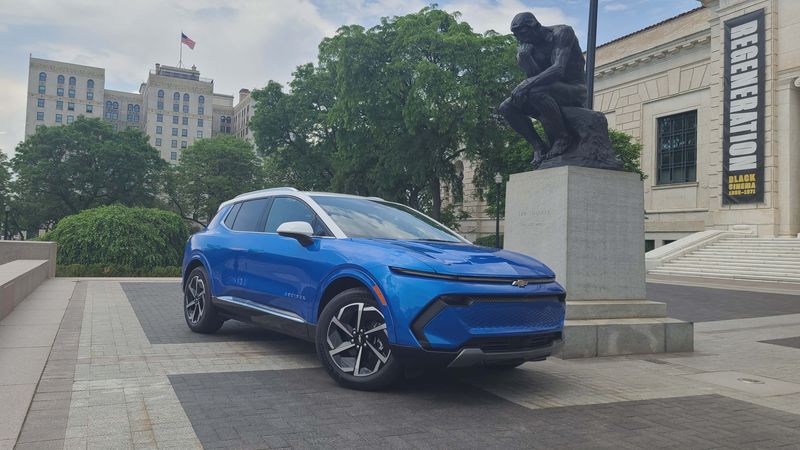
Chevrolet solidified itself in 2025 as the second-best selling EV brand after Tesla with the Equinox EV (57,954 units) joining the Model Y (357,528) and Model 3 (192,440) on the EV sales podium according to Motor Intelligence data. With new models introduced in Q1, Hyundai/Kia and Toyota sport full-model EV lineups like Chevy.
“There’s a balance with these brands,” said Lindland. They are “giving the consumer the choice. And (they are) also insulating their balance sheet, because, they’ve got to make money and EVs are expensive.”
The deep-pocketed Asians’ steady approach should pay dividends, Brauer said: “They excel at low prices and good quality. The Toyota C-HR, the Hyundai Kona EV, the Kia EV3 are all still coming.”
Loser: Legacy brands
Deep pockets and market cred have been no guarantee of success, however. Honda sells 40% of its global production in the United States and its compact CR-V SUV (403,768 unit sales) is the second-best-selling non-pickup in the U..S market after the Toyota RAV4, Yet, despite a massive, $5 billion “EV Hub” investment in its Marysville, Ohio, manufacturing operations, it’s canceled plans for a compact, 0 Series SUV, sedan EV and Acura RSX SUV.
Even a parentship with Sony to make the Afeela sedan — the Japanese electronic giant’s first cars — couldn’t save EV production.
“It says a lot when two well-run, well-funded companies like Honda and Sony can’t make this happen,” said Lindland. “That disintegration is even more symptomatic (of the EV market) than a startup like Fisker.”
While Ford has canceled the slow-selling Lightning EV pickup, its Mustang Mach-E appears to be a solid part of the Blue Oval’s lineup despite a 60% sales dive in Q1 (4,600 units) that dropped it well behind the Mustang muscle car in sales (14,074). But like other performance-brand SUVs (Porsche Macan, Lamborghini Urus), Mach-E opens the door to new Mustang customers.
Dodge’s Charger Daytona EV, on the other hand, appears to be a fish out of water with a measly 240 sales in Q1.
“Stellantis brands are so distinctly American when it comes to Dodge, Jeep, Ram and Chrysler,” said Lindland. “I think they face some of the biggest hurdles to overcome when you take away things like exhaust note.”
Model Y competitor Volkswagen ID.4, once touted by the German brand as the most significant vehicle since the Beetle (which sold over 300,000 units a year in the 1960s), saw Q1 sales plummet 96% to just 338 units. VW has pulled both the ID.4 and ID. Buzz microbus out of the U.S. market.
Winner: Cadillac
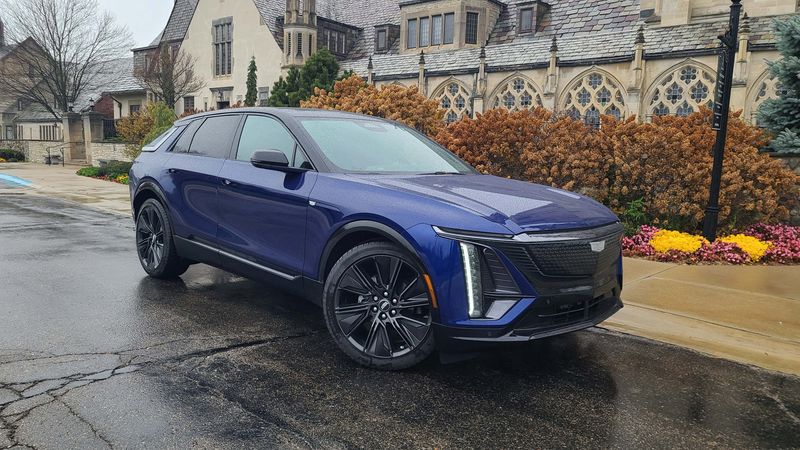
GM’s luxury brand has embraced the EV Age with an eye on going all-electric. Its full-EV lineup includes the Optiq, Lyriq, Vistiq, Escalade IQ and halo Celestiq. The result is the best-selling premium brand not named Tesla — beating out longtime German rivals Audi, BMW and Mercedes.
Lyriq was the best-selling non-Tesla luxe EV last year at 20,971 units.
“The Lyriq is absolutely gorgeous,” said Lindland. “And it’s the right size for our market.”
Loser: Cadillac
However, Lindland worries that Cadillac has all its eggs in one basket without a full ICE lineup compared to the Teutonic trio.
“I really like Cadillac’s positioning when it comes to EVs,” continued Lindland. “(But) I don’t think they should go 100% EV. Vehicles like the ICE Cadillac Escalade still have a place in our society.”
Brauer concurred, commenting that “the fad — that cool kids drive electric cars — is playing itself out.” Right on cue, reports have emerged this spring that Cadillac will continue its gas-powered Escalade, XT5 and CT5 models.
Winner: Chevy Bolt
What’s the fastest-selling car in the new year? The remade 2027 Chevrolet Bolt, which took on average just 9.6 days to sell, according to iSeeCars data (the electric Hyundai Ioniq 5 N was the slowest seller at 196 days). Bolt was the only EV among the 20 fastest-selling models, while six EVs languished in the bottom 20.
Like Tesla models, Bolt has a rabid core following, which is why GM brought it back from 2023 retirement. The Chevy EV will only be produced for 18 months at GM’s Fairfax Assembly in Kansas City, however, before it makes room for the Chevy Equinox ICE and next-gen Buick Envision SUVs.
Both gas-powered, of course.
Henry Payne is auto critic for The Detroit News. Find him at hpayne@detroitnews.com or @HenryEPayne.
This article originally appeared on The Detroit News: EV winners and losers: Tesla and Chevy gain, VW and startups retreat
Reporting by Henry Payne, The Detroit News / The Detroit News
USA TODAY Network via Reuters Connect