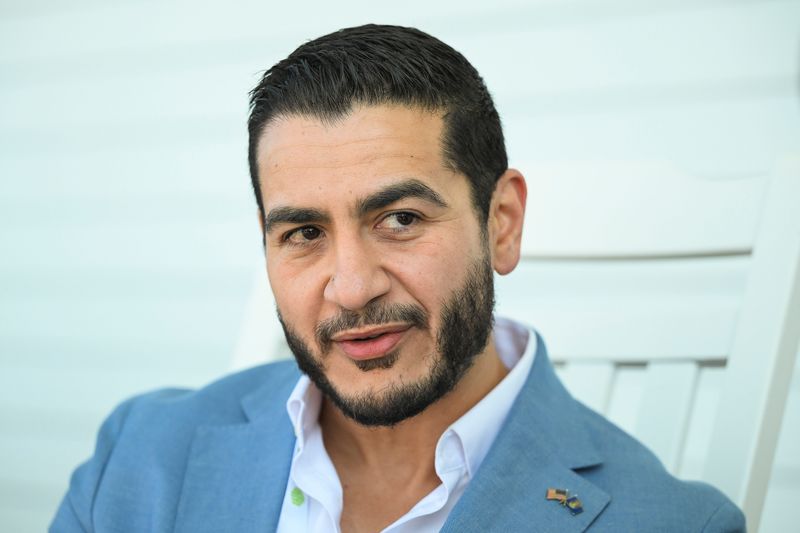
Democratic U.S. Senate hopeful Abdul El-Sayed created a pair of political action committees years ago to boost like-minded progressive candidates and ballot initiatives, but he ended up spending just a small fraction, roughly 13%, on such contributions.
The same Southpaw PACs created by El-Sayed of Ann Arbor pumped over $200,000 to consultants ― nearly 47% of overall expenditures for both committees ― including payments to individuals who also worked as producers on his podcast and, in one case, worked for his Senate campaign.

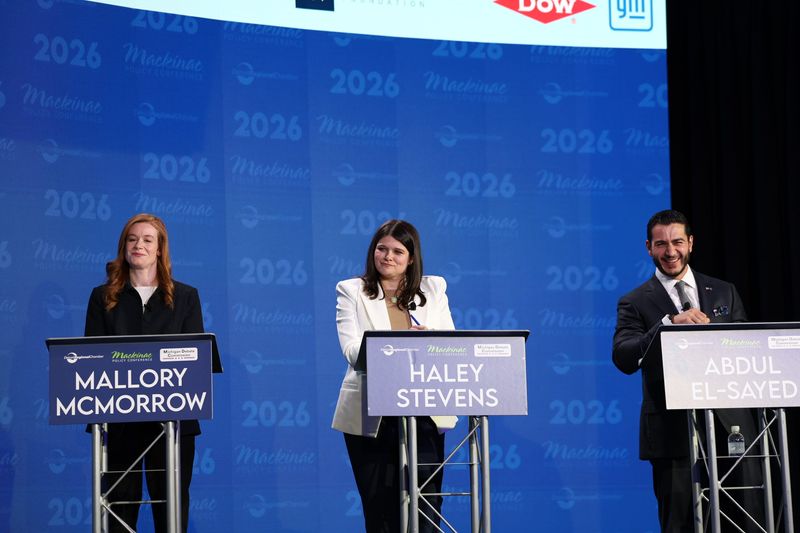
El-Sayed, a former public health official, is locked in a tense contest for the Democratic nomination for U.S. Senate, facing four-term U.S. Rep. Haley Stevens of Birmingham and state Sen. Mallory McMorrow of Royal Oak. Michigan’s seat in the Senate is up for grabs after Sen. Gary Peters, D-Bloomfield Township, decided against another term.
Both McMorrow and Stevens have PACs that similarly raised money to bolster other Democratic candidates or causes. They have devoted 53% and 60% of their PAC spending, respectively, to contributions for candidate or political committees, according to a Detroit News analysis.
El-Sayed last week noted that the Southpaw PACs both have been closed for a “long time.” He defended the spending on consultants, whom he said coordinated fundraising, volunteer recruitment, door-knocking and other grassroots activities that support candidates’ campaigns. He said he’s proud of and grateful for the work the PACs did.
“Go and talk to the folks who benefited from the work we did. Somebody like (state Rep.) Donovan McKinney or others who found support through Southpaw when they couldn’t find it elsewhere,” El-Sayed told The Detroit News.
“We sent literally thousands of messages on behalf of candidates, supporting and getting the word out for them. I know on paper that shows up as a consultant fee, but that is direct voter contact on behalf of candidates.”
El-Sayed spokeswoman Roxie Richner added in a statement that Southpaw was not designed as a pass-through in the way that many “big money PACs” are, but to coordinate outreach to voters.
“We were proud to offer candidates for office tens of thousands of dollars worth in staff time, dialer and text outreach support,” Richner said.
A campaign finance expert, however, said El-Sayed’s spending on contributions to other candidates or political committees is less than would be expected for groups specifically created for that purpose, as El-Sayed had claimed.
“That’s a very paltry amount donated to other candidates,” said Michael Beckel, director of money in politics reform at Issue One, a bipartisan political reform organization in Washington.
“I guess there are arguments someone could make about how these other consultant expenditures were helping with movement building or mobilizing people. But in terms of direct support to candidates, this was a very small portion of the overall funds that were available and is not in line with how most politicians are spending their leadership PAC funds.”
How El-Sayed PACs spent their money
For example, the federal Southpaw PAC, registered in 2021 to “support Abdul’s vision” and candidates consistent with it, put 4% ($7,500) of its spending toward contributions to eight U.S. House candidates in 2022, only one of which won their primary.
The federal PAC also spent over $132,600 on consultants for communications, fundraising and political strategy during the year and a half that it was active, according to disclosure reports.
Payments to two of those consultants, over $75,000 total to Purple Tulip LLC and $33,500 to Bluefish Communications, continued for eight months after Southpaw PAC made its last campaign contribution in March 2022 to then-U.S. Rep. Andy Levin, D-Bloomfield Township.
Purple Tulip LLC is registered to Tara Knight, who was a producer on El-Sayed’s America Dissected podcast starting in 2019 and who has worked as the operations director for his Senate campaign. Bluefish Communications is tied to Austin Fisher, who was also a producer for America Dissected.
Richner acknowledged that several of the PAC’s part-time staff were employed elsewhere, but said the staff time was “strictly” segregated to keep all PAC-related activities separate from any other roles. The federal PAC was shut down when El-Sayed took a role with Wayne County, Richner added.
El-Sayed became director of Wayne County’s public health department in March 2023.
The state-level Southpaw MI PAC, created in 2018, spent a greater share than the federal PAC on direct and in-kind contributions to campaigns, about $54,650 or about 19% of its money.
When it was active from 2018-21, the Southpaw MI PAC also spent significant sums on consultant and PAC management services, allocating roughly $82,000 or 29% of expenditures to these categories. They included payments to Purple Tulip ($34,000) and Bluefish Communications ($8,500), according to disclosures.
The PAC’s largest direct contribution was $10,000 to the campaign of former state Rep. Abdullah Hammoud when he was running to be mayor of Dearborn in 2021. The state-level PAC’s second-largest donation was $6,800 to El-Sayed’s own gubernatorial campaign account after he’d lost the primary.
There were also direct contributions to the 2018 U.S. House campaigns of Rob Davidson and Matt Longjohn, who, like El-Sayed, are both doctors, and to the Michigan Supreme Court bids of Sam Bagenstos and Megan Cavanagh.
The remainder were in-kind contributions mostly to state legislative hopefuls in 2020, such as Reps. McKinney and Rep. Laurie Pohutsky of Livonia, both of whom credited the Southpaw PAC with helping them win a seat in the state House.
“Their endorsement sent a clear signal to voters that our people-powered campaign represented the values our community deserves: clean air, affordable healthcare, and lower utility bills and insurance rates,” McKinney said in a statement.
Pohutsky said that Southpaw connected her team with campaign tools, donors and voters “at a time when we could use all the help we could get.”
“I’ll always be grateful to Southpaw and Abdul for supporting candidates at every level,” Pohutsky said in a statement.
How the PACs of Stevens, McMorrow have spent their cash
Drawn from the boxing term, the Southpaw PACs got their name because El-Sayed “punches from the left.”
He launched the state-level Southpaw PAC in September 2018 after losing the Democratic gubernatorial primary to Gretchen Whitmer. At the time, he denied that Southpaw would be a precursor to another campaign and pitched it as a progressive PAC aiming to “organize for down-ballot candidates and causes” ahead of the general election and beyond.
SouthPaw MI PAC is “about making sure that we coalesce a movement that we spent a lot of effort and time and money building in the run-up to the primary,” El-Sayed told Politico in 2018.
In Congress, lawmakers use similar groups known as leadership PACs that are ostensibly for lawmakers to build support for efforts to win leadership posts but are also used to bolster colleagues, political parties or issues they care about at election time.
A 2021 study of leadership PACs by Beckel’s Issue One and the nonpartisan Campaign Legal Center found the leadership PAC of a typical member of Congress spent 70% of the funds on politics between January 2019 and December 2020. Just 43 members of Congress spent less than 25% on politics during this time.
Stevens’ leadership PAC, HMS Scrap PAC, has devoted over $321,000 of its spending to contributions to other federal candidates or political committees, or 60% of expenditures since its creation in 2020. By comparison, HMS Scrap paid $63,260 or 12% to consultants in that time.
She’s supported the reelection campaigns of Democratic colleagues around the country, including $1,000 last year to the Toledo area’s Rep. Marcy Kaptur, who was redistricted, and $5,000 to New York Rep. Dan Goldman this year, as he faces a primary challenge from former city Comptroller Brad Lander.
The HMS Scrap transferred $68,000 to Stevens’ Senate campaign last year for payroll, which spokesman Arik Wolk said is for staff who do fundraising for both the leadership PAC and the campaign.
McMorrow’s leadership fund, A More Perfect Michigan, has spent over $622,600 on contributions to other state candidates’ campaigns or political committees, or 53% of its spending since its creation in April 2022. A More Perfect Michigan spent over $322,300, or about 27%, on consultants in that time, records show.
McMorrow’s PAC was formed around the time of her viral speech on the Senate chamber floor denouncing rhetoric from her Republican colleagues ― an address that launched other speaking engagements, national media attention and a flood of donations.
That summer, she declared her goal of winning the Michigan Senate majority for Democrats “to give the power back to the people.”
Now on the campaign trail, McMorrow regularly touts the fundraising assistance that she gave to other candidates, saying in Thursday’s primary debate that she “helped flip the entire state Senate to Democrats for the first time since 1984.”
mburke@detroitnews.com
Staff Writers Grant Schwab and Politics Editor Chad Livengood contributed.
This article originally appeared on The Detroit News: El-Sayed PACs spent ‘paltry’ sum on candidates, big on consultants
Reporting by Melissa Nann Burke, The Detroit News / The Detroit News
USA TODAY Network via Reuters Connect