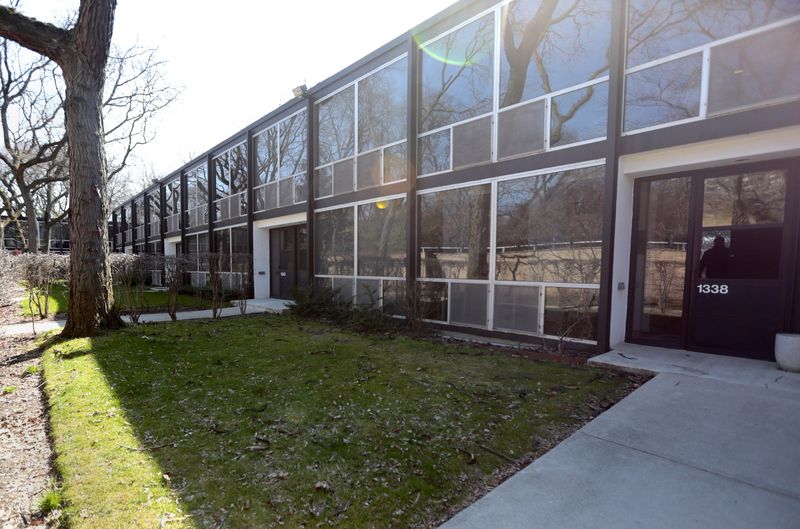
A Wayne County judge delivered a victory — for now, at least — to residents in the historic Mies van der Rohe condominium cooperatives in their fight to stop an underground steam project that many residents said was destroying the natural aesthetic of the neighborhood.
In what has been a long legal battle between Detroit Thermal and many of the residents living in the Mies Van der Rohe co-ops, Wayne County Circuit Court Judge Annette Berry on Feb. 26 ruled that the utility company is prevented from reconnecting a steam tunnel underneath the properties that was meant to provide heat to the 1300 Lafayette East Cooperative building across the street.

The order specifically states that any intrusion by company employees on the historic property related to using steam lines to service a building outside of the property “exceeds the scope of the easements and constitutes a trespass.” However, Detroit Thermal can appeal the decision.
Representatives for Detroit Thermal could not be immediately reached March 6.
Both parties also have pending claims and counterclaims involving trespassing allegations, which are expected to be addressed in a March 24 hearing.
Detroit Thermal, in late 2024, notified the Mies co-ops’ property manager about looking into whether the steam lines, which were abandoned in the 1980s and have not been used, could be reopened and upgraded to provide steam heat to the 1300 Lafayette property. Several residents from the Mies co-ops began challenging Detroit Thermal and filed a lawsuit against the company in July 2025 in a fight to preserve the historic neighborhood from potential environmental impacts.
The lawsuit came before the Detroit’s Historic District Commission in a meeting, where the city approved a revised project intended to address co-op residents concerns over the possibility that it would “tear apart” a historic landmark and green space. The commission approved the project after hours of discussion and providing time for public comment from residents to weigh in.
Many residents emphasized they were not opposed to utility improvements for their neighbors to the south in the 1300 building, though they grew frustrated with the process, claiming Detroit Thermal kept them out of discussions about their plans, and the use of their property for infrastructure work beyond what was legally permitted. Residents from the 1300 Lafayette property argued Detroit Thermal’s proposal was the more affordable path and it would solve the issue of relying on aging boilers, which have failed during winter months, to heat their units.
Harvey Hollins, Detroit Thermal’s spokesman, previously told the Free Press the company made several modifications in an attempt to address concerns. However, as the legal battle proceeded, the court issued a temporary restraining order against Detroit Thermal barring them from work.
The order stated there would be a “real and imminent danger” that the co-ops would “suffer irreparable harm in the form of permanent and irreversible damage” to the landscape.
Detroit Thermal sought to lift the order, though the judge extended it shortly after. However, company crews were allowed to continue work in the public right-of-way.
Dana Afana is the Detroit city hall reporter for the Free Press. Contact: dafana@freepress.com. Follow her: @DanaAfana.
This article originally appeared on Detroit Free Press: Detroit Thermal prevented from building Lafayette Park steam network
Reporting by Dana Afana, Detroit Free Press / Detroit Free Press
USA TODAY Network via Reuters Connect