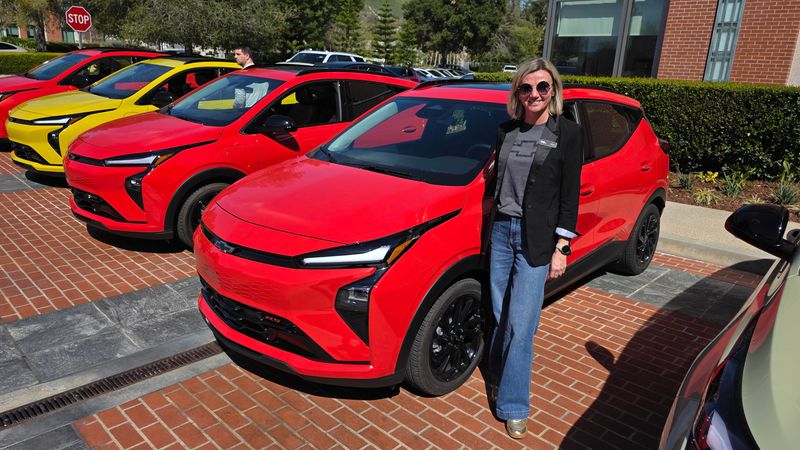
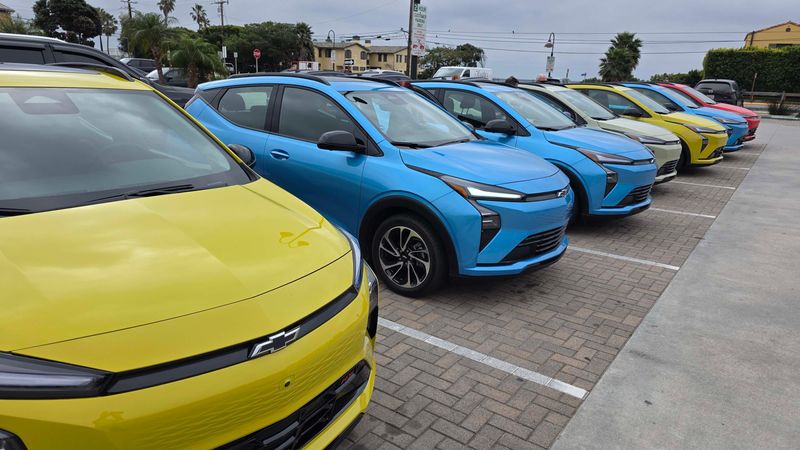
Westlake, California — The electric Chevrolet Bolt was born in 2016 with high expectations, put out to pasture in 2023, and given a second chance for the 2027 model year.
Its rebirth is a microcosm of Detroit electric vehicle learnings over the last 10 years. From its new battery to its new charging port, hands-free driving system and new assembly plant, the upgraded Bolt 2.0 has adapted to a dramatically different EV and manufacturing ecosystem than Bolt 1.0 occupied.

“The industry had a lot of dreams. Now we have a lot of realities,” said auto analyst Rebecca Lindland, managing director of automotive and mobility for HarrisX and former communications director for kaput EV startup Fisker Inc. “Bolt is coming into a market very different from what manufacturers thought (it would be) 10 years ago. So it’s smart for GM to provide a vehicle that’s different, that’s got a very passionate buyer base, that has distinctive technology.”
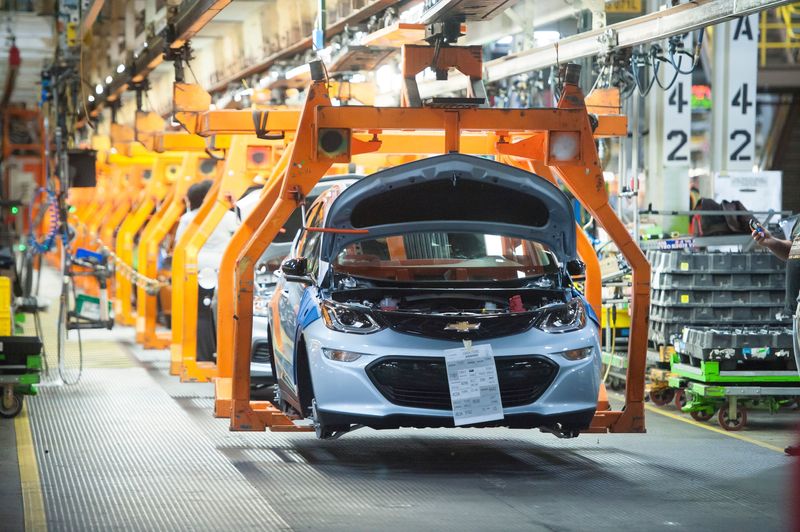
The first-gen Bolt hatchback debuted as a 2016 revolutionary with 238-mile range.
It was the first, affordable, non-Tesla EV with 200-plus mile range electric vehicle produced at General Motors Co.’s dedicated small-car Orion Assembly plant north of Detroit. The first-gen Bolt was built alongside the Opel Ampera-e EV bound for Europe and Chevy Sonic subcompact as GM transitioned from its Volt sedan’s plug-in hybrid technology to an all-electric future.
Bolt beat the Tesla Model 3 to market by a year. But it never achieved the Silicon Valley EV-maker’s 200,000-year-sales figures — averaging about 30,000 units from 2018-23. Instead, GM saw Tesla-sized sales potential in electric trucks and pulled the plug on Bolt (and its wee Orion peers).
“When Orion EV Assembly reopens in 2024 and reaches full production, employment will nearly triple, and we’ll have a company-wide capacity to build 600,000 electric trucks annually,” CEO Mary Barra told investors in 2023.
Fast forward to 2026. The second-gen Bolt will be built at Kansas City Assembly as part of a different GM future: internal-combustion-engine trucks and SUVs proliferating amid emissions and fuel economy standards eased by the Trump administration.
Orion is the new home of giant, ICE-powered Cadillac Escalade SUVs, Chevrolet Silverado SUVs and GMC Sierra pickups. The Bolts’ stay in Kansas City will be even shorter than in Orion: just 18 months before stepping aside for the ICE-powered Chevy Equinox and Buick Envision SUVs — reshored for U.S. production from, respectively, Mexico and China to avoid Trump administration import tariffs.
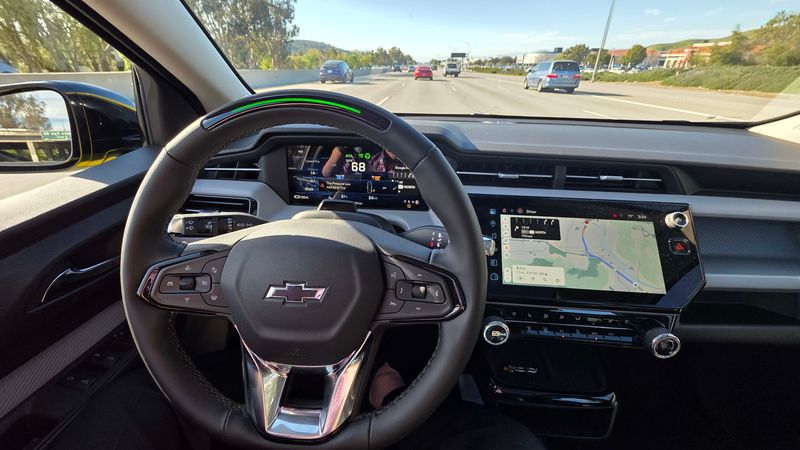
“Bolt’s in Kansas City (and) back as the most affordable EV in the industry, as well as it is the most affordable way to get hands-free driving in a vehicle with our Super Cruise technology,” Bolt Executive Chief Engineer Mandi Damman said in an interview at Bolt 2.0’s media test.
New Super Cruise
The Orion-built Bolt was also the vessel for GM’s autonomous vehicle revolution.
In 2019, it became the industry’s first production-ready, dedicated autonomous vehicle, filling orders from GM’s San Francisco-based Cruise autonomous ride-sharing service to deploy self-driving robots in California and beyond.
Fast forward to 2026, and Cruise has ceased operation, ceding the field to Waymo and Tesla rideshare fleets. No longer employed as a rideshare bot, Bolt instead will be the entry-level vessel for GM’s hands-free Super Cruise technology.
Super Cruise debuted in 2017 on Cadillac’s flagship CT6 sedan. But it has since taken root across Chevrolet, Buick and GMC models as the General chases Tesla’s ambitious Full Self Driving tech.
“We aren’t shying away from bringing in additional technology and features that people want if this is the right size and price point for them,” said Damman of Super Cruise availability on the compact EV.
The $3,255 Super Cruise package must be optioned on the $28,995 Bolt as part of a suite of tech and comfort upgrades totaling $6,600. Total cost? $35,595. After a three-year trial period, a monthly subscription fee will apply. Tesla, meanwhile, offers a $99-a-month FSD subscription with no downstroke.
New NACS charger
Bolt 1.0 was introduced with a so-called Combined Charging System connector as the industry rallied around a CCS standard in Europe and the United States. Electrify America, the first large, independent, national fast-changing network (funded by Volkswagen as penance for Dieselgate), adopted the standard.
But Tesla, which had built its sprawling, proprietary fast-charging network using the North American Charging Standard, resisted.
With sales numbers on its side (and a lighter, more consumer-friendly connector), Tesla’s NACS became the de facto U.S. standard. In 2023, GM bent to popular will and began a transition to NACS ports in order to gain access to Tesla’s Superchargers.
“Ten years ago, GM didn’t want to acknowledge Tesla existed, much less use their charging port,” analyst Lindland saod. “But reality can make strange bedfellows, you know? It’s smart of Chevy to leverage the existing infrastructure, because infrastructure continues to be a significant barrier to EV adoption. It would really be irresponsible, from a shareholder standpoint, to not make this vehicle NACS compliant.”
Too late for Bolt 1.0, for which CCS (as well as slow, 55 kW charging speeds compared to Model 3’s 250 kW) had been an albatross around its neck, frustrating owners with unreliable, third-party networks like EA.
For 2027, Bolt 2.0 is back with NACS and increased battery capacity for 262 miles of range.
“Having the NACS charge port opens up a lot of opportunity from a charge network perspective,” said Damman, noting the EV’s charge rate has increased to 150 kW. “We’ve drastically improved almost three times from a DC fast charging perspective, charging from 10% to 80% in only 25 minutes.”
New battery
The 2027 Bolt is also one of the first to adopt lithium iron phosphate batteries made by China’s CATL.
First-gen Bolt owners (and others) were confused by manufacturer recommendations that so-called lithium nickel manganese cobalt oxide batteries only be charged to 80% lest they experience battery degradation. That meant Bolt 1.0’s true range was 190 miles instead of 238 miles. By comparison, gas vehicles easily fill to 100% tank capacity.
“The biggest thing our customers will notice is 262 miles of range — and being able to use that full range with the LFP” battery technology, said Damman. “Being able to offer all 100% of that 262 miles is a huge benefit.”
Like a smartphone, owners can now leave their Bolt plugged in to 100% capacity overnight. At a DC fast charger, however, charging will still slow considerably over 80%.
Tesla first used LFP batteries in 2022 models. But the EV maker stopped using LFP in 2024 after the Biden administration slapped big tariffs on China-sourced battery materials.
Outfitted with its new hardware, Bolt 2.0 is on sale now. Act fast if you want one, though, because the clock is ticking before Kansas City switches to all-ICE production.
Henry Payne is auto critic for The Detroit News. Find him at hpayne@detroitnews.com or Twitter @HenryEPayne.
This article originally appeared on The Detroit News: Chevy Bolt 2.0 reflects a new auto landscape with new battery tech
Reporting by Henry Payne, The Detroit News / The Detroit News
USA TODAY Network via Reuters Connect