Question: I understand that we should be planting native plants in the garden and yard, but I am not sure which plants are native or which plants would do best in my yard. Any guidance?
Answer: This is a great question, as many gardeners have been planting native plants the past several years, and some gardeners are now reporting that some native plants are not surviving in certain locations.

Native plants offer many benefits, including the fact that they typically support greater populations of pollinators and beneficial insects, as well as birds and other wildlife. When selecting trees, shrubs and herbaceous perennials for your garden and home landscape, try to choose native species, as these plants have evolved in environmental conditions similar that of central Ohio and will generally thrive in the area, if they are the right plants planted in the right place!
When choosing native plants, it is important to first consider several factors of the planting site, including soil type, soil-moisture level and sunlight level. Matching the right plant to the right environment is important when selecting plants for the landscape.
For example, chokeberry and buttonbush are wonderful native shrubs for Greater Columbus, but while chokeberry will thrive in a drier location, buttonbush prefers locations with more soil moisture. Some native plants such as spicebush do well in shaded areas while others such as black-eyed Susans prefer full-sun locations.
When selecting native plants, inventory the growing conditions of the site first and then choose plants which are best suited to those conditions. Most nurseries and garden centers now label native plants as such, which is helpful when shopping for natives. Lists of native plants for Ohio can be found at go.osu.edu/nativeplant.
Q: I am finding more ants on several large shade trees in my yard than I typically see in the summer. These ants seem to be larger than ants I see in other locations in the yard and I am wondering if they might be carpenter ants or even termites. How can you tell the difference?
A: It is not uncommon to find any type of ant, including carpenter ants, and termites on trees, particularly on large mature trees which may have dead or decaying limbs. One quick way to tell the difference between a termite and an ant is to look at the antennae to determine whether it is straight or elbowed. Ants have elbowed antennae while termites have straight antennae. Ants also have constricted waists while termites are more broad-waisted.
To determine if the ants on your trees are carpenter ants or another type of ant, it is useful to determine exactly what the ants are doing on the tree. Many times, ants are attracted to other insects or insect secretions such as honeydew on the tree. In these cases, the ants are not harming the tree.
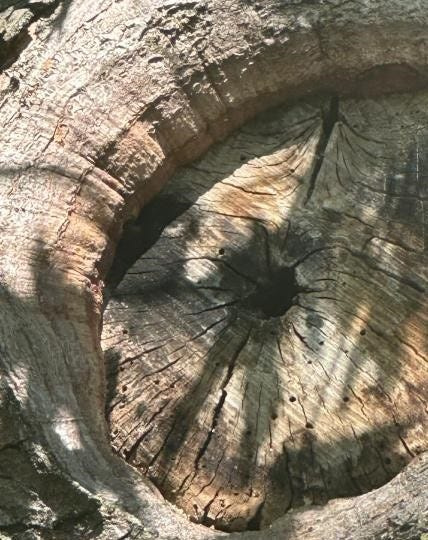
One tell-tale sign of the presence of carpenter ants is piles of sawdust on the tree branches, bark or on the ground next to the tree. Unlike termites, carpenter ants do not eat wood; they excavate nest tunnels and toss out the sawdust to make their nests.
Another sign of carpenter ants is the holes they chew into the tree to start these nests. The sawdust can be blown or washed away easily, so look for entry holes, as well as evidence of sawdust.
When carpenter ants bore into live trees, it is typically in an area of the tree which is dead, rotting or compromised in some other way.
Q: I know this is the year that cicadas will return in Ohio, and the last time we had them, we experienced damage on our dogwood and apple trees. What is the best way to protect trees from cicada damage?
A: The bad news is that it is difficult to protect large trees from damage from the periodical cicada (Magicicada septendecim), but the good news is that we won’t be seeing this insect in central Ohio this year!
There are different broods of this insect in different parts of Ohio and several other states, and the brood which will emerge in Ohio this year (Brood XIV) is only located in southern and southwest Ohio. The brood which lives in central Ohio, Brood X, will not emerge from the ground until 2038.
This article originally appeared on Farmers Advance: Ask the Expert: Will cicadas return to central Ohio this year?
Reporting by Mike Hogan / Farmers Advance
USA TODAY Network via Reuters Connect