Imagine opening your electric bill and finding only a few cents owed or nothing at all.
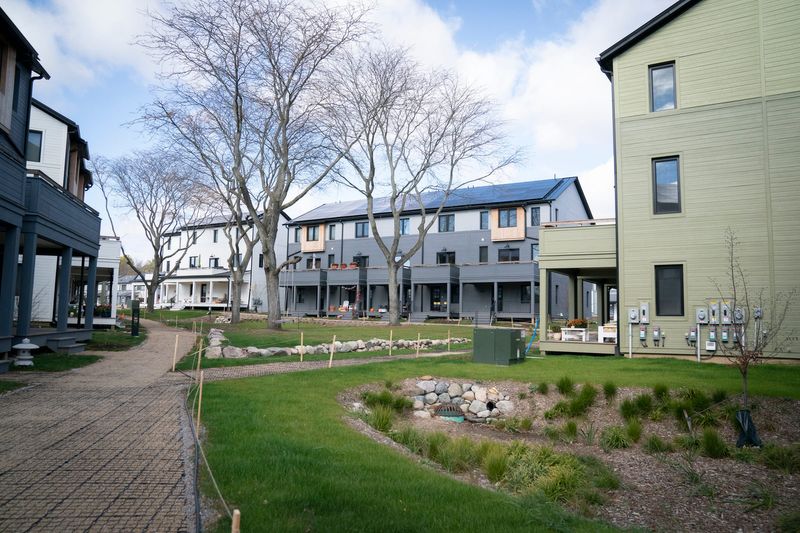
That’s everyday reality for some residents of Veridian at County Farm, a new Ann Arbor neighborhood that is reshaping what home energy use can look like.

Targeted to be one of the nation’s first solar-powered, net-zero and net-positive energy, fossil-fuel-free communities, Veridian is designed to produce its own power, eliminate the need for natural gas and reduce carbon emissions.
The project is a collaboration between Ann-Arbor based THRIVE Collaborative, and Avalon Housing, is being built on a 14-acre site that formerly housed the Washtenaw County Juvenile Detention Center.
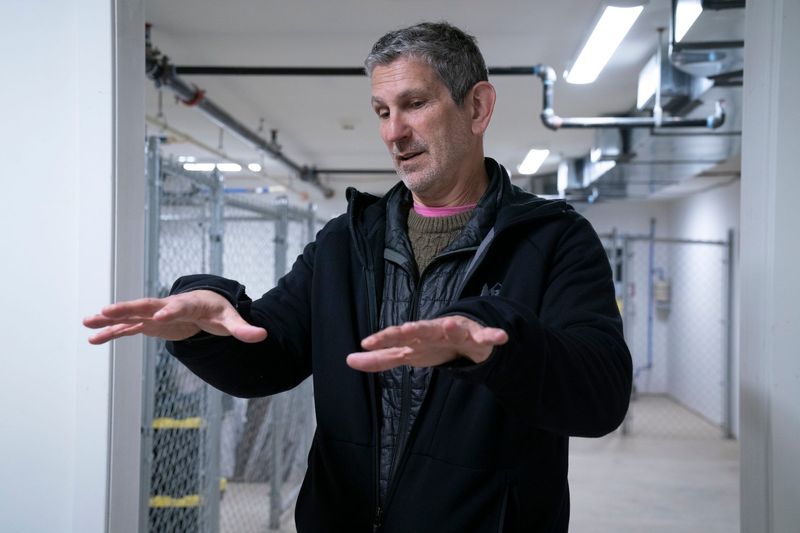
“Sustainability shouldn’t be a style, it shouldn’t be a luxury item, it’s something that should fundability be a right for everybody to have,” says, Matt Grocoff, co-founder of THRIVE Collaborative.
Grocoff, who lives with his family in a 125-year-old Ann Arbor home certified as net-zero energy, said his household disconnected from natural gas over 15 years ago.
“My daughters have grown up in a home where they don’t know what a fossil fuel house is like,” Grocoff said. “Their car charges in the driveway. This is normal to them.”
When complete, Veridian at County Farms will include more than 110 residences, ranging from single-family homes and townhomes to studio units, and 11 short-term rentals in a restored farmhouse, according to Grocoff.
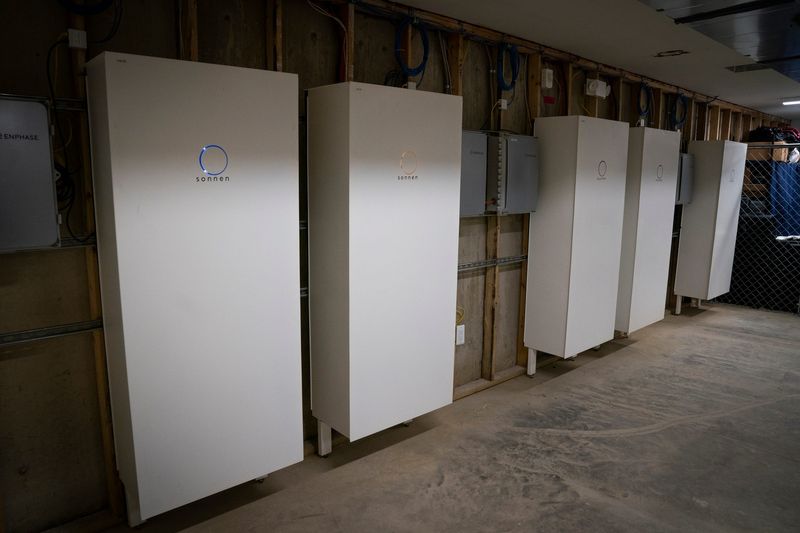
Each home will rely entirely on rooftop solar panels, geothermal wells and battery storage systems, meaning no natural gas lines connected to any buildings.
According to THRIVE Collaborative Sustainability Development Director Sara Hammerschmidt, about 40% of carbon emissions in the U.S. come from the building industry.
“Being intentional about the things going into these homes is something we are really paying attention to,” she said.
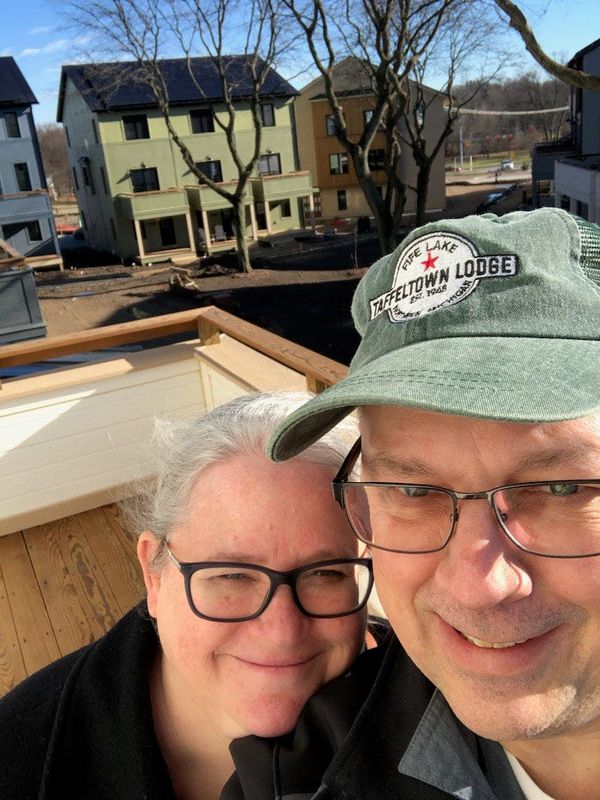
Patrick and Tammy Ferry were among Veridian’s first homeowners last year. The sustainability feature drew them in, and the energy bills keep them smiling.
Their most recent bill totaled just 20 cents. It was a little high, Patrick joked.
Every home includes solar arrays, energy recovery ventilators, heat pump water heaters, induction cooking, EV charging, Bosch electric appliances, Swedish triple-pane windows, and a compact Sonnen battery that stores excess solar power.
Steve Hathaway and his wife moved in last spring, and Steve described buying at Veridian as “getting a house with a cause,” noting that they appreciated both the sustainability mission and the appeal of new construction.
One month their electric bill was 47 cents. Another month it was negative 18 cents.
“Everybody is really social, and we’ve had a lot of fun,” Hathaway said, adding that the switch to fossil-fuel-free living has even changed their cooking habits. “Now I have to learn to grill on a pellet grill. I don’t want to let down the team.”
Home prices range from approximately $280,000 to $995,000, with detached single-family homes expected to start around $1.5 million.
The Michigan Public Service Commission has approved a pilot “virtual power plant” microgrid system for the neighborhood, allowing homes to share stored solar energy across the community, a model that could influence future development nationwide.
Veridian also places a strong emphasis on community connection. Front porches face shared greenways with native landscaping. Amenities, some completed, and others planned, include walking paths, rain gardens, a farm market, community gardens, edible landscaping, a bike-repair shed, shared e-bike and car-share options, outdoor gathering areas, and seasonal events at a restored 1840s barn.
Ultra-high-speed 10 Gbps internet is included in the homeowner’s association dues for market-rate buyers.
“We’ve gotten to know neighbors really well in ways we just haven’t experienced in other places,” Patrick Ferry said.
“The sustainability aspect is exciting, but even more than that, it feels like a small village within the city. It has this European vibe, built around a center courtyard. It’s a unique experience. One that we’re thoroughly enjoying.”
Using housing to address climate woes
Interest in net-zero housing is rising across the country. A 2022 report from the Energy and Environmental Building Alliance found a 190% increase in zero-energy home construction in the U.S. and Canada since 2020.
Supporters say neighborhoods like Veridian could play a role in reaching climate goals. Residential buildings account for more than a quarter of the nation’s fossil-fuel consumption, according to Grocoff. By electrifying home systems and generating power on site, Veridian aims to reduce operational greenhouse gas emissions at the neighborhood level.
Buyers who purchase before December 2025 may qualify for a federal tax credit of up to 30% on solar, battery storage and geothermal systems.
“It’s healthy, it’s beautiful, but it’s also necessary,” Grocoff said. “We want to be an example, to where every neighborhood in the nation is run with all electric and powered with renewable energy.”
Brendel Clark (previously published as Brendel Hightower) writes about real estate and other topics for the Detroit Free Press. Contact her at bclark@freepress.com.
This article originally appeared on Detroit Free Press: Ann Arbor neighborhood shows net-zero energy living is possible. How it came to be
Reporting by Brendel Clark , Detroit Free Press / Detroit Free Press
USA TODAY Network via Reuters Connect