A Michigan native greeted the Artemis II astronauts after their capsule landed in the Pacific Ocean last week and was one of several Navy divers who performed medical checks on them.

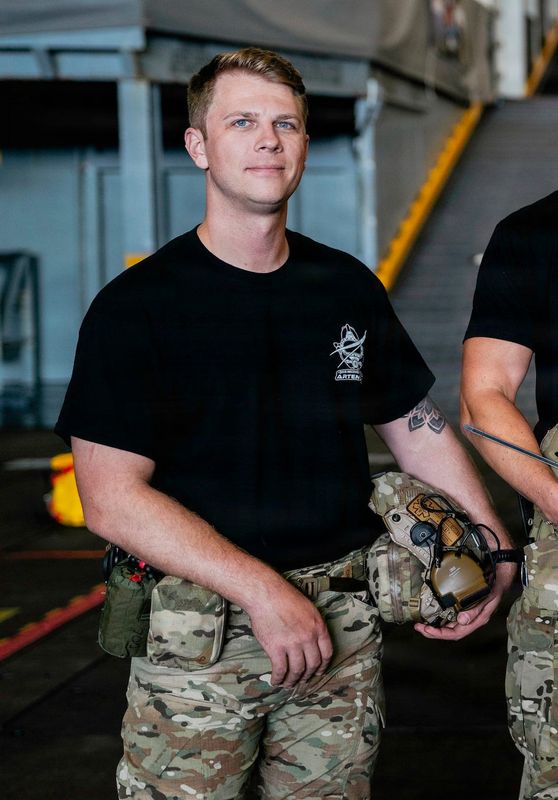
Hospital Corpsman 1st Class Steve Kapala, 33, who was raised in Alpena, participated in the Artemis II recovery mission. He said the experience has been “incredible.”
“This is not something that I had on my bingo card,” he said.
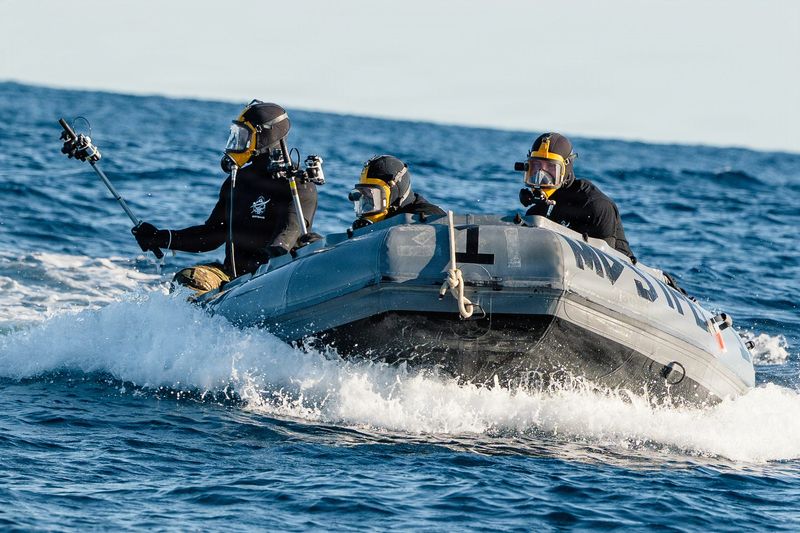
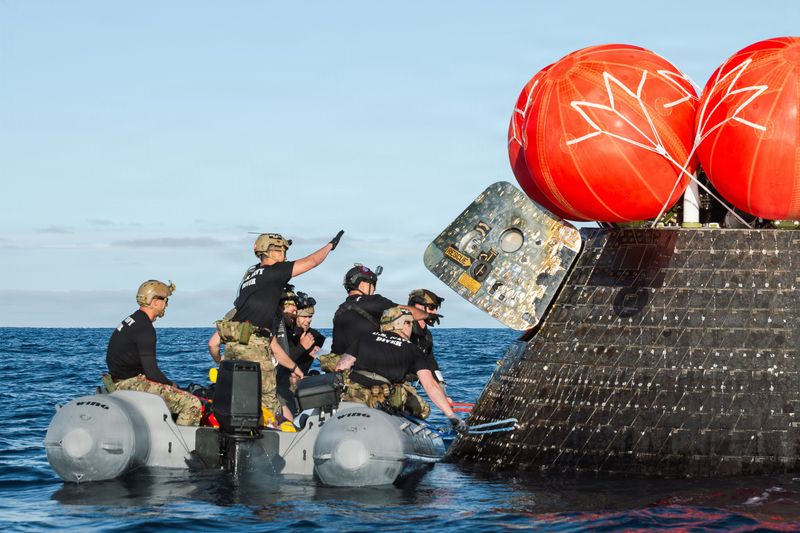
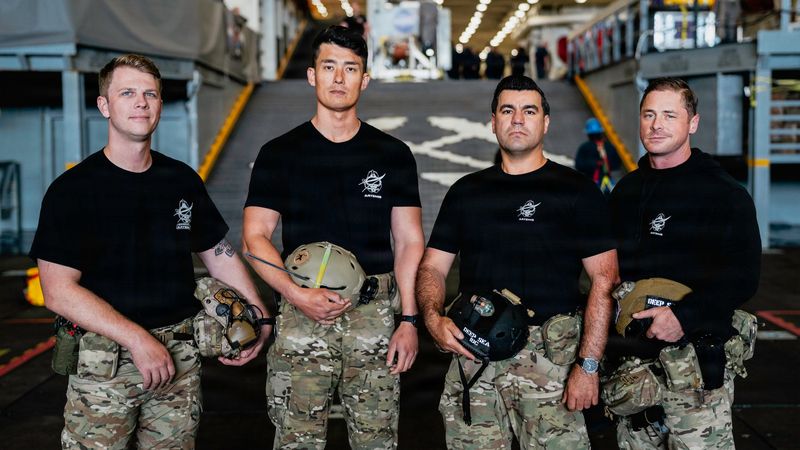
Kapala spoke with media outlets about his experience on a call Thursday morning. He was one of the first people to make contact with the Artemis II crew once the Orion capsule returned to Earth. He and three other Navy dive medical providers made initial medical assessments of the crew and assisted them out of the capsule “safely and efficiently,” the Navy Office of Community Outreach said.
The Artemis II mission sent a crew of four astronauts on a 10-day journey around the moon to test systems and hardware for future expeditions to the surface. The astronauts traveled farther from Earth than any human has ever been in space. They splashed down in the Pacific Ocean off the coast of San Diego on Friday, April 10.
Kapala, who now lives in San Diego, said his parents still live in Michigan. He still goes home for hunting season and to visit his grandparents.
“I’m very grateful for… where I came from,” he said, “and I love going home to Michigan to visit everybody.”
He said he is “completely shocked” by how much positive feedback he has been receiving from friends, family and other people he knows since the Artemis II mission.
“People have been reaching out to me and saying the nicest things,” he said.
Interacting with Artemis II crew members
Kapala told reporters that when the “double sonic boom” of the Orion capsule reentering the atmosphere was heard, several small boats booked it to where the capsule was headed. He was on one of the boats, which had come from the USS John P. Murtha, an amphibious transport dock ship.
He said the first thing the Navy divers did once they reached the capsule was a “gas-free check.” They made sure there were no toxic gases coming off of the capsule.
Once they completed that work, all of the medical team and a few other people went to the capsule. The door to the capsule opened on its own, he said.
Kapala said they had already “kind of gotten a heads up from Houston” that the astronauts were “all good.”
“But just getting eyes on for the first time was just — I still get like hairs raising on the back of my neck from just like how electrifying that moment was,” he said. “Like when we just saw that … those are our humans, they’re back, and those are our friends, and they’re okay, that was an awesome moment.”
He said he and the other Navy personnel reintroduced themselves to the astronauts and asked how they were doing. He said they did “a walking neuro exam.”
“I’m just kind of like looking at them, and I want to make sure that they’re happy, they’re healthy,” he said. “I’m looking at their eye movement, pupil dilation, and I’m just kind of assessing them…”
He said they also got the astronauts’ vital signs. He said they were “rock stars, if I’m being honest.”
“Especially my astronaut Victor Glover,” he said. “He was an absolute stud. … He was in very good condition and very, very talkative.”
Growing up in Alpena and joining the Navy
Kapala said he was raised in a “very small town” and did a lot of camping. His family went to different campgrounds and visited various lakes in Michigan.
“That was … my parents way of showing us the world, but it was just our little part in Michigan,” he said.
After graduating from Alpena High School, he started down the “pre-med pipeline,” as he was interested in medicine. After a bit of time, he became interested in nuclear power and started working at the Donald C. Cook Nuclear Plant in Berrien County as a contractor.
He said that by reading some books and having conversations with some of his coworkers at the power plant, he “just kind of got the itch to explore the world and to try to challenge myself.” He joined the Navy in 2014.
“And since then, it’s … been a wild ride,” he said.
He said that when he joined, he wanted to go into Naval Special Warfare. But after some time on that career path, he was “not happy.”
He said that while serving as a rescue swimmer on a destroyer, he decided to not continue on the Naval Special Warfare route. He decided to become a corpsman, which is akin to being a medic, he said. He also chose to specialize in dive medicine.
Reflecting on his experience with the Artemis II mission
Kapala said he read a lot of science fiction novels growing up and was interested in space.
“Falling into this job fairly recently and then just getting to work with NASA ― seeing things from the engineering side of the house … and also the medical and tying that all together ― and being able to help take care of the astronauts and help them get them home to their families has been incredible,” he said.
He said the whole experience has been “a dream.”
Kapala said his first four years in the Navy were “very rough,” and he was in entry-level positions. But now, being able to be a part of such a historic mission makes him feel like he was “very lucky,” he said.
“But, also, with enough hard work, good things come to anybody,” he said.
USA Today contributed.
asnabes@detroitnews.com
This article originally appeared on The Detroit News: Alpena native helped recover Artemis II crew after splash down in Pacific
Reporting by Anne Snabes, The Detroit News / The Detroit News
USA TODAY Network via Reuters Connect