

Ahead of a pivotal primary election, Democratic voters in Michigan are prioritizing the fight against Republican President Donald Trump, candidates who shun corporate contributions and an overhaul of the nation’s health care system, according to a new poll for The Detroit News and WDIV-TV.
The survey of 500 likely Democratic primary voters in the battleground state outlined a party that’s hoping to return to power in Washington, D.C., and interested in major changes both to itself and in federal policies.

Asked what the most important issue was motivating them to vote in the Aug. 4 primary, the top answer among Michigan Democrats was opposition to Trump’s administration at 19%, and the fifth most frequent answer was change, reform and accountability at 10%. The economy and the cost of living came in second at 18%.
One participant in the poll, Justin Croffe, a 26-year-old Lansing resident, said he’s planning to support more left-leaning candidates in the primary who aren’t afraid of challenging the status quo.
“They don’t fight as hard, the current establishment Democrats,” Croffe said.
The Lansing-based Glengariff Group conducted the poll on behalf of The News and WDIV-TV. Participants were contacted by phone July 8-11. The survey had a margin of error of plus or minus 4.4 percentage points.
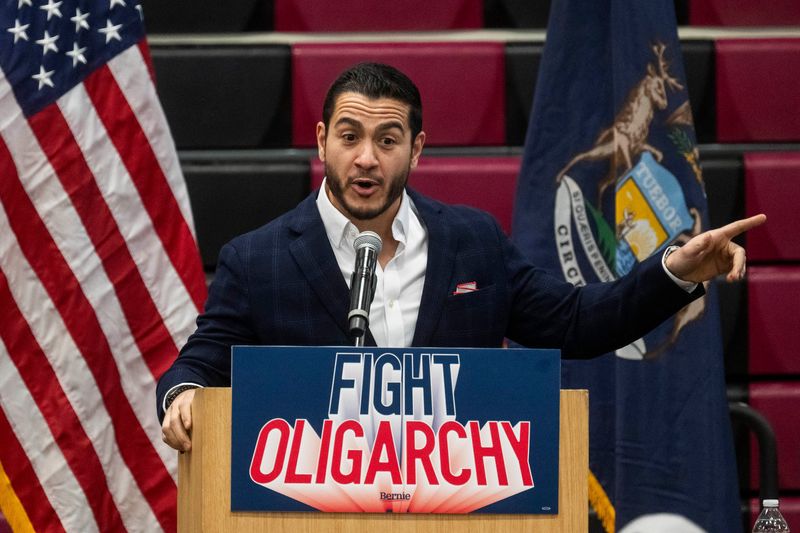
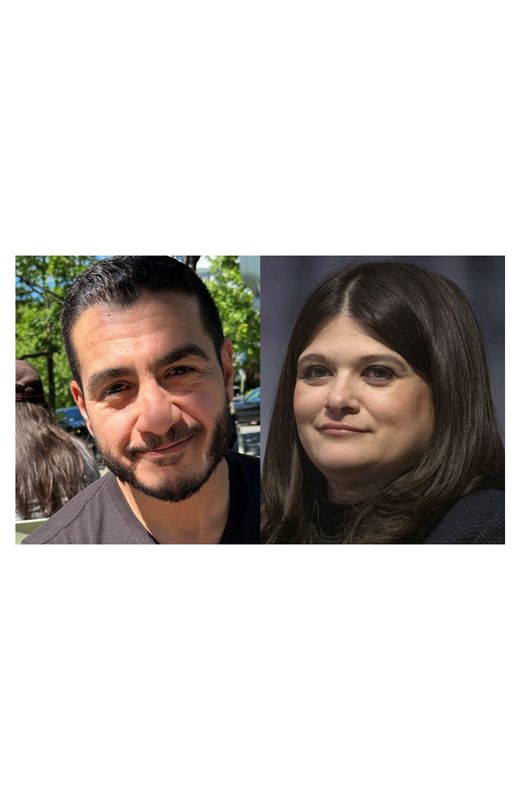
The poll examined primary voters’ stances amid a heated and close race for the Democratic nomination for the U.S. Senate between U.S. Rep. Haley Stevens of Birmingham and progressive former Wayne County health official Abdul El-Sayed of Ann Arbor.
They’re hoping to fill a seat that’s currently held by U.S. Sen. Gary Peters, D-Bloomfield Township, who decided not to seek reelection. Former Congressman Mike Rogers of White Lake is the presumptive Republican nominee that the Democratic primary winner will face in the fall election.
Among participants, 48% said they planned to vote for Stevens and 41% said they would support El-Sayed, with about 10% remaining undecided.
Asked what the main factor, among four options, was for picking a nominee, 38% said choosing a fighter who will stand up to Trump, 25% said finding someone who could win in November, 19% said favoring a candidate who represented their values and 13% said preferring the person who could get results in the Senate.
“Trump is the center point of all of this,” said pollster Richard Czuba, the founder of the Glengariff Group.
The ranking of issues in the poll pointed to the tone of the primary race, said Adrian Hemond, a political consultant and CEO of the firm Grassroots Midwest.
“The fact that parochial Michigan issues rank dead last in why people are making their voting decisions explains the class of candidate we’re getting these days in Michigan,” Hemond said. “They are giving people what they want, meaning they are 100% focused on the soap opera in Washington, D.C., as opposed to the fact that Michigan is a poor state now.”
The following are eight other takeaways from the new poll’s results:
1. Both candidates have a path to victory
While Stevens might have a lead in the poll, the survey indicated both Stevens and El-Sayed still have a path to victory.
The race remains close with three weeks to go, and the 10% of primary voters who are undecided could swing it. Meanwhile, state Sen. Mallory McMorrow of Royal Oak, who ended her campaign on July 5, will remain on the ballot, a factor that is hard to reflect in a telephone poll.
Less than 1% of poll participants said they had already voted for McMorrow. It’s likely that more than 1% of voters will cast ballots for McMorrow in the election, potentially not knowing that she isn’t actively seeking the nomination.
Likewise, El-Sayed’s campaign events have been drawing large crowds, and there seems to be energy within the progressive wing of the Democratic Party. A ground game fueled by volunteers could benefit El-Sayed in the coming weeks.
El-Sayed has made “Medicare for all” a pillar of his campaign for the Senate. His website vows that he will “fight to expand Medicare to cover all necessary healthcare, including vision, dental and hearing, and extend it to every single American from cradle to grave without premiums, copays or deductibles.”
The new survey found 83% of like Democratic primary voters supported a single-payer health care system or a government-run system. Only 10% opposed it.
2. Support grows for Democratic Socialists
Another potential reason for optimism for El-Sayed is likely Democratic primary voters’ feelings on Democratic Socialists.
While El-Sayed doesn’t identify as a Democratic Socialist, that wing of the Democratic Party is expected to be among his supporters. He has been endorsed by U.S. Sen. Bernie Sanders of Vermont, a self-described democratic socialist. The poll showed El-Sayed winning the support of 77% of those self-identifying as Democratic Socialists, and Stevens taking 20% of that subgroup.
In the survey, 58% of likely Democratic primary voters in Michigan said they had a favorable view of Democratic Socialists with 15% having an unfavorable view and 28% saying they were neutral on the subject.
Darren Townsend, 64, of Alpena, described himself as something of a socialist in a Tuesday call with The Detroit News, in part because he believes the rich should not have “more and more and more” while the “poor get poorer.”
The former truck driver said he’s always been supportive of democratic socialists.
“And I always will,” Townsend said. “I don’t know if it will make a difference, but I always will.”
3. Half of Democrats view AIPAC unfavorably
The poll conducted last week found that 49% of Democratic primary voters have an unfavorable opinion of the American Israel Public Affairs Committee, or AIPAC.
About 12% view AIPAC favorably, and 39% were neutral ― with no opinion of the pro-Israel lobby group ― or said they didn’t know. About 34% of voters expressed a “very” unfavorable opinion of AIPAC.
About 65% of El-Sayed’s supporters expressed an unfavorable view of AIPAC, with 8% favorable and 26% neutral, while fewer Stevens’ voters, 38%, viewed AIPAC unfavorably. Nearly 17% of Stevens’ supporters view the group favorably.
The group does not seem to be a motivating issue for undecided voters in the Senate, 65% of whom were neutral on AIPAC, according to the poll results.
“What this issue has become is virtue-signaling to the far left that you’re one of us,” Czuba said of the AIPAC opposition.
Overall, the poll respondents didn’t rate a candidate’s position on Israel and Gaza to be of great importance when choosing a Senate nominee.
They rated a Senate candidate’s position on Israel and Gaza at 5.6 on a 10-point scale. Czuba said a measurement over 7 usually indicates some level of importance, while 8 is considered demonstrating a high level of importance.
A majority of respondents said antisemitism against Jewish Americans has gone up in the last two years, that they support both a Palestinian state and Israel’s right to exist, and believe Israel has “gone too far” in its war against the militant groups Hamas and Hezbollah.
4. Role of corporate PAC money
About 59% of likely Democratic primary voters said they would be less likely to vote for a candidate who is supported by donations from corporate political action committees.
About 2% of respondents said it would make them more likely to support a candidate, while 33% said the issue made no difference to them. About 5% said they don’t know, or it depends.
“Voters just don’t like candidates taking corporate PAC contributions,” Czuba said. “But it’s far more resonant of an issue with Democratic Socialists and El-Sayed voters than it is with everyone else.”
El-Sayed has refused corporate PAC money in his Senate bid, while Stevens has continued to accept it. About 79% of El-Sayed voters said in the poll that they’re less likely to vote for a candidate that accepts corporate PAC cash, while 47% of Stevens voters said they’d be less likely to support such a candidate.
About 36.5% of undecided voters said they’d be less likely to vote for a corporate PAC-backed candidate, but 38.5% of the undecideds said the issue has no impact on them.
5. Support for single-payer system plunges after they learn this fact
Voters in the poll by a margin of 83%-10% said they would support changing the American health system to a single-payer system in which everyone was covered by a Medicare-style form of health care.
But support dropped to 66.5% after being told that anyone with insurance through their employer or negotiated by their union would no longer receive those benefits and would be moved to the federal health care system. About 21.5% said they’d oppose the system under those terms, while 12% said they don’t know or it depends.
But 41% said they’d “strongly” support the single-payer system with this caveat, while nearly 26% would somewhat support it.
“I think that is part of the reason you see these candidates kind of dancing a little on this issue,” Czuba said.
Townsend, the retired Alpena truck driver who participated in the poll, said he’s been without reliable insurance for four years and is delaying prostate surgery until October, when he’ll qualify for Medicare.
It’s his first-hand experience with the health care system, he said, that drives his support for universal health care.
“The insurance companies just get rich off hospitals, off of us,” Townsend said.
6. Whitmer could be influential
While Gov. Gretchen Whitmer previously said she wouldn’t take a side in the Senate primary election, the new survey found half of the undecided Democrats said they would be more likely to support a candidate if the two-term Democratic governor threw her support behind the candidate.
Among the 10% of undecideds in the Senate primary, half of them indicated Whitmer’s endorsement might affect their choice.
“She has a crucial role, if she wants to take it,” Czuba said.
About 87% of the likely Democratic primary voters surveyed said they had a favorable view of Whitmer, the top Democratic official in Michigan, who can’t run for reelection this fall because of the state’s term limits.
One poll participant, Michelle Kantor, said she’s still undecided about which candidates will earn her vote in the Senate primary race. The 57-year-old Jackson woman plans to do research before heading to the polls, but noted a Whitmer endorsement would hold some sway.
“I just like Gov. Whitmer, and I support her, so that would weigh heavily for me if she endorsed somebody,” Kantor said.
7. Schumer should go, Jeffries can stay
Just 16% of the Michigan poll respondents said Senate Democratic Leader Chuck Schumer of New York should keep his job, while 65% said someone new should take his place in leading the party in the Senate. Another 19% of voters were unsure.
Schumer registered no support over 21% among any demographic group. At least 77.5% of El-Sayed supporters said Schumer should go, and 62% of Stevens voters.
However, House Democratic Leader Hakeem Jeffries of New York is another story, with 42% of poll participants saying he is the right person to lead House Democrats, while 32.5% called for someone new. Another quarter of Democratic voters said they don’t know.
Half of Democratic Socialists in the survey said Jeffries should be replaced, and just 25.6% said he’s the right guy.
8. Democrats stiff-arm the 2024 Uncommitted leaders
Nearly 58% of Democratic respondents said members of their party who led the uncommitted movement should play a smaller role in the party going forward, and 18% said they should have a larger role.
The 2024 movement with roots in Michigan urged Democrats to vote uncommitted in response to then-President Joe Biden’s support of Israel’s war in Gaza.
Nearly 72% of Black Democrats, about 57% of El-Sayed supporters and 62% of Stevens voters said uncommitted leaders should play a smaller role.
“Democratic voters don’t think that if you weren’t there for Kamala Harris that you should have a large role in the party,” Czuba said.
cmauger@detroitnews.com
mburke@detroitnews.com
eleblanc@detroitnews.com
This article originally appeared on The Detroit News: 8 takeaways from new poll: Michigan Democratic voters seek fighters
Reporting by Craig Mauger, Melissa Nann Burke and Beth LeBlanc, The Detroit News / The Detroit News
USA TODAY Network via Reuters Connect
By Craig Mauger, Melissa Nann Burke and Beth LeBlanc, The Detroit News | USA TODAY Network
