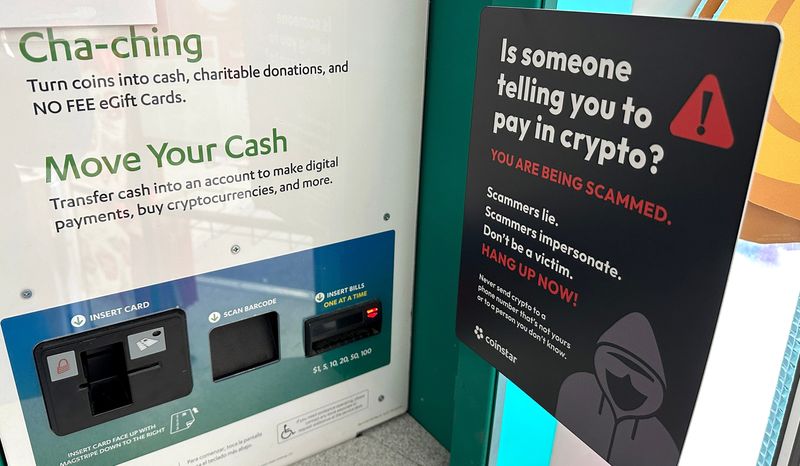
The scourge of crypto scams — enabled by seemingly harmless looking bitcoin ATMs standing in the corner of gas stations and grocery stores — has one wealthy community on the shores of Lake St. Clair saying enough is enough.
The city attorney for Grosse Pointe Farms drafted an ordinance at the recommendation of two council members that would, among other restrictions, limit how much money new customers could put into a virtual currency ATM. The limit would be to up to $1,000 during any 24-hour period and up to $5,000 during the 14 days for someone who would be considered a new customer.

The theory is that new customers know very little about how crypto works and, as a result, can be easily tricked by scammers who direct them to send cash through digital-asset ATMs often found at gas stations, grocery stores, liquor stores, vape shops, nail salons, and hotels.
Victims aren’t just losing $100 or $200 here and there. They’re losing thousands of dollars at a pop. Once the money is sent to scammers, it’s gone.
How many crypto ATMs are located in Grosse Pointe Farms?
None. So it could be shocking that a community wants a crackdown on something that hasn’t even set up shop there — until you realize that nearly everyone seems to know someone who has lost money to a scammer who used a scheme involving a crypto ATM.
How one $20,000 scam motivated a city council
Grosse Pointe Farms council members who support the ordinance view the proposed restrictions as a preemptive strike to protect residents in case crypto ATMs expand into their community.
“Where there’s money, there’s opportunity,” said Lev Wood, who, along with council member Sierra Donaven, called for the ordinance. A public hearing on the drafted ordinance is scheduled for July 14.
Wood says the recommendation for an ordinance was made after the council heard a public safety report in late March involving one horrific loss to scammers.
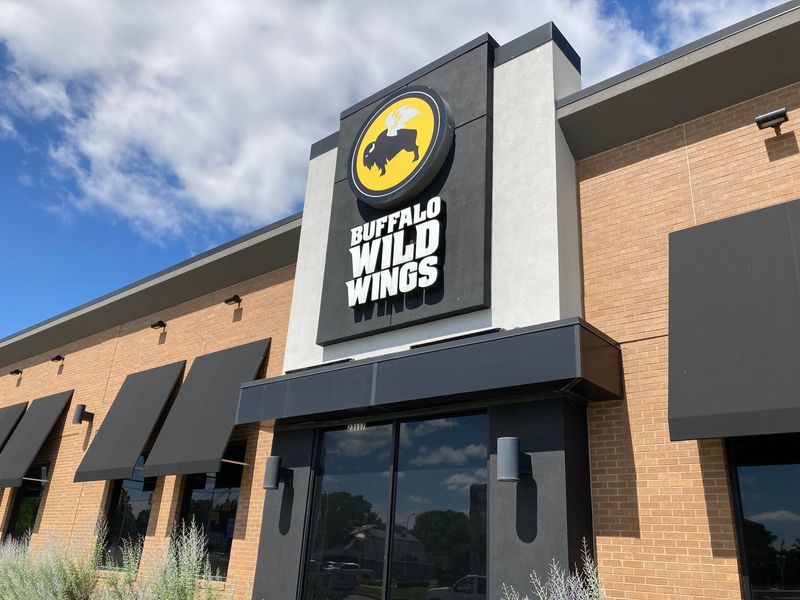
One elderly Grosse Pointe Farms resident withdrew $20,000 in cash from a Chase branch, he said, and then sent that money to scammers via a cryptocurrency ATM located in a restaurant specializing in chicken wings in St. Clair Shores.
The man was depositing $100 bills, one at a time, into that ATM, which sits not far from the entrance and host stand.
The scammers caught him off guard and somehow convinced the man that if he’d send $20,000 in cash via the crypto ATM, he’d receive $50,000 in return.
Wood did not know the details of the deceitful story that scammers told the man. But consumer watchdogs warn that some scams start out by claiming that you’ve won a prize.
The Federal Trade Commission issued a warning in late June that consumers are being told that they won big money or expensive cars. First, in order to claim the prize, the scammers demand that the winner pay taxes or fees before any prize will be sent. It’s a scam.
“Any money you send is going to a scammer’s pocket,” according to the FTC alert. “And, sorry, there is no prize.”
“It’s laughable, except it’s sad,” said Wood, who would like to see surrounding cities such as the four other Grosse Pointes, Harper Woods, Eastpointe, and St. Clair Shores take similar actions to protect consumers.
Money sent to scammers through crypto ATMs is nearly impossible to recover. Michigan Attorney General Dana Nessel warned in April that bitcoin ATMs lack oversight and regulation, and, as a result, have become “an attractive option for criminals engaged in fraud and money laundering.”
From where I sit as a financial columnist, I find it encouraging to see more efforts to protect consumers, including communities and states pushing for more restrictions.
The losses are so troubling that at least a dozen states across the country have taken action to protect both young and older consumers who might be tricked into sending cash directly to scammers through these kiosks, which are largely unregulated at the state level, according to AARP’s policy and government affairs experts.
Cassie Thierfelder, advocacy manager for AARP Michigan, told the Detroit Free Press that to the best of her knowledge, legislation related to crypto ATM fraud has not yet been introduced in Michigan.
Michigan does not regulate crypto ATMs
Right now, it isn’t tough to find a crypto ATM in Michigan. But it is difficult to put a number on how many of these ATMS run by various companies are located here.
Bitcoin Depot says it had 259 ATM locations in Michigan, according to its website on June 30. Cash2Bitcoin appears to list more than 130 such ATMs in Michigan. Others also operate ATMs in the state, as well.
“As these machines are completely unlicensed and unregulated in the state of Michigan, we do not know how many are operative in our state,” said Danny Wimmer, Nessel’s press secretary.
Since these cryptocurrency ATMs are not licensed, Michigan Department of Insurance and Financial Services does not maintain a complete list of their locations, said Chelsea Lewis, director of communications for DIFS.
For several years, the new age ATMs could be easily ignored as consumers grabbed a bag a chips and a six-pack at the gas station or convenience store. Not any more, though, as con artists treat these machines as hidden gems.
“The rise in crypto-related scams is deeply troubling, and I’m personally very supportive of the proactive steps we’re taking in Grosse Pointe Farms to respond to that threat,” said Neil Sroka, Grosse Pointe Farms council member.
Sroka said he’d even favor an outright ban of crypto ATMs in the city. But he said the city attorney said the drafted ordinance could be more “legally durable.”
Elderly people in their 70s and 80s aren’t the only ones seeing their savings vanish.
I talked with Stacy Hazinski, an unemployed 51-year-old woman, in Troy in early April who lost $17,500 — her entire income tax refund plus much of her savings — after crooks convinced her that a bitcoin ATM can operate as a “safety locker” to protect her money from someone who was about to send her savings at her credit union into some account at www.poker.com. The crooks impersonated the fraud department at her credit union.
The Troy Police Department went to all of the cryptocurrency kiosks in Troy in late April and put up warning flyers, according to Troy police spokesman Lt. Benjamin Hancock.
Troy police noted that the incidents had been occurring frequently enough in Troy, with some residents losing thousands of dollars, that more public awareness was needed.
Earlier this year, a 79-year-old Troy woman lost $12,500 after she deposited that money into a bitcoin ATM as instructed by scammers who initially claimed that her Apple account was compromised.
Dollars lost to crypto ATMs have many taking notice
In Fort Myers, Florida, 10 cases of fraud last year at these ATMs led to more than $285,000 in losses and its council is considering options, such as warning signs at the ATMs, according to a report in the Fort Myers News-Press. Less than halfway through 2025, eight similar scams have cost victims more than $256,000. There are 34 crypto ATMs located in Fort Myers.
In Omaha, Nebraska, City Council Member Aimee Melton pushed for an ordinance in 2024 that requires that retailers that have a crypto ATM or bitcoin teller machine at their place of business post a written warning about potential fraud or risks of losing money to scams.
Melton, a lawyer who practices family law, said scammers even tried to get her father to go to a bitcoin ATM to send bail money for her, claiming that his daughter was involved in an accident where she was at fault. He didn’t send any money. “He was a little in tuned because of what I do,” Melton said.
But one client nearly lost $3,000 — she had the cash in hand and was driving with her husband to the crypto ATM as directed by the scammer — to somehow stop a warrant from going out for her arrest after supposedly missing jury duty. It was a scam.
Fortunately, before they got to the ATM, the husband suggested that the wife call Melton.
The scammer stayed on one phone, as the couple used another phone to talk to someone else. Melton was out, but an attorney at the law practice took the call. The attorney convinced them that this was a scam. The couple then told the scammer that their attorney wanted to talk to him. The scammer immediately hung up, Melton said.
In March, Nebraska passed a law, which goes into effect in September, that requires licensing for crypto ATM operators and sets a transaction cap of $2,000 a day for new customers. The daily limit is $10,500 for existing customers. In addition, the law mandates that crypto ATM operators be licensed.
Someone would be considered to be a new customer for up to 14 days after opening an account. The refund would apply to any fraudulent activity during those 14 days, said Todd Stubbendieck, AARP Nebraska state director.
As part of the law in Nebraska, crypto ATM operators must post fraud notices on the machines. The same bill also requires retailers selling gift certificates and gift cards to provide fraud prevention notices to customers.
In addition, transaction fees at crypto ATMs in Nebraska are capped at 18% of the transaction value.
Stubbendieck, the AARP Nebraska state director, said the law requires ATM operators to offer refunds to customers who report an incident of fraud within 30 days after the transaction.
A similar law in Rhode Island also now calls for refunds for scam victims and puts a $2,000 daily cap on transactions for new customers and a $5,000 daily cap on existing customers. After 30 days, a new customer converts to an existing customer.
Illinois saw the crackdown as necessary, including daily transaction limits, to protect consumers, even though the crypto ATM industry put up a strong fight.
“Retirees and families were literally losing their life savings,” said AARP Illinois State Director Philippe Largent, who said the state has a bit more than 1,600 cryptocurrency ATMs.
“They are cropping up everywhere,” Largent said, adding he would not be surprised to see crypto ATMs expand into new areas.
The AARP Fraud Watch Network, which hears from consumers across the country, saw an uptick in digital-asset ATM complaints relating to scams last year.
After that, AARP began making a major push in states across the country to see legislation move forward at the state level to combat fraud involving depositing cash at crypto ATMs.
“We know that scammers are always finding new ways to steal people’s hard-earned money,” said Nancy LeaMond, the chief advocacy and engagement officer for AARP.
A newer way involves directing the targeted consumer to a crypto ATM in their area. Some 45,000 crypto kiosks exist across the country, according to AARP’s count, that resemble traditional bank ATMs.
An estimated 2,032 bitcoin ATMs existed in the United States in 2018, according to one earlier estimate by Coin ATM Radar. That website now lists 38,570 crypto ATMs in the country as of July 2025.
“We don’t think these machines should be banned outright, but many states don’t have clear laws or oversight, allowing these machines to go mostly unregulated,” said LeaMond, who’s also an executive vice president at AARP.
What people don’t know about bitcoin is used against them
Most victims of this type of fraud have never used a bitcoin ATM machine, AARP advocates said, and this can make them even more vulnerable to scammers.
“Older Americans are the most likely targets,” LeaMond said. “In crypto, it’s even more dizzying as a concept.”
Con artists know how to use online sites to direct unwitting consumers to the crypto ATM at a store or gas station near them — and they remain on the phone to walk victims through the process involved with setting up a crypto account at an ATM.
The scams might start out with a text from someone pretending to be a government official, such as a local sheriff. Or maybe the scammer is impersonating the utility company, a bank or credit union. Some say you’re about to be hired for a job.
As part of the process, you’re directed to send cryptocurrency bought at a crypto ATM to a digital wallet controlled by the scammer.
Many times, crooks can easily find a crypto ATM simply by searching online for bitcoin ATMs near you.
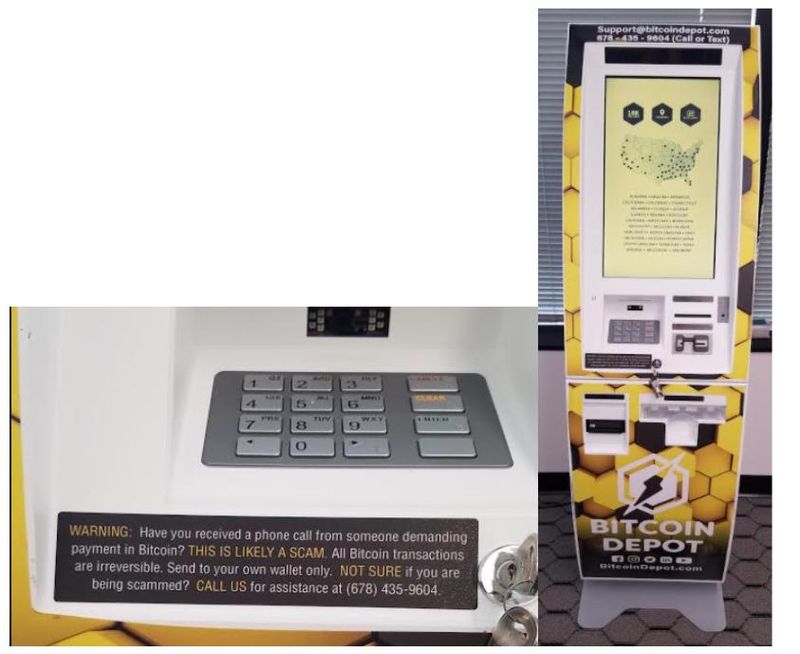
Bitcoin Depot has an ATM at Buffalo Wild Wings in St. Clair Shores on Harper Avenue, where the elderly consumer reported losing $20,000. Bitcoin Depot has 10 locations in Warren, six in Troy, six in Ann Arbor and two in Hamtramck, according to its website, as well as other locations in Michigan.
I visited the Buffalo Wild Wings in St. Clair Shores on June 28, long after the $20,000 scam took place.
That day, I spotted a permanent label on the Bitcoin Depot ATM attached above the keypad on the kiosk that stated: “Warning: Have you received a phone call from someone demanding payment in bitcoin? This is likely a scam. All bitcoin transactions are irreversible. Send to your wallet only.”
I’m not sure how well you’d see the warning, though, especially if scammers had you feeling fearful that you’re about to be arrested or that you had to act quickly to claim a prize.
It’s far easier to spot the Bitcoin Depot tagline on the screen that states: “Bringing Bitcoin to the Masses.”
LibertyX, which launched a bitcoin ATM in 2013, has bitcoin ATMs in some Costco stores, Speedway gas stations, BP stations, Kroger supermarkets, Walgreens, CVS stores and elsewhere in Michigan and across the country, according to its website.
LibertyX now allows consumers to use their debit card to buy bitcoin from an ATM in many locations. “No wasted time inserting bills or worrying about large amounts of cash.”
Theoretically, I guess potential scam victims wouldn’t even have to stop at the bank to get cash before they get scammed, if they can use a debit card.
LibertyX did not respond to questions from the Detroit Free Press.
Consumers lost $66 million to crypto ATM fraud in the first six months of 2024, according to the Federal Trade Commission. The actual number is likely higher as such types of fraud often go unreported, according to the FTC. The FTC said the losses involving these ATMs increased dramatically from $12 million in 2020 to $114 million for all of 2023.
Based on FBI data, consumers filed 10,956 complaints about crypto kiosk-related scams and reported that $246.7 million was stolen in 2024.
Those older than 60 reported losing $107.2 million via these ATMs or kiosks — or nearly 43.5% of the reported losses, according to the FBI Internet Crime Report.
AARP favors crypto ATM regulations in general that include:
Often, new state regulations call for cryptocurrency operators to refund transaction fees, as well as the dollars transferred to scammers. Victims would need to contact kiosk operators, as well as law enforcement within a set time frame under the law to ask for a refund.
Daily transaction caps, AARP advocates said, put a limit on how much consumers can lose potentially, as well as limiting the liability that cryptocurrency ATM operators would face in the event that money lost to fraud must be refunded.
Bitcoin companies explain what they’re doing
Not surprisingly, big players in the crypto ATM industry often fight what some view as overreaching regulations, including daily limits on how much cash can be converted into crypto in a single day.
“While we support responsible legislation, overly restrictive transaction caps can have unintended consequences, such as prompting individuals with fraudulent intent or involved in scams to structure transactions just below the threshold, making suspicious activity more difficult to identify and prevent,” according to a statement a Bitcoin Depot spokesperson emailed to the Detroit Free Press.
According to Bitcoin Depot, the company’s ATMs have “up to nine real-time scam warnings before a transaction is completed.”
“To further protect our users, we provide 24/7 live customer support and actively work with law enforcement to investigate scams and issue refunds when possible,” according to the statement.
The Bitcoin Depot spokesperson said a typical kiosk transaction is about $200, often used for remittances, online purchases, or small investments.
Bitcoin Depot lists its fees online, including a $3 flat fee per transaction, plus a spread on the exchange rate. “Charges apply to all purchases, regardless of where the bitcoin is sent, because the service is completed at the point of sale,” according to a spokesperson.
“During the transaction, customers must confirm they are sending bitcoin to their own wallet, and not the wallet of someone else,” the spokesperson said.
Bitcoin Depot says it already works with law enforcement “utilizing blockchain analytics to support investigations into scams and assist in efforts to recover funds through the legal process when possible.”
Yet, the push for more restrictions seems to be only building in 2025.
Crypto ATM abuse has gotten so bad that a top Democratic senator introduced a bill in Congress in February that would protect new customers who are most likely to be fraud victims by setting transaction limits of $2,000 per day, and $10,000 total over the first 14 days.
The Crypto ATM Fraud Protection Act — introduced by Illinois Sen. Dick Durbin, ranking member of the Senate Judiciary Committee — would require full refunds for fraudulent transactions at crypto ATMs if the new customer makes a report within 30 days.
It would be required that the ATM offer a way for consumers to give live, verbal confirmation for any transaction greater than $500.
Would such regulation slam the brakes completely on this type of fraud? I doubt it. But it would no doubt protect many consumers from losing a huge chunk of their life savings.
Scammers just have it too easy otherwise scamming the masses by directing potential victims to a crypto ATM in their neighborhood.
Contact personal finance columnist Susan Tompor: stompor@freepress.com. Follow her on X @tompor.
This article originally appeared on Detroit Free Press: Grosse Pointe Farms wants bitcoin ATM crackdown after scam surge
Reporting by Susan Tompor, Detroit Free Press / Detroit Free Press
USA TODAY Network via Reuters Connect