

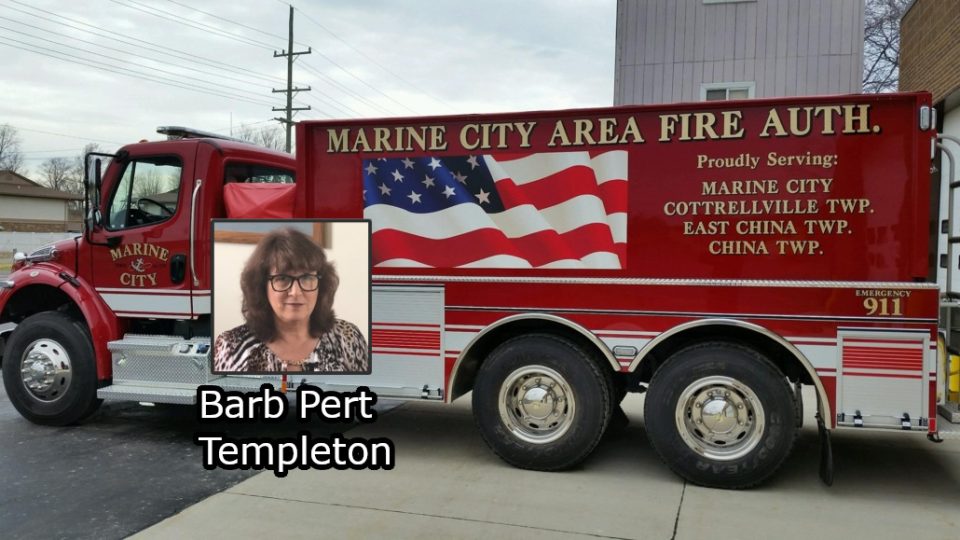
He’s been a trained firefighter and EMT
By Barb Pert Templeton

After working as a municipal administrator for decades, Scott Adkins has certainly logged his time behind a desk. So, it’s an interesting surprise to discover that when he began his career 40 years ago it was as a firefighter and EMT.
“I actually became a paid-on call firefighter in December 1985 and EMT in June 1986, so helping serve Marine City now was a natural fit,” Adkins said.

There’s no doubt Adkins has had an impressive run as an administrator. He spent 11 years as the city manager in Roseville, five years as the superintendent for the City of St. Clair and nearly 18-months as the city manager in Marine City, where today he’s a part-time administrative consultant.
Embracing what most would call an unconventional retirement Adkins was also recently named an arson investigator for the cities of Marine City and St. Clair. He completed training at the State Police Arson Academy and in his “spare” time is also training to be a pump operator for the Marine City Fire Department.
Blue Water Healthy Living caught up with Adkins to pose some additional questions about his firefighting history.
Blue Water Healthy Living: How did these new ‘fire” related titles come about?
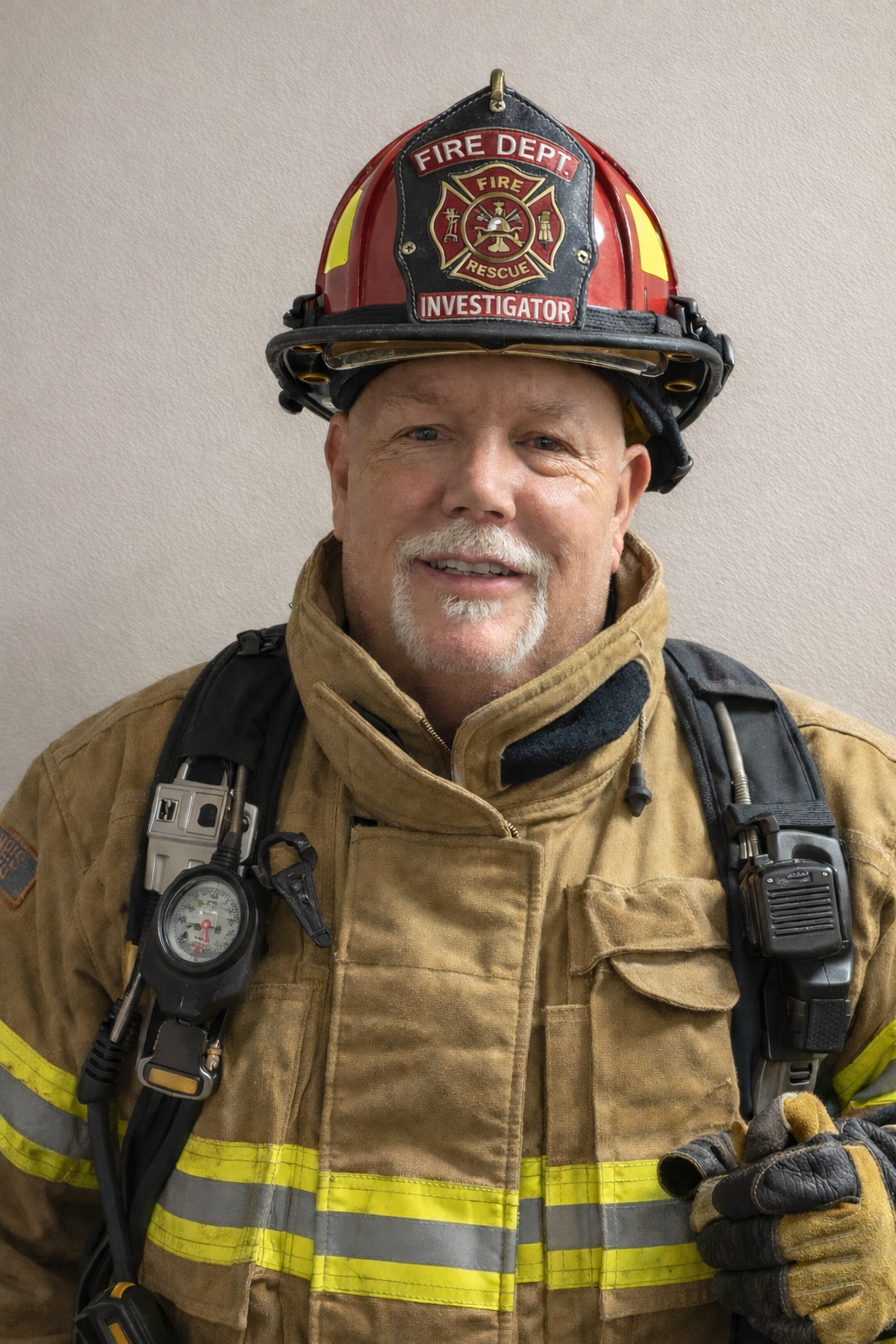
Scott Adkins, the former Marine City manager and current administrative consultant for the city, will now also serve as an arson investigator for the city’s fire department.
Marine City Arson Investigator Scott Adkins: I am a state certified Fire Fighter I and II, Fire Officer I & II, Fire Investigator and just completed Fire Instructor I training. I was also previously an EMT and will be looking to return to the EMS side of things in the future. In addition, I have numerous certifications and training courses in Emergency and Incident Management and other Public Safety topics. I also have a master’s degree in technology, which included core studies in Public Administration, Land Use Planning and Public Safety Administration. I now get to add Fire Investigator to that list.
BWHL: Can you share a little about your time at the State Police Arson Academy?
Adkins: This was a Michigan State Police training program consisting of two weeks of classroom lecture and practical (in the field) training. This class was limited to 20 attendees, so I was required to apply to be considered and accepted for participation. Selection was based on previous experience as well as several minimum participant qualifications and prerequisites. The class was held at the MSP Post/Sixth District Headquarters in Grand Rapids. The class participants consisted of a mix of fire fighters, fire inspectors, police officers, detectives and three General Motors automotive engineers. It was truly one of the most detailed but most rewarding courses that I have taken.
BWHL: What was the training like? How many hours/weeks?
Adkins: As being tied to National Codes and Standards and having very strict attendance, homework, and other requirements, you needed to remain sharp, committed and certainly on your toes. This certification also requires continuing education and training annually to remain proficient and current on codes, regulations, and tactics.
BWHL: What was the biggest challenge for you?
Adkins: I think that the biggest challenge was being an adult learner that has been out of such a structured classroom environment like this for a few years. I had to adjust to address eight daily hours of classroom and field work and nearly another four hours or more of assignments and studying each night and across a weekend to successfully pass a National Pro Board-Certified course. This was not only a challenge, but also still needing to balance family, life and yes still getting work done for the city that was needed, even while away.
BWHL: What was the most interesting aspect of arson investigation for you?
Adkins: Arson investigation is really a science, and I have always been intrigued by methods and theories of how things work and how they are what they are. I also have always had a spark for continued learning, and this made the program both a challenge but also an opportunity.
“I actually became a paid-on call firefighter in December 1985 and EMT in June 1986, so helping serve Marine City now was a natural fit.”
Marine City Arson Investigator Scott Adkins
BWHL: Are you considered freelance or part-time as the arson investigator for Marine City?
Adkins: I am a member of both the Marine City and St Clair Area Fire Departments in a paid-on-call capacity as a fire fighter as well as fire investigator. I have already been involved in several investigations for both departments and look forward to continuing to serve both communities. I am also looking forward to sharing my experience and skills by mentoring and coaching members of both departments as well as other departments nearby, especially those new to the profession. Giving back is something that I have always done and it allows me to help make our communities safer.
BWHL: Does an arson investigator wear a uniform and carry a badge?
Adkins: We wear the same type of uniform as all other members of the fire departments, but being a fire investigator does require the addition of specialized equipment and supplies to perform the job. Both departments provide some of those items, but I also purchase quite a bit on my own as well.
BWHL: Can you give an example of what might prompt an arson investigator at the scene of a fire in Marine City? (Or is that something that’s always part of the aftermath of a fire or?)
Adkins: All fire scenes and most other emergency scenes require some type of investigation to sort out what the underlying circumstances that created the situation or incident. In Fire/Arson Investigations, it is to determine the origin of the fire and then what the likely cause was. It is really a systematic process based on the Scientific Method in an effort answer many questions.
BWHL: The Marine City Fire Chief (Joseph Slankster) also mentioned that you’re being trained to operate the pump on the city fire truck – what’s that like?
Adkins: I have had many years of experience driving and operating various types of fire apparatus and emergency vehicles. Although all fire equipment has the same basic operational process, there are some differences from manufacturer to manufacturer, but it is really like riding a bike, you never really forget the basics, you just need to adapt to department standards and operations. I have been able to do this in both Marine City and St Clair and keeping up to date on technology is always a benefit.
BWHL: Do others seem surprised to discover you are a trained firefighter and investigator?
Adkins: You would be shocked at how many people are surprised when they find out that I was a firefighter long before I was a city administrator. This background was always helpful in my professional career too by knowing what it is like being outside city hall performing this work. It makes me feel proud that my sons have followed in the footsteps of their dad in public safety service too.
