

By Erin Fanning

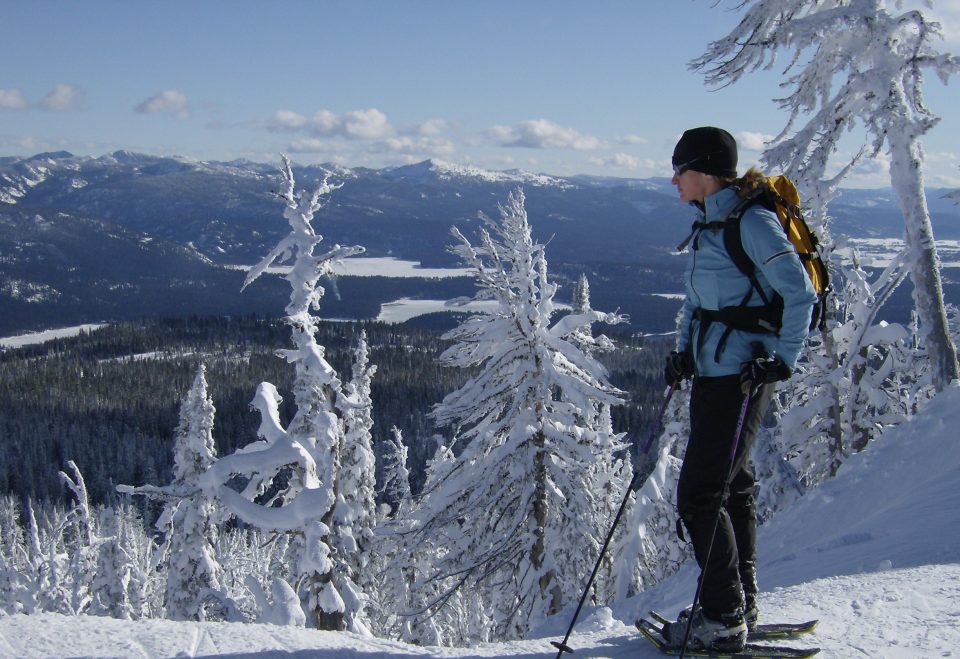
Decorating the walls of lakeside cottages and mountain retreats, old snowshoes are today’s designer chic. Oversized and heavy, these antiques look clumsy, better suited as art than as a mode of transportation. Their 21st-century cousins, however, sport high-tech materials, perfect for long days of exploring snow-shrouded forests or running on groomed pathways.
Sleek and light, modern snowshoes fall into roughly three categories. The first, mountaineering, offer a larger footprint, beefier cleats, and better flotation–the ability to stay on top of snow. They are best suited for those seeking a rugged adventure–breaking trail in the backcountry or climbing mountains.

Recreational, the second category, are geared for snowshoers who occasionally break trail but also like to explore groomed paths. Smaller than mountaineering models and easier to maneuver, these shoes are adequate for light backcountry travel and winter camping. Within this group there are also a range of options from less expensive models for flat terrain to the more expensive, which are appropriate for steeper climbs and include better bindings.
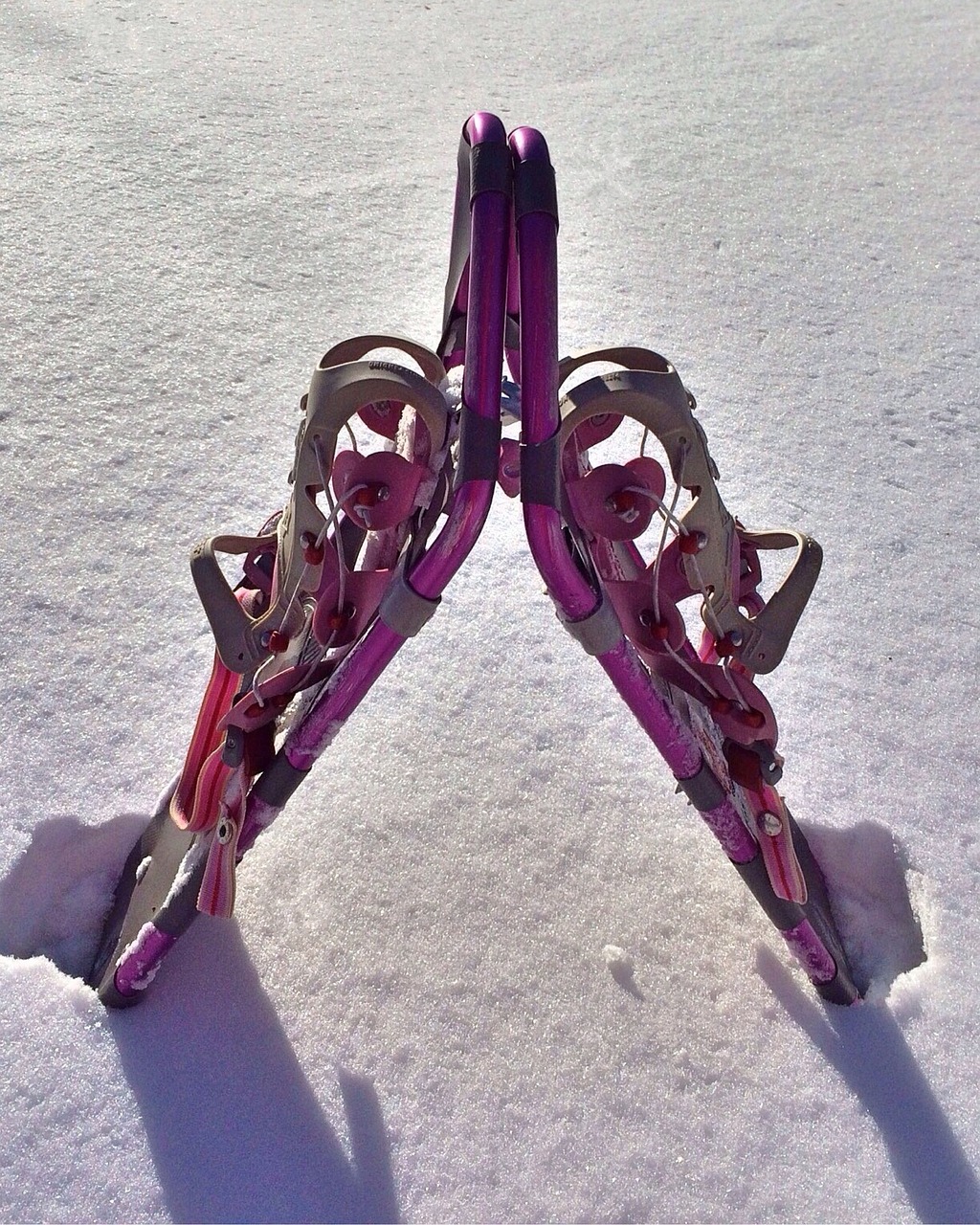
Running or sport snowshoes make up the final category. Smaller and lighter than the other two types, they equip runners for cold-weather jogging on groomed pathways. Unlike the snowshoes in the first two categories, the sport models have an asymmetrical pattern, allowing runners to place their feet without one shoe hitting the other. Regular snowshoes, because they are designed for maximum flotation, sometimes bump into each other, forcing snowshoers to walk with their legs slightly apart.
Once you’ve decided how you’ll use the snowshoes, consider what type of conditions you’ll encounter. Do you plan to snowshoe only on groomed paths or sometimes break trail? Will the snow be light and fluffy or wet and soggy? Will your explorations include rugged terrain or backpacking?
It’s impossible, however, to find the perfect snowshoe for every condition and terrain. But you should be able to buy a pair that suits your needs most of the time.
There is also a certain amount of overlap between the different categories. For example, though they might feel clunky, mountaineering snowshoes can be used on groomed trails, and very small people might discover that jogging snowshoes work well for them in a variety of conditions. There are even snowshoes designed specifically for a woman’s stride and smaller foot.
When you are ready to buy, visit an outdoor store with specialized knowledge. There are many excellent manufacturers, and a good salesperson can point out the positive and negative aspects of different brands.
You’ll also want to buy the smallest snowshoe possible for your weight and frame. The smaller the shoe, the more maneuverability you gain. The shoe will also be lighter, making trudging through snow easier and more enjoyable.
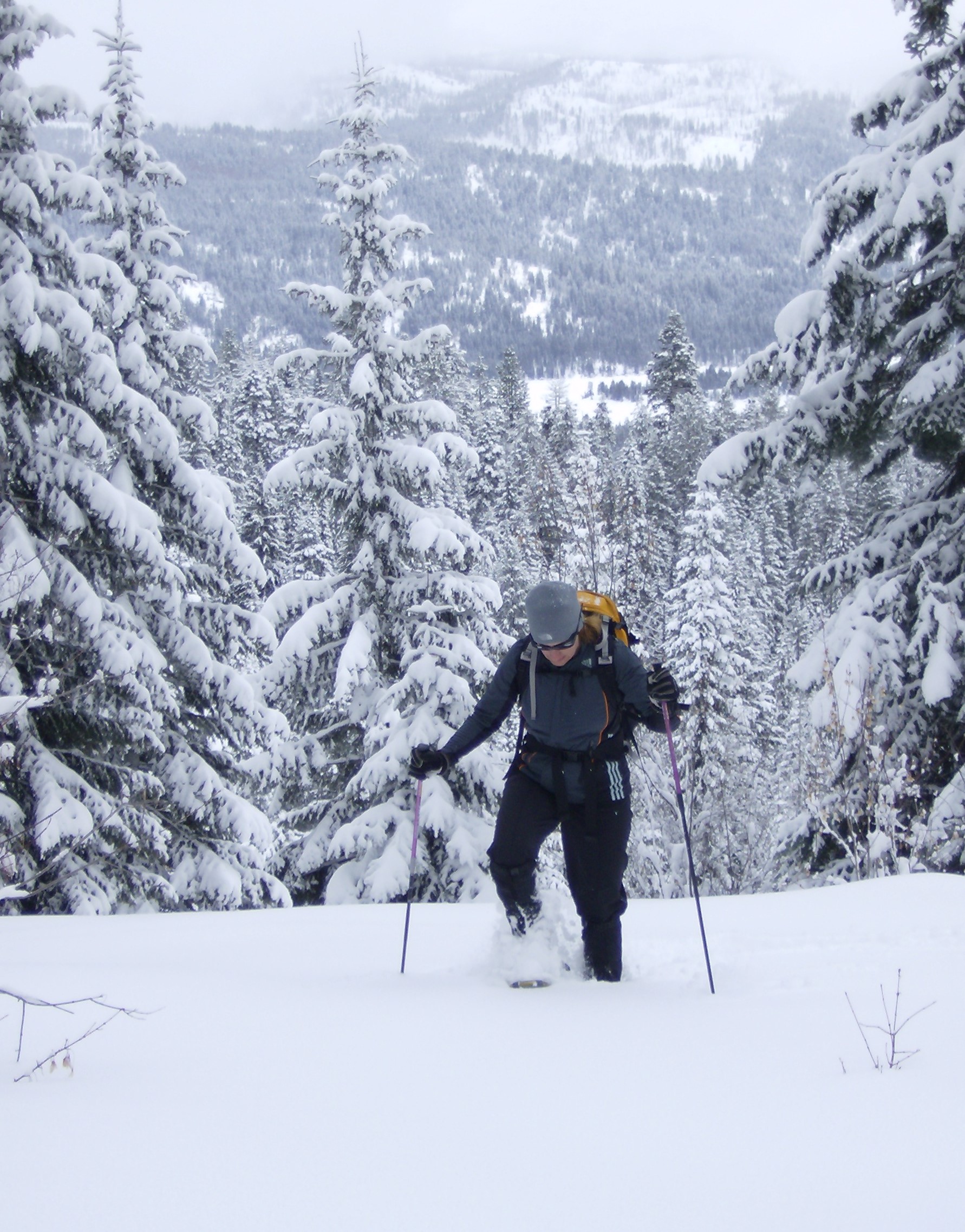
On the other hand, if a shoe is too small for your weight, then you’ll lose flotation. You should also take into consideration whether you’ll be carrying a backpack and how much it will weigh. Luckily, most manufacturers place the weight range for each model directly on the snowshoe, making this process a little easier.
While trying on the shoes, carefully examine the binding. Does it seem easy to get in and out of or will your fingers be frostbitten by the time it’s fastened? Is the strapping sturdy? Are you able to snug the binding so that your foot is tightly encased?
If possible, take the shoes outside to a snowy parking lot and see how they feel. At the very least, walk around in the store. Are you able to move with relative ease? Is the binding staying in place or does it seem to loosen easily?
You should also think about the type of boots you’ll wear with your snowshoes. A waterproof material is vital, and they should be as comfortable as hiking boots. It’s ideal if the boots have a small ledge in the back where the binding’s strap can rest, keeping it from slipping while you walk. Several manufacturers also design boots specifically for snowshoeing.
Another accessory to consider is poles. Ski or hiking poles provide extra balance while ascending or descending a hill or simply working your way through deep snow.
Whether used for exploring a remote glacier or hiking around a snow-covered city park, it’s almost a guarantee that today’s snowshoes won’t become artwork for your wall anytime soon. You’ll be too busy using them.
