By Savyata Mishra
April 23 (Reuters) – Keurig Dr Pepper topped Wall Street estimates for first-quarter sales and profit on Thursday and stuck to its annual forecasts, riding on resilient demand for its beverages amid a drag from its coffee business.

The company’s net sales rose to $3.98 billion for the quarter ended March 31, beating analysts’ estimates of $3.84 billion, according to data compiled by LSEG.
Adjusted profit at 39 cents per share also topped expectations of 37 cents.
Shares of the company were up about 4% in early trading.
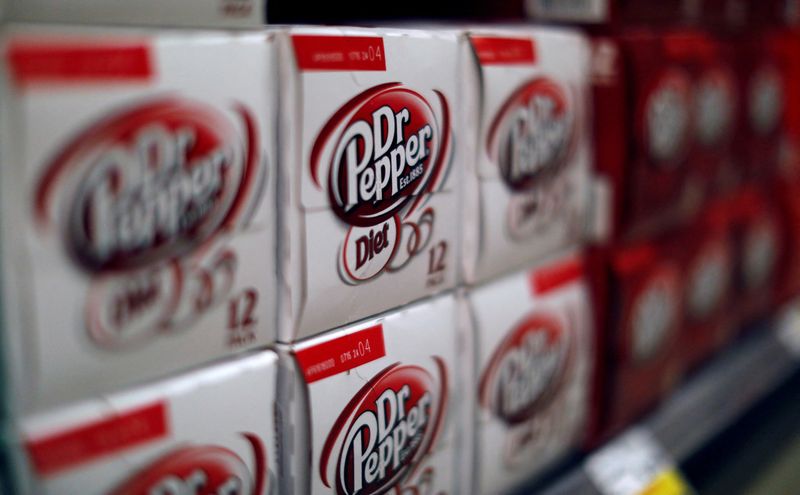
Sales jumped about 12% in its U.S. beverage unit, driven by price hikes and robust demand for core brands such as Dr Pepper, Snapple and 7UP, as well as steady gains from energy drink brand Ghost and partner brand Electrolit.
The strength in beverages helped counter a softer quarter for its coffee business, where weaker at-home demand, retailer stock reductions and higher costs weighed on margins.
Keurig Dr Pepper said its gross margin fell to 52.8% from 54.6% a year earlier.
Executives said the company has indirect exposure to higher packaging, fuel and freight costs tied to the Middle East conflict but is largely hedged for 2026. The company will take action to protect margins if elevated costs persist, they added.
The company on April 1 completed its roughly $18 billion takeover of Dutch coffee and tea giant JDE Peet’s and investors are tracking the planned split of its beverage and global coffee businesses by the end of 2026.
The company’s stock has lost about 24% of its value since announcing the JDE Peet’s deal in August, which analysts have said reflects investor unease around the size and complexity of the acquisition and the planned split.
The quarter also comes as packaged food and beverage companies have leaned more heavily on price increases to protect margins, even as inflation-weary shoppers turn more selective in their spending.
The company stuck to its 2026 net sales forecast range of $25.9 billion to $26.4 billion, and low-double-digit adjusted profit growth.
(Reporting by Savyata Mishra in Bengaluru; Editing by Sriraj Kalluvila)