BEIJING, April 23 (Reuters) – From robotaxis to flying cars, China is on the road to bringing more of its cutting-edge vehicle technology overseas – a strategy that reflects both its global ambition and hard economic realities.
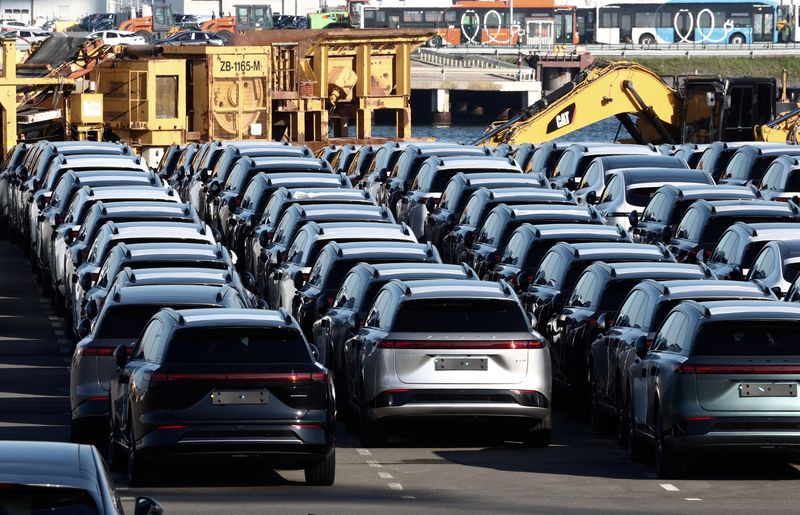
The world’s second-largest economy is also home to the world’s biggest and most advanced car market. But a brutal, multi-year price war has left the country filled to the brim with vehicles, including electric vehicles pumped out by scores of companies that are unknown in the West.

China’s car sales fell 18% in the first quarter from a year earlier and are expected to remain flat or down for the foreseeable future. Going abroad, therefore, offers both the promise of higher margins and a meaningful growth in sales volume, analysts and industry watchers say.
While Chinese EVs are subject to tariffs in Europe, even with the levies they remain cost-competitive in continental markets. And at the moment, the U.S. is closed to Chinese cars, although that may not always be the case.
“They’ve reached a point where they know it’s not just about China,” said Pedro Pacheco, an analyst at research firm Gartner, speaking about Chinese automakers.
“They also need a roadmap to deploy technology in Europe, in Latin America, in Southeast Asia.”
China exported 5.8 million cars last year, an increase of almost 20% from a year earlier, according to industry data. Overall vehicle exports from China, including cars and commercial vehicles, are expected to grow 4% to 7.4 million this year, according to a forecast from the China Association of Automobile Manufacturers released on Thursday.
China’s annual auto show kicks off on Friday in Beijing, with the global growth outlook a key focus for the industry.
EV maker Xpeng expects to start large-scale production of its “flying” cars next year and of its humanoid robots in the fourth quarter of 2026, President Brian Gu told Reuters on Thursday.
Xpeng has received more than 7,000 orders for its flying cars, the majority of which are in China, where the company is working on obtaining approval from the country’s aviation authorities.
It also plans to start robotaxi tests in the southern city of Guangzhou this year, Gu said, adding that 2027 will be a “critical year” for “tests around the world with partners.”
Last year, Xpeng generated around 15% of its revenue from overseas sales. In the next five to 10 years, “more than 50% of the revenue should come from outside of China,” Gu said.
(Reporting by Qiaoyi Li and Nick Carey; Writing by David Dolan; Editing by Thomas Derpinghaus)