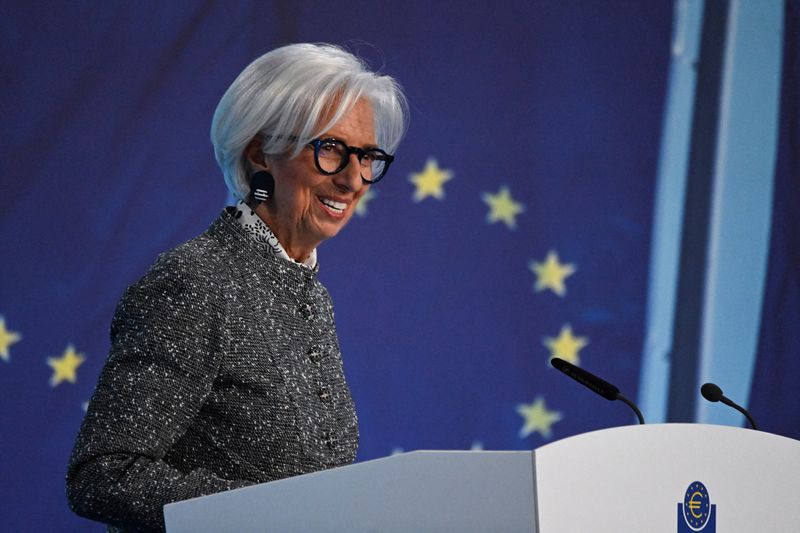
WASHINGTON, April 17 (Reuters) – The Iran war could drag euro zone growth lower and push inflation above already increased projections, requiring the European Central Bank to remain vigilant, ECB President Christine Lagarde said on Friday.
ECB policymakers have been debating whether to raise interest rates to prevent the energy-driven inflation shock from setting off an inflation spiral, but signals suggest action is not seen as urgent for now.

“The war in the Middle East has made the outlook significantly more uncertain, creating upside risks for inflation and downside risks for economic growth,” Lagarde told the IMF’s International Monetary and Financial Committee.
“It will have a material impact on near-term inflation through higher energy prices,” Lagarde said in comments that largely mirror her statement after the central bank’s policy meeting last month.
Markets have mostly priced out an interest rate hike in April but still see a move around mid-year, while a second hike at the end of the year is almost fully priced in.
Lagarde added that growth is also facing a drag from tighter global financial conditions, trade frictions and other geopolitical tensions, including Russia’s war in Ukraine.
However, she sent no fresh signals about policy, repeating her mantra that decisions are taken on a meeting-by-meeting basis and are based on incoming data, and the ECB was not pre-committing to any particular policy path.
“We are closely monitoring the situation, and the incoming information in the period ahead will help us assess the impact of the war on the inflation outlook,” Lagarde said.
(Reporting by Balazs Koranyi; Editing by Paul Simao)