

By Maria Martinez
BERLIN, June 16 (Reuters) – Germany’s economy is expected to grow by 0.8% in both 2026 and 2027, as resilient industrial activity offsets only part of the drag from higher energy prices linked to the Iran war, the RWI economic institute said on Tuesday.

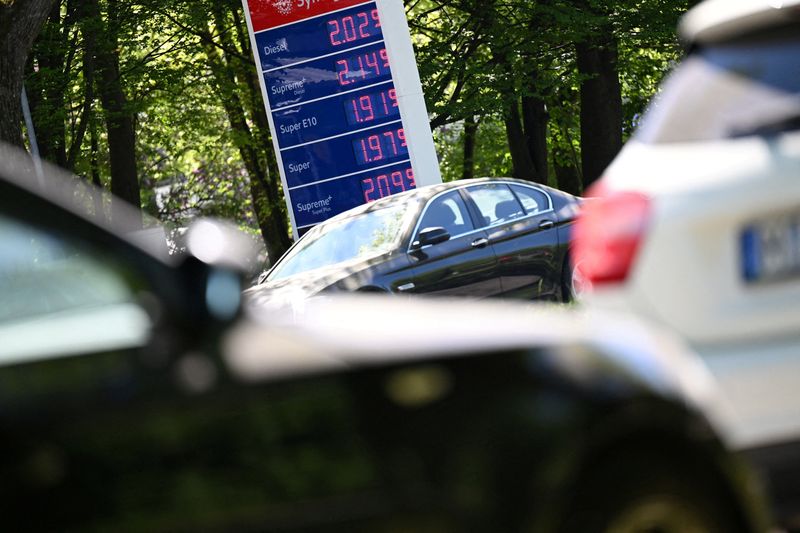
The institute said it had lowered its expectations for the recovery, with rising oil, fuel and transport costs increasingly feeding through to broader parts of the economy.
It forecast consumer price inflation of 3.1% in 2026 and 2.9% in 2027.
“The current inflation surge is not limited to fuel and energy,” RWI chief economist Torsten Schmidt said. “Higher costs are increasingly working their way through value chains and will become visible in more and more goods and services.”
RWI said private consumption was likely to remain weak as persistent inflation erodes household purchasing power, and it expects the economy to stagnate in the second quarter of 2026.
On the other hand, the institute said German industry had so far proved more robust than expected, with output, orders and exports rising in the first quarter.
Industry should continue to benefit from stronger exports and higher public investment, though elevated energy costs would weigh over time, RWI said.
(Reporting by Maria Martinez, Editing by Miranda Murray)
By Maria Martinez | Reuters | © Copyright Thomson Reuters 2026.
