

By Dietrich Knauth
NEW YORK, July 29 (Reuters) – After years of failed attempts to resolve thousands of lawsuits alleging that its talc products caused cancer, Johnson & Johnson says it has reached a settlement, worth at least $5.5 billion, that could finally help bring an end to litigation that has dogged the company for over a decade.

WHAT IS THE TALC LITIGATION ABOUT?
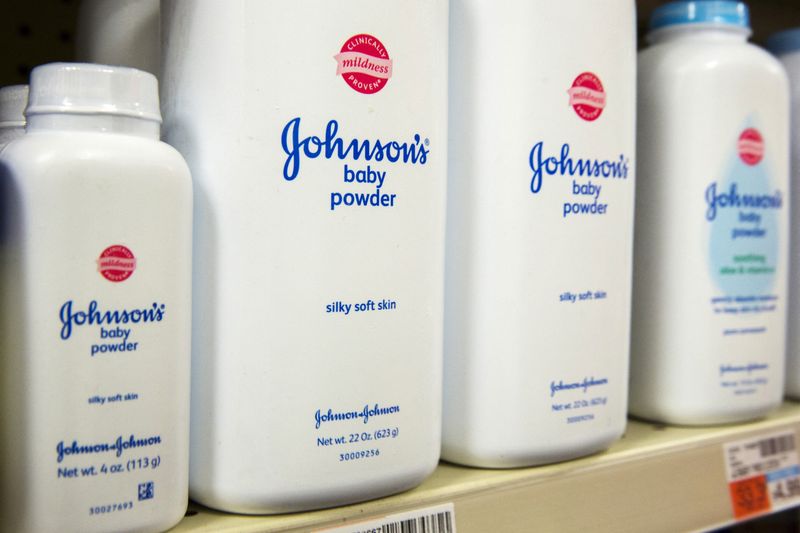
Tens of thousands of people have sued J&J in federal and state courts, alleging that its talc-based baby powder and other products caused ovarian cancer.
J&J has long denied the allegations, arguing that decades of scientific testing show its talc products are safe and do not cause cancer.
Results at trial have been mixed: J&J won several cases, but the litigation has also produced billions of dollars in verdicts, settlements and legal costs over more than a decade.
WHAT MUST HAPPEN FOR THE SETTLEMENT TO TAKE EFFECT?
J&J says the settlement will move forward only if the deal is accepted by enough people to cover 95% of the estimated 76,000 ovarian cancer claims. That could happen in a few months, according to a plaintiffs’ lawyer who supports the deal.
HOW HAS J&J TRIED TO RESOLVE THE LITIGATION IN THE PAST?
J&J previously tried three times to end the talc litigation through bankruptcy. In each case, it created a new subsidiary, transferred talc liabilities to that company and then placed it into bankruptcy proceedings. Each bankruptcy was tossed out of court.
The bankruptcies were fiercely opposed by some plaintiffs’ lawyers, who argued that a financially healthy company such as J&J should not be able to use bankruptcy protections meant for businesses in financial distress.
A bankruptcy settlement, if it had been approved, would have bound people who did not agree to its terms and claims from people who develop cancer in the future.
HOW IS THIS SETTLEMENT DIFFERENT FROM THE PAST ATTEMPTS?
The new settlement does not attempt to bind unwilling participants or people who develop cancer in the future. It is a voluntary process that does not rely on a bankruptcy court’s approval.
It will pay claims much faster than the bankruptcy would have. Plaintiffs’ lawyers said the new deal will pay claims in full in less than two years, whereas the bankruptcy settlement would have paid out claims over 25 years.
IS THE SETTLEMENT LIKELY TO SUCCEED?
J&J and leading plaintiffs’ law firms – including firms that represent large numbers of plaintiffs with ovarian cancer claims and those that negotiated the deal – have expressed confidence that this deal will get across the finish line.
Some plaintiffs’ law firms said on Tuesday they are still reviewing the deal and deciding whether to recommend it to their clients.
J&J said plaintiffs are more likely to take the deal after a recent court ruling by a judge overseeing the federal talc cases. That ruling cast doubt on plaintiffs’ ability to prove their cases and highlighted tightening standards for the scientific evidence that can be admitted in court.
IF THE DEAL SUCCEEDS, WHAT LEGAL RISK IS J&J LEFT WITH?
The deal leaves J&J open to litigation from people who may develop ovarian cancer and who decide to sue J&J in the future. Ovarian cancer can have a latency period of decades, representing the time gap between when a person is exposed to a harmful substance and when cancer symptoms start or the disease is detected.
J&J previously said that bankruptcy was the only way to resolve the cases, because the company needed certainty about the future claims as well as the current claims.
(Reporting by Dietrich Knauth, Editing by Alexia Garamfalvi and Bill Berkrot)
By Dietrich Knauth | Reuters | © Copyright Thomson Reuters 2026.
