

By Siddarth S and Johann M Cherian
July 27 (Reuters) – Emerging economies already strained by the Middle East conflict face a new threat: a potentially powerful El Niño that could push up food prices and slow growth.

The U.S. National Oceanic and Atmospheric Administration is forecasting an 81% chance of a very strong El Niño through October-December period, potentially placing it among the most powerful events on record since 1950 and dubbed by markets as “super El Niño”.
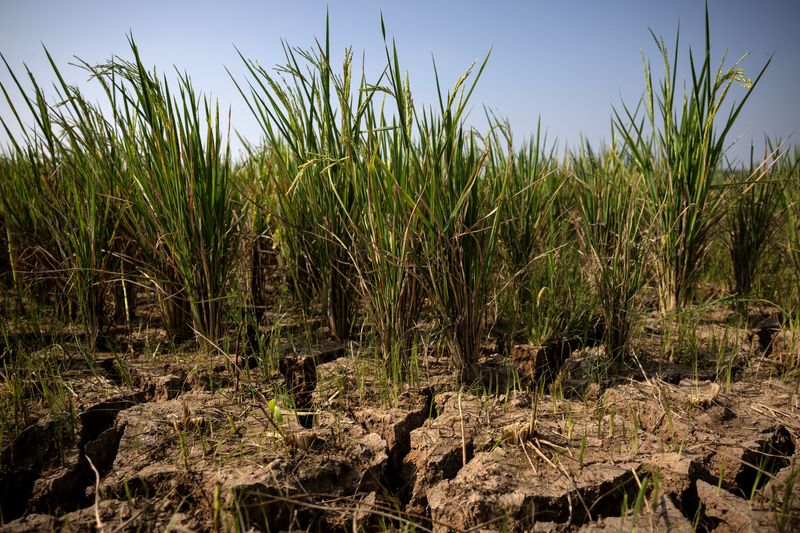
The weather phenomenon, which typically occurs every two to seven years, is likely to bring drought to parts of Asia and heavy rains to parts of South America, threatening harvests and food supplies.
Emerging markets are particularly vulnerable as households spend a larger share of their income on food, and agriculture plays a big role in their economies, raising the risk that central banks will have to keep policy tighter for longer.
“We came into this year with many central banks thinking they had space to cut. And now we see central banks stopping cutting, and some of them are hiking,” said Gillian Edgeworth, a fixed income portfolio manager at Wellington Management.
“I don’t think we’re moving to a world where there’s rapid rate cuts in emerging markets in the second half of the year.”
Here are some key countries and regions affected:
INDIA BRACES FOR WEAK MONSOON
The world’s most populous country is among the most exposed because it depends heavily on the annual monsoon, which typically delivers nearly 70% of the country’s rainfall.
India’s Meteorological Department has warned rainfall could be the lowest in more than a decade, threatening crop yields and raising the risk of higher food prices.
India is the world’s largest rice exporter and second-largest sugar producer. The country has often proved resilient to El Niño episodes thanks to larger food stockpiles. However, with inflation above the central bank’s 4% target, analysts say a “super” El Nino could force it to tighten monetary policy.
ASIA FEELING THE HEAT
Higher energy and fertilizer costs are weighing on external balances and economic growth across much of Asia, complicating central banks’ efforts to stabilize currencies and contain inflation.
Central banks in the Philippines, Indonesia, Korea, Pakistan and Sri Lanka have already hiked interest rates at least once this year. A severe El Niño could keep borrowing costs elevated across the region through the start of the following year.
“El Niño is just going to make inflation more sticky,” said Gary Tan, equity portfolio manager at Allspring Global Investments.
“People are forecasting rate hikes for the second half of the year, especially for the South Asian countries, which are kind of the most impacted by El Niño such as India, Indonesia, Vietnam, Thailand.”
Weaker currencies leave Asian economies more exposed to higher import costs should food and energy prices rise further.
Indonesia’s rupiah and India’s rupee are near record lows, while Thailand’s baht, South Korea’s won, Philippine’s peso and Sri Lanka’s rupee are on track for declines this year.
COLOMBIA, PERU IN FOCUS IN LATIN AMERICA
Colombia is among the Latin American economies most exposed to El Niño-related weather shocks, as below-average rainfall can hit food supply and electricity prices.
The country’s reliance on hydropower makes reservoir levels a key inflation indicator. Low water levels can force greater use of costlier thermal generation, pushing up electricity prices and inflation.
Analysts warn a severe El Niño could keep Colombian monetary policy restrictive for longer.
“Colombia is most exposed to higher food and energy inflation triggered by El Niño disruptions,” said Dan Pan, an economist at Standard Chartered.
“BanRep is currently facing the greatest challenge as El Niño fuels further inflation, in addition to the outsized minimum wage hike and higher oil prices.”
Peru’s central bank has warned that inflation could exceed its target this year and growth suffer, citing high oil prices and El Niño’s impact on fishing and agriculture.
Argentina, by contrast, may benefit from higher rainfall, which could support grain output, export revenues and foreign-exchange inflows. Central banks in Brazil, Mexico and Chile are expected to take a wait-and-see approach as they assess any impact on inflation and growth.
AFRICA AND EMERGING EUROPE
The impact across Africa is expected to vary widely.
A number of East and Southern African economies, including Kenya and South Africa, are vulnerable to weather-related disruptions to agricultural production, while drought conditions could strain food supplies, slow agricultural output and boost inflation.
South Africa’s central bank has repeatedly flagged El Niño as a potential inflation risk. Food prices were a key channel through which the last major El Niño fed into inflation.
However, the central bank surprised investors by keeping its interest rates unchanged in its July meeting, as opposed to market expectations of a 25 basis point rate hike.
Last month, ratings agency S&P Global warned that the credit profiles of some African sovereigns could come under pressure if climate-related shocks intensify and weigh on growth, public finances and external balances.
El Niño’s impact on central and eastern Europe has historically been relatively limited, with investors continuing to anticipate interest-rate cuts in Poland, Hungary and Romania this year.
(Reporting by Siddarth S and Johann M Cherian in Bengaluru; Editing by Karin Strohecker and Arun Koyyur)
By Siddarth S and Johann M Cherian | Reuters | © Copyright Thomson Reuters 2026.
