

By Manya Saini
June 17 (Reuters) – SPACs are making a comeback.

A flood of expected blockbuster IPOs this year is creating an opening for SPACs as smaller companies seek to capitalize on a favorable market without having to compete for investor attention against the likes of SpaceX, Anthropic and OpenAI.
That is giving blank-check companies renewed footing after years of upheaval, with a more mature SPAC market emerging at a time when mega-IPOs are expected to command an outsized share of investor capital and attention, analysts, market experts and industry insiders told Reuters.
“A parade of mega-IPOs could make life harder for smaller issuers with the giant names soaking up headlines, analyst attention, institutional bandwidth, and a meaningful share of available capital,” said Michael Ashley Schulman, a partner at financial advisers Cerity Partners. “A SPAC could open a quick side entrance.”
Special-purpose acquisition companies, or SPACs, allow companies to go public without raising fresh capital from investors. They had been written off after a pandemic-era boom during which hundreds of blank-check companies rushed to market. Many of those companies later struggled to find acquisition targets or delivered poor returns after completing mergers.
SPAC DEALS SURGE WITH BILLIONS READY
More SPAC deals are getting done. Globally, 44 SPAC mergers have been announced this year, worth $36.9 billion, up from 33 deals worth $15 billion at this point last year, Dealogic data showed.
And there is plenty of dry powder. As of June 17, some 359 SPACs are sitting on $56.8 billion in capital that has already been raised, and is just waiting to be deployed, according to data compiled by SPAC Research.
The transactions allow private companies to reach public markets by merging with a listed shell company rather than pursuing a traditional IPO. The most likely candidates for SPAC deals are energy, defense, critical minerals, nuclear, space, and crypto sectors, along with smaller international firms seeking access to U.S. capital markets, three experts said.
Elon Musk’s SpaceX kicked off the mega-IPO wave with a record-breaking IPO last week that valued it at roughly $1.8 trillion. AI rivals Anthropic and OpenAI have also confidentially filed for U.S. listings that are expected later this year, setting the stage for one of the busiest periods for marquee offerings in recent memory.
Michelle Gasaway, a partner at the capital markets practice of law firm Skadden, Arps, said there is more interest in SPAC transactions today than two years ago. She cited the flexibility in timing, and the ease in negotiating a valuation instead of chancing it with everyday investors on the public markets. That all makes it “appealing for companies that do not want to compete for attention in a crowded IPO market,” she said.
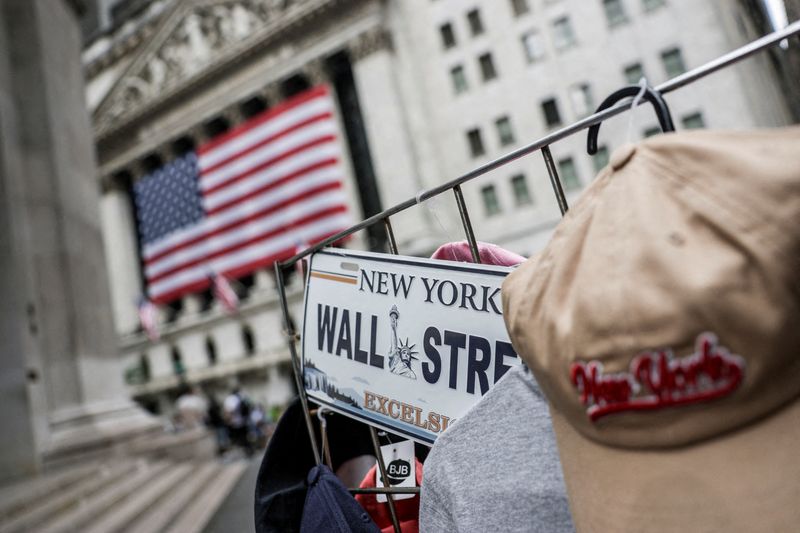
ALTERNATE ROUTE TO WALL STREET
As Wall Street prepares for some of the largest IPOs in history, market experts warn that some investors may wait on the sidelines for marquee offerings rather than allocate capital to smaller deals.
“I do expect some companies that may have considered a traditional IPO to look at a SPAC merger instead,” said IPOX Research Associate Lukas Muehlbauer.
“A major factor that favors SPACs is that there are still many vehicles out there that need to consummate transactions before liquidation, so there is capital looking for deals.”
U.S. SPAC issuance rebounded sharply in 2025, with 145 blank-check companies going public, the highest annual total since 2021, according to Dealogic data. Most of those vehicles have roughly two years to find acquisition targets before they must liquidate and return capital to investors.
Another 107 SPACs have listed on U.S. exchanges so far in 2026 through June 15, up sharply from 57 over the same period a year earlier, Dealogic data showed.
The resurgence has drawn prominent sponsors back to the market, including Chamath Palihapitiya, dubbed Wall Street’s “SPAC king” for his high-profile deals during the boom.
A banking industry source said discussions around potential SPAC mergers have grown markedly this year, as companies seeking valuations below $3 billion increasingly explored both SPACs and traditional IPOs as paths to going public.
To be sure, high redemption rates remain a potential obstacle, with some SPAC deals closing with proceeds below target as investors pull money from the SPAC’s trust account after a merger is announced.
TIMING ADVANTAGE DRAWS COMPANIES
For companies eying a stock market debut, favorable IPO conditions can prove fleeting, with sudden swings in markets capable of derailing offerings even late in the process.
“If sentiment is there, a SPAC can be a very efficient way to go public. It can happen in a matter of weeks, and you can raise capital in a matter of days,” said Dynamix CEO Andrejka Bernatova, who has raised about $630 million for SPACs.
Recent deals underscore the renewed activity. In March, Controlled Thermal Resources agreed to go public through a $4.7 billion SPAC merger, while Taiwanese battery maker ProLogium Technology struck a $3.8 billion blank-check deal.
“A SPAC is just a much more predictable manner to go public when the company is right and the market is there,” Bernatova said, adding that strong investor appetite in the IPO market can also improve broader sentiment for SPACs.
(Reporting by Manya Saini in Bengaluru; Editing by Dawn Kopecki and Matthew Lewis)
By Manya Saini | Reuters | © Copyright Thomson Reuters 2026.
