The second-most-popular United States pet has first-place status in many countries, including China, Russia and some European regions.
This pet is semi-domesticated because, until quite recently, domestication only had minor effects upon its wild-type genetics and phenotype (external appearance). Also, these critters easily return to feral status if abandoned or escaping to outdoor environments.

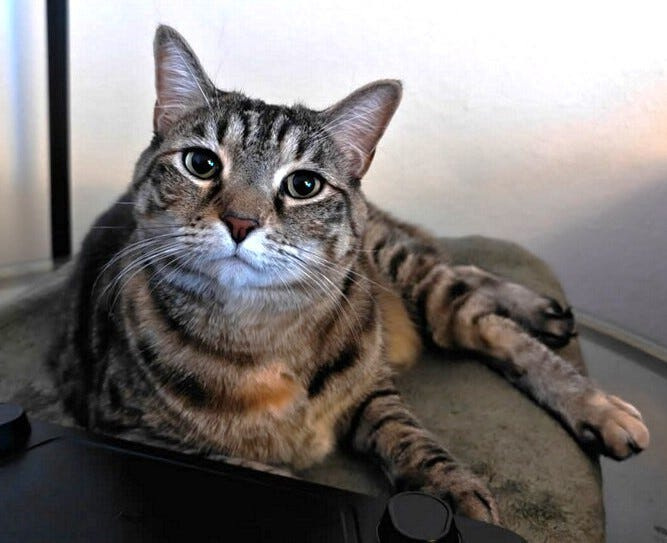
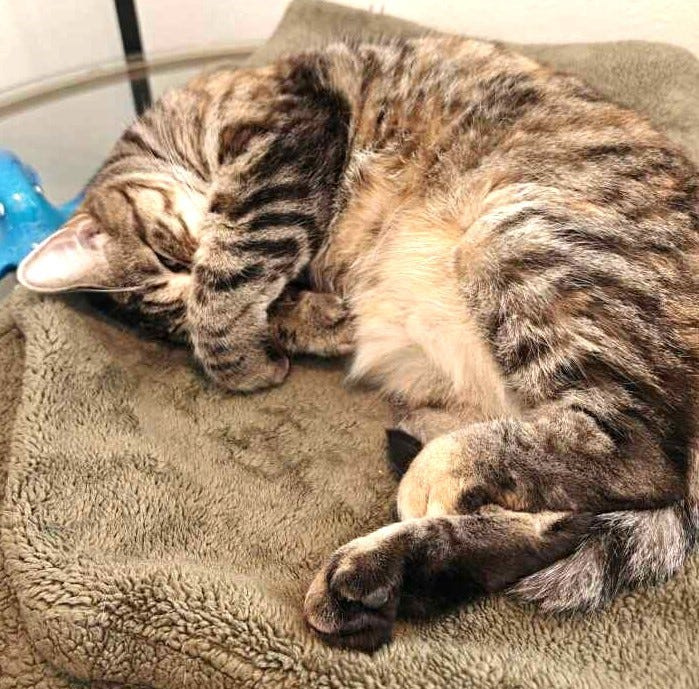
These interesting and somewhat independent pets are house cats (Felis catus).
House cats and African wildcats
The house cat’s ancestor is the extant African wildcat (Felis lybica). The original range of African wildcats included most of Africa excluding the interior Sahara Desert, the Near East, and western and central Asia. Habitat of natural F. lybica populations includes deserts, savannas, shrublands, grasslands, woodlands and other ecosystems.
Its external appearance closely resembles the tabby pattern of domesticated cats. Ear pinnae often have small terminal tufts, and the wildcat’s long tail usually has two or three dark bands near its terminal, black tip. The African wildcat has slightly longer legs than most house cats, a short coat and well-developed facial whiskers.
African wildcats and their domesticated counterparts have good olfactory senses and acute night vision conferred by a well-developed tapetum lucidum behind their retina. African wildcats and house cats usually hunt during crepuscular and nocturnal hours, and their excellent sense of hearing is keen enough to allow a stealthy stalk of prey in complete darkness.
These small felids are obligate carnivores with specialized teeth to accommodate a meat-based diet. Retractable claws on all feet facilitate stalking and capturing prey. House cats subdue prey via sharp canine teeth and, if necessary, by strangulation.
Common prey items include rodents, rabbits, birds, lizards, snakes, frogs, insects and other appropriately sized vertebrate and invertebrate animals. I’ve known several house and farm cats that regularly captured shrews but declined to consume these small, somewhat smelly insectivores.
Cats have excellent balance, quick reflexes and, if falling from a sufficient height, an almost legendary, remarkable “righting reflex” allowing the cat to usually land upon its feet. This righting ability is enhanced by sensitive, proprio-spatial, inner ear morphology, a flexible spine and reduced, non-anchored collar bones.
Cat fanciers
Cats voluntarily began domesticating themselves and associating with humans at least 10,000 years ago.
An approximately 7,500-year-old burial site containing human and cat remains was discovered on Cyprus Island and other ancient entombed or mummified cat remains have been discovered in the Fertile Crescent, Egypt, Eastern Europe and various Mediterranean locations.
Ancient Egyptians venerated cats as gods representing justice, fertility and power; whereas, later Christian groups often maligned house cats as witches’ familiars and evil portents. However, domesticated cats were effective rodent and vermin eliminators and were welcomed into human settlements.
Ancient Phoenician, Greek and Roman sailors also carried cats aboard their ships. These practices continue among communities and maritime businesses to the present day.
Because of ship-borne transport, house cats accompanied their commensal humans to almost all continents. Also, the original, extensive range of African wildcats facilitated multiple, transformative events, referred to as “mitochondrial Eve” events.
Breeds apart
However, similar to domesticated dogs — the most popular animal in the U.S. — and with a few exceptions, the house cat’s expansion into 45–75 currently recognized breeds didn’t begin until the 19th century. Also similar to the domesticated dog, ownership of the few distinctive, early cat breeds was restricted to royalty or wealthy individuals.
One interesting house cat breed is the Siamese. Siamese cats originated in Thailand and were exported to other regions as novelty pets. Siamese cats possess hair color patterns known as color-point pelage. The blue eyes and black tails, ears, faces, feet and lower legs of Siamese cats are a breed characteristic.
The remainder of the Siamese cat’s body is usually a solid, creamy white. Its body coloration is determined by a temperature sensitive gene. This gene produces melanin in hair follicles at the body’s slightly cooler extremities but is inhibited in the body’s warmer, central regions.
Siamese cats usually are more vocal than many other cat breeds, and their vocalizations have a raspy, lower-pitched yowling quality compared to other house cats.
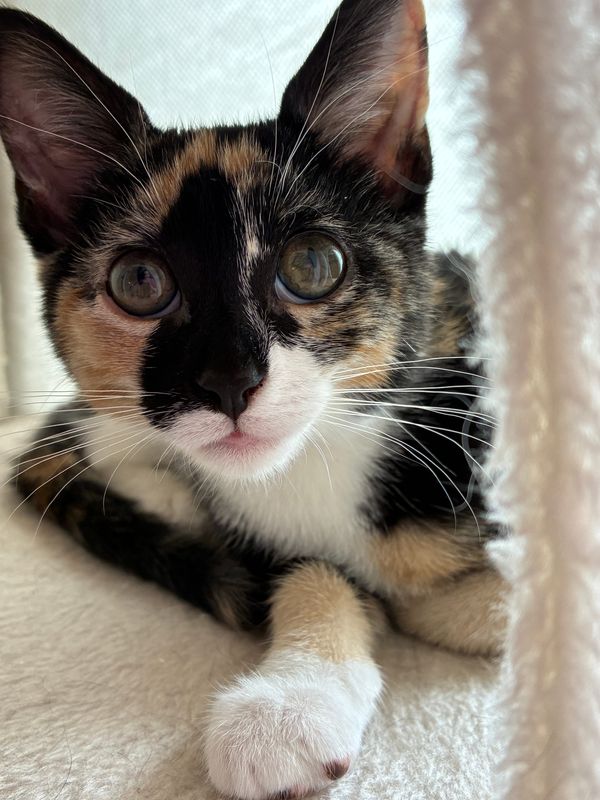
Another interesting house cat color pattern referred to as “tortoiseshell” and/or “calico” is not breed-specific, but it is determined by genes found on the house cat’s sex chromosomes. Genes determining whether cats possess black or orange hairs are located on separate X-chromosomes.
Therefore, the tri-color, mixed black, orange and white tortoiseshell and calico color patterns are found almost exclusively on female cats because females possess the double-X sex chromosome combination.
Male tortoiseshell and calico cats are very rare and occur because of a genetic non-disjunction resulting in a male cat with the rare sex chromosome combination of XXY.
Other natural genetic mutations have given rise to short-tailed cat breeds such as the Korean bobtail, Manx, Mekong bobtail and pixie-bob.
Purr-fectly adorable to cat lovers
House cats diligently groom and, if possible, bury their solid waste, thus, making cats good choices for indoor lives alongside humans. However, house cats are territorial. A group of cats (also known as a “clowder”) forms social hierarchies wherein new members must be accepted into the group.
House cats often engage in scent rubbing behaviors as social bonding signals between themselves and humans. A notable exception to the ideal feline pet position is physicians’ advice that mothers avoid contact with house cats as-much-as possible during pregnancy to avoid the risk of accidentally contracting tularemia.
Perhaps one reason humans love house cats is because of purring. Purring is accomplished via low frequency vibration of the cats’ vocal cords assisted by fibrous pads within vocal cord tissues. Purring seems to be involuntary and self-sustaining once initiated.
Purring is usually interpreted as signaling pleasure or contentment; however, house cats also purr whenever nervous or injured. Exact mechanisms and reasons for the house cat’s purr are still being investigated.
Our fastidious feline friends may not be first-place pets in the United States but, because of their engrained habits and hunting abilities, house cats are still admired and desirable pets and companions in homes and near farms and businesses.
Over 40 million United States homeowners think so!
Jim Goetze is a retired professor of biology and former chairperson of the Natural Sciences Department of Laredo College with an avid interest in all aspects of the natural world. He can be contacted at gonorthtxnature@gmail.com.
This article originally appeared on Wichita Falls Times Record News: Are these the purr-fect pets? | Opinion
Reporting by Jim Goetze, Wichita Falls Times Record News / Wichita Falls Times Record News
USA TODAY Network via Reuters Connect
By Jim Goetze, Wichita Falls Times Record News | USA TODAY Network