When we think about what shapes our health, we tend to think about eating better and getting more sleep and exercise. But healthy choices don’t occur in a vacuum.
From neighborhood layout to traffic patterns and nearby food options, the “built environment” influences how much we move, what we eat and what we’re exposed to. This matters because non-communicable chronic diseases like diabetes and respiratory and cardiovascular diseases are now the leading causes of death — and they are closely linked to our lifestyle patterns.

Three elements stand out.
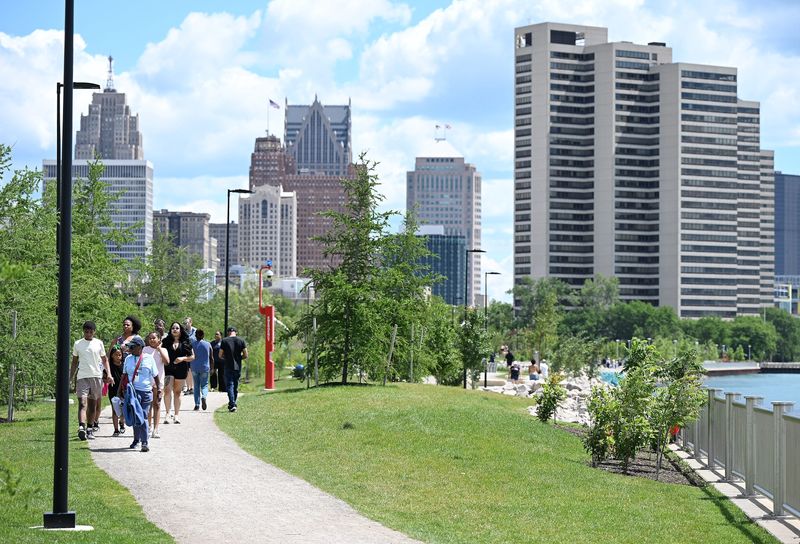
First, movement. Meeting basic physical activity guidelines — at least 150 minutes per week — is associated with a 20% to 30% drop in both all-cause mortality and depression risk. American life has become increasingly sedentary and car-dependent. How can we redesign the built environment to change that?
Amy Chesterton, an urban planner and partner at Rossetti in Detroit, has thought hard about this. She cites studies finding that people living in walkable environments add about 90 minutes of activity a week simply by going about their daily lives.
“It’s really about whether you can live your daily life without getting in your car for every single thing,” she says. The simplest lever is creating continuous sidewalks, but many cities treat the street itself as a substitute.
Parking requirements are, for Chesterton, the “third rail of development.” Parking minimums have led to an oversupply of spaces, which are expensive and spread destinations farther apart, discouraging walkable layouts and turning land that could be used for housing, trees or street-facing shops into seas of asphalt. Instituting parking maximums and zoning for mixed-use, she says, would start to put “more people, more shops, more services in the same area, and suddenly transit — and walking — start to become logical.”
On housing, she says, “the first health decision is where you site it: do residents have walkable access to everything they need for daily life?” This is especially consequential for seniors isolated in eldercare facilities and teens waiting at home for a ride. Reduced opportunities for social interaction are linked to mental health decline. We can’t “magically undo sprawl,” Chesterton observes, but mixed-use can put housing over shops and daily needs and recreation within walking or biking distance.
Environmental exposures are a second key health determinant. The built environment affects air quality through features like site density, road placement and zoning. High-traffic neighborhoods or those near industrial areas raise residents’ risk of respiratory and cardiovascular disease. Kids in these air-polluted areas face a higher asthma risk. A 2021 report found 14.8% of Detroit children had asthma, nearly double the statewide rate of 8.4%.
Indoor air pollution is another problem since people spend about 90% of their time inside. Poorly ventilated buildings trap pollutants like nitrogen dioxide, mold and gases released from paints and construction materials. Such pollutants may trigger respiratory and cardiovascular issues, headaches and other health problems. Healthier building standards and retrofits can help clean up indoor air.
Finally, the built environment influences diet and nutrition. Food quality and availability are shaped by zoning, land use, density, transportation and permitting, among other factors. According to Ashley Atkinson, co-director of the nonprofit Keep Growing Detroit, the question isn’t simply whether there is a grocery store nearby.
“It’s about how easy it is for food entrepreneurs to start and run businesses—and whether we are creating the conditions for local food systems to develop.”
Fostering urban agriculture is a key step, she says. “Gardening and farming have multiple health benefits — they help people eat more fruits and vegetables, get physical activity and connect with each other.” Detroit’s nearly 20 square miles of vacant land provide “a real opportunity to reimagine the city’s relationship with food altogether.”
It’s not just about removing barriers like regulations and penalties but about building a functioning system. She stresses the importance of treating food production, green space, housing and food commerce as integrated land uses — not “separate worlds.” The goal: “more ownership and capacity in the community to provide food in all its forms.”
With better planning, geography need not become health destiny. Simple regulatory fixes like streamlining permitting for small food businesses can be implemented immediately. In housing, authorizing Accessory Dwelling Units (ADUs) would reduce older adults’ isolation by allowing them to live close to family and friends. Reducing air pollution is a longer-term issue, but communities can start by reimagining zoning to increase walkability and reduce traffic.
“The solutions exist,” says Atkinson. “We just need the vision and the leadership to act.”
Kelly Rogers Victor, Ph.D., MPH, MPP is a writer and consultant on nutrition, health policy and public health. Her columns appear regularly in The Detroit News. Reach her at Kelly@upstreamhealthconsulting.com.
This article originally appeared on The Detroit News: Why your zip code determines your long-term health | Rogers Victor
Reporting by Kelly Rogers Victor / The Detroit News
USA TODAY Network via Reuters Connect
By Kelly Rogers Victor | USA TODAY Network