DETROIT ― The crowd wasn’t large ― a smattering of about 40 or so people at Detroit’s historic Palmer Park just north of downtown on a warm and muggy summer evening.
The people who did show up were there because they feared something precious could be lost: the relationships between therapists and the people who trust them with their deepest wounds.

This is what democracy often looks like. A tent. Some speakers. Livestreaming on social media. And waning sunlight seemingly trying to figure out whether to set in fiery red-orange or fade behind rainclouds.
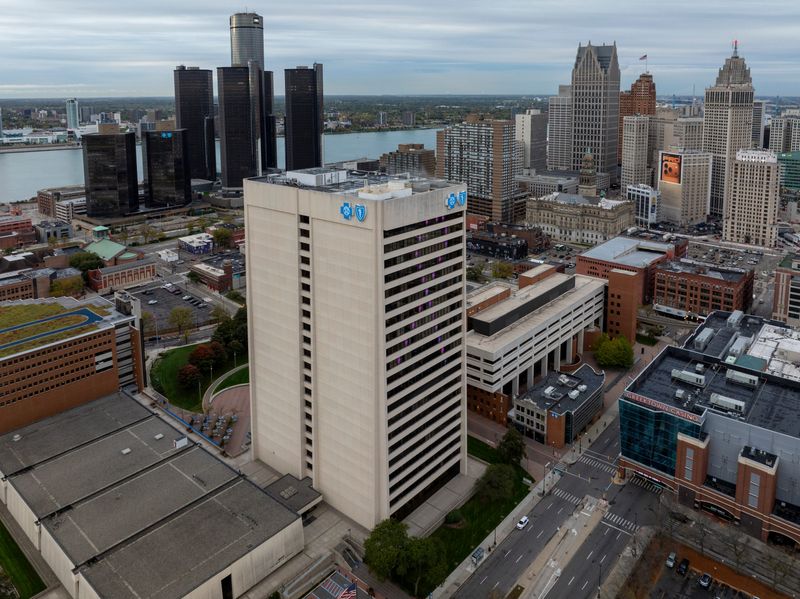
It was my pleasure to witness this moment firsthand because we live in a new era ― a period when the most powerful leaders in our government increasingly move to trample on our First Amendment rights. This was the second time within the past 30 days that I have found myself covering the debate surrounding Blue Cross Blue Shield of Michigan’s planned reimbursement policy changes affecting limited licensed mental health clinicians.
I’ve written previously about the policy itself. This time, though, something else captured my attention.
It was the people.
Last Friday night’s rally was organized by Caitlin Fleming, a mental health therapist and co-founder of Healer’s Choice, who demonstrated the kind of leadership that rarely makes headlines but often changes communities. She listened as much as she spoke. She created space for others to tell their stories. She reminded those gathered that advocacy is less about anger and more about refusing to become invisible.
At one point, Fleming shared that she lost her former husband to suicide.
Her words carried weight, especially because only days earlier I had written about losing my aunt Geraldine and how grief leaves permanent marks on those left behind. Mental illness, suicide and trauma are not abstract policy debates. Nearly every family carries a story. Every interruption in care has a human face.
That reality echoed through the entire evening.
Mars DeWitt, a limited licensed clinician who previously worked as a teacher, reminded us that change has happened before in Detroit. After addressing the audience, DeWitt told me that they watched the fight for teacher pay, recalling Detroit educators’ successful efforts to improve salaries. “So, I know it’s possible for therapists to fight back in a similar way.… Detroit is one of those inspiring cities in the world because we know how to fight back.”
Their words were less criticism than a declaration of home.
Congresswoman Rashida Tlaib, D-Detroit, connected the issue to another community she knows well: veterans.
“Every interruption in treatment increases the risk that a patient, including veterans, falls through the cracks,” she said. “Our veterans should not have to retell their trauma, rebuild our trust or start the therapeutic process from the beginning due to an insurance billing policy.”
Jess Riley of the National Association of Social Workers-Michigan added sobering context. Twenty-five Michigan counties have no psychiatrists. Ten neither have a psychiatrist or psychologist. The Upper Peninsula has no child psychiatrists and no pediatric psychiatric beds.
Whatever one’s position on reimbursement policy, those numbers reveal a behavioral work force already stretched dangerously thin.
Fleming also reminded the audience that communities of color are especially vulnerable to changes in insurance coverage policy because they understand what generational trauma in health care looks like. She cited historical abuses such as the Tuskegee Study of Untreated Syphilis. She emphasized that clinical supervision should not be a sign that therapists are somehow viewed as inadequate.
“We want people to be supervised not because they are not quality therapists; it’s the human experience. We should always be working in teams.
Notably, Fleming said Blue Cross Blue Shield of Michigan has not publicly released data estimating how many patients may lose access to their current therapists under the proposed policy. She said representatives from BCBS Michigan were invited to the forum but did not participate.
Regardless of where this debate ultimately ends, something encouraging happened last Friday evening.
Citizens assembled peacefully. They exercised their First Amendment rights. They shared data, personal stories and deeply held convictions. They urged elected officials to listen. They asked a powerful institution to explain itself.
That is not something to fear.
It is something to celebrate.
That’s because healthy democracies depend on citizens who care enough to show up – even if there are only 40 of them standing together in a Detroit park at the end of a long week, refusing to believe their voices don’t matter.
Byron McCauley is a regional columnist for USA Today Co. in Michigan. Email: bmccauley@usatodayco.com; call (513) 504-8915.
This article originally appeared on The Detroit News: A small group of citizens rally for mental health coverage in Detroit
Reporting by Byron McCauley / The Detroit News
USA TODAY Network via Reuters Connect
By Byron McCauley | USA TODAY Network