Nick Howland’s path to City Council president took him from the Chicago suburbs to Duke University to four years in the Navy and then into a career with defense and aerospace companies.
The turning point came in 2001 while he was pursuing an MBA at the University of Chicago and the 9/11 terrorist attacks shocked the nation.

“I watched my former destroyer shipmates and my boat teammates all prepare for war,” Howland said.
He dropped his plan to go into investment banking and opted instead for defense-related work that brought him to Jacksonville in 2007.
Stating July 1, he’ll have a year to bring those experiences to bear as City Council president, considered the second-most powerful position in City Hall besides the mayor.
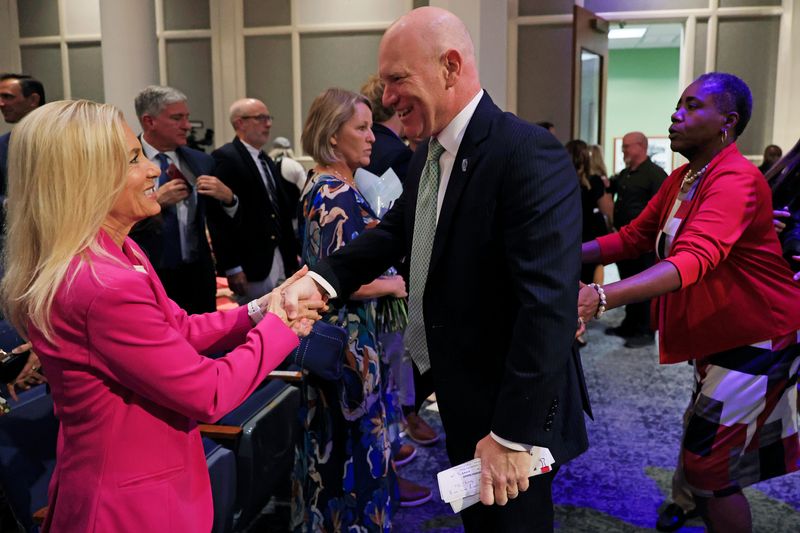
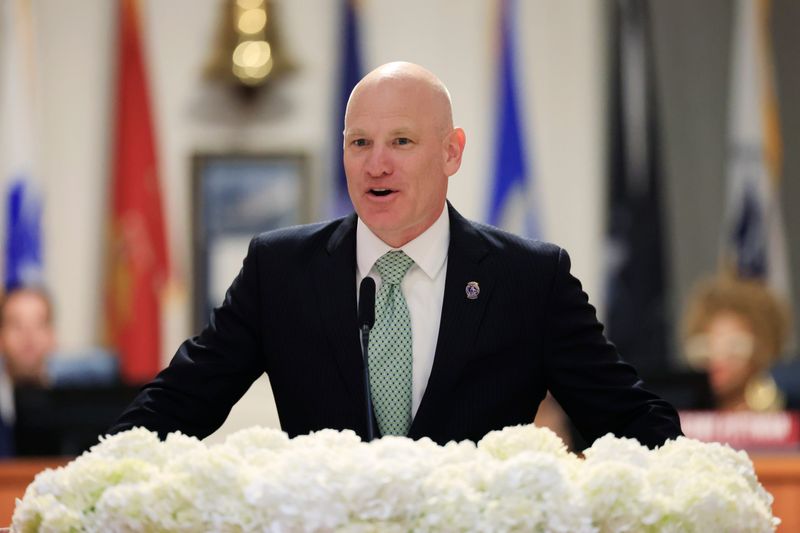
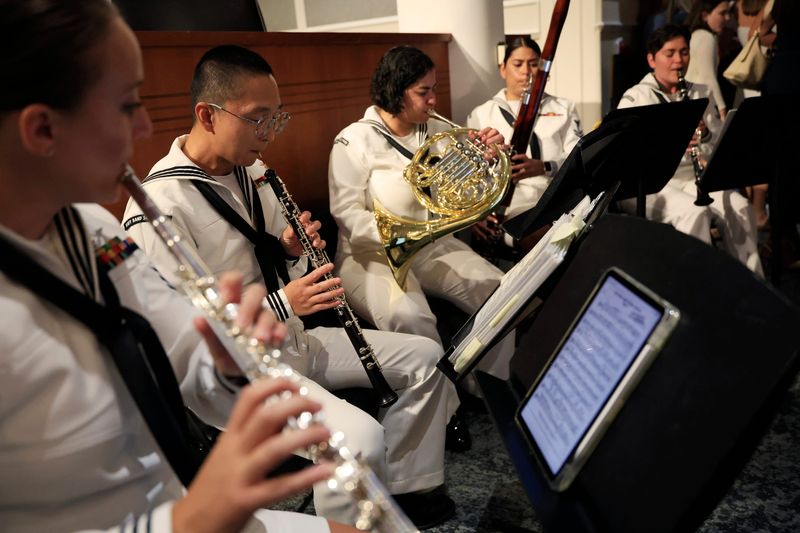
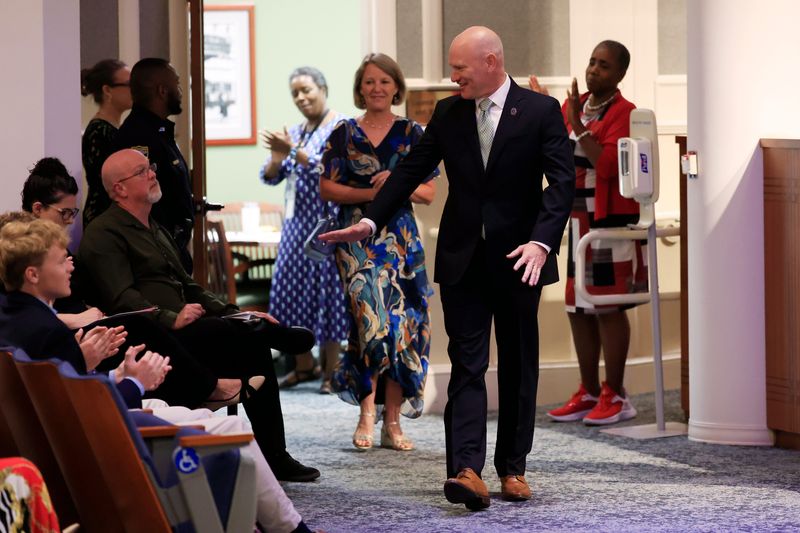
At a June 25 swearing-in ceremony that featured performances by the Navy Band, he threw his support behind a November referendum on deep property tax cuts for Florida homeowners and said the city must start preparing for less revenue by “trimming extras” from next year’s budget.
In a first for City Council, he said he will invite the city’s citizen planning advisory committees to make presentations on what they want council to put in the 2026-27 budget, which he predicted will spend less than the current budget outside of public safety increases for the Jacksonville Sheriff’s Office and the fire department.
Howland and Deegan split on property tax cut
Howland’s support for the November referendum on cutting property taxes for homeowners and his plan to start cutting the city budget in preparation for its potential passage marks an early split from Mayor Donna Deegan.
“We don’t know yet what voters will decide regarding property tax relief in November,” Howland said. “I’m hopeful they deliver tax relief because affordability is real. The crisis is real and tax relief will leave more money in the wallets of families in Jacksonville.”
If more than 60% of Florida voters approve the amendment on the November ballot, the impact would start in the 2027-28 budget when the current $50,000 homestead exemption for non-school taxes would go up to $150,000. The exemption then would go up again to $250,000 for the 2028-29 budget.
The homestead exemption does not apply to rental property.
The City Council Auditor’s Office and the Duval County Property Appraiser’s Office have projected the city would lose about $300 million in property tax revenue from the higher homestead exemption. This year’s city budget is just over $2 billion.
Deegan, along with leaders of St. Johns and Clay County governments, have said the size of the homestead exemption would hit everyday services.
She has called it a “hastily conceived, short-sighted overhaul of how cities are funded” that will “hurt more people than it helps.”
“This proposed reduction will inevitably result in roads deteriorating, libraries, pools and parks closing, public safety response times going up, housing affordability worsening and more homeless on the streets,” she said earlier this month.
Howland did not specify any specific programs for cuts but said he considers the core obligations of city government to be public safety, infrastructure such as roads and sidewalks, and services such as garbage collection, transportation for people with disabilities, the park system and permitting for new construction.
“It’s important to understand this scrutiny of the budget doesn’t mean we’re spending less on what matters,” Howland said. “It means we’re protecting the core (services) and trimming extras so we can invest more on what matters.”
Howland’s path to Jacksonville through Navy and 9/11
Howland also laid out proposals for economic development that would include a new approach to paying for taxpayer incentives and a requirement that companies receiving incentives must ensure at least 10% of new jobs created will go to residents with connections to military service.
Those proposals reflect Howland’s service in the Navy and his work for companies in the fields of aerospace and defense.
He grew up in the Chicago suburbs and earned a bachelor’s degree from Duke University in 1995. He then served four years in the Navy as a fourth-generation Naval officer before getting an MBA from the University of Chicago in 2003. He was a University of Chicago student when the 9/11 terrorist attacks struck in 2001.
“A few weeks later, Raytheon came to campus to recruit,” he said. “That’s when my future took an entirely new direction.”
“I committed my career not to to making money but to protecting those who protect us,” he said of the decision that began with Raytheon and brought him to Jacksonville in 2007 for a job with Armor Holdings.
He later worked as an executive with Survitec Group, Revere Survival and Patten Company while he and his wife Malou raised two sons who attend the University of Florida.
He currently is executive director of The Fire Watch, a nonprofit seeking to end suicides by veterans. The organization does not receive city funding but it got about $928,000 in this year’s state budget.
Howland wants changes in city’s taxpayer incentives
Howland said his first piece of legislation as council president will be the Stand for Service Act that would require companies receiving taxpayer incentives to hire residents who are veterans, serving in the the Guard and military reserves, or spouses of active-duty members for at least 10% of the new jobs generated by taxpayer assistance.
He said he will file that legislation as the nation heads toward its 250th anniversary celebration.
“Ten percent of Americans served during the Revolutionary War,” he said. “They delivered to their posterity the greatest country on Earth. Ten percent of us serve now. They defend the greatest country on Earth. The Stand for Service Act shows that Jacksonville will always stand up for its 10%.”
Howland said he also wants to expand how the city pays for multimillion dollar completion grants the city has used to fuel downtown development. The city has paid for those cash grants by drawing money from the city’s general fund. Howland said the city instead could get the money from businesses in return for them getting a credit against future payment of their city property taxes.
As an example of how it would work, he said if a proposed downtown riverfront hotel needs a $12 million completion grant from the city to round out its financing, a manufacturer that pays about $4 million in city property taxes each year could provide the $12 million to the city in return for an eight-year, 50% tax credit worth $16 million to the manufacturer over that time period.
“The manufacturer enjoys a safe 7% rate of return on its investment,” he said. “The city spurs downtown growth without using general fund dollars. Best of all, the investment along the river happens.”
He said JAX Chamber will bring together business leaders in July to assess the idea and report back to City Council.
“It may not work, but we have to try,” Howland said.
He said he also wants to residents serving on the city’s six citizen planning advisory committees, called CPACs for short, to have a voice in how council shapes the 2026-27 budget.
The CPACs will make presentations to the council’s Finance Committee before its budget hearing on Deegan’s proposed five-year capital improvement program for construction projects they’d like to see happen in their areas of Jacksonville.
“That doesn’t mean the Finance Committee will implement every recommendation,” he said. “It has to balance everything against the realities of the city budget. But it will certainly consider them.”
This article originally appeared on Florida Times-Union: Incoming Jacksonville City Council president backs tax cut referendum
Reporting by David Bauerlein, Jacksonville Florida Times-Union / Florida Times-Union
USA TODAY Network via Reuters Connect
By David Bauerlein, Jacksonville Florida Times-Union | USA TODAY Network