A federal prison inmate has pleaded guilty to working in a drug-trafficking ring that apparently supplied big shipments of fentanyl to Jacksonville dealers for years.
Daniel Don Juan, 35, was behind bars for a 20-year sentence when he used a smuggled cell phone to direct a drug mule caught driving seven kilograms of fentanyl ― about 15.4 pounds ― to a contact in Jacksonville, according to court filing called a “factual basis” submitted when he entered his plea June 25.

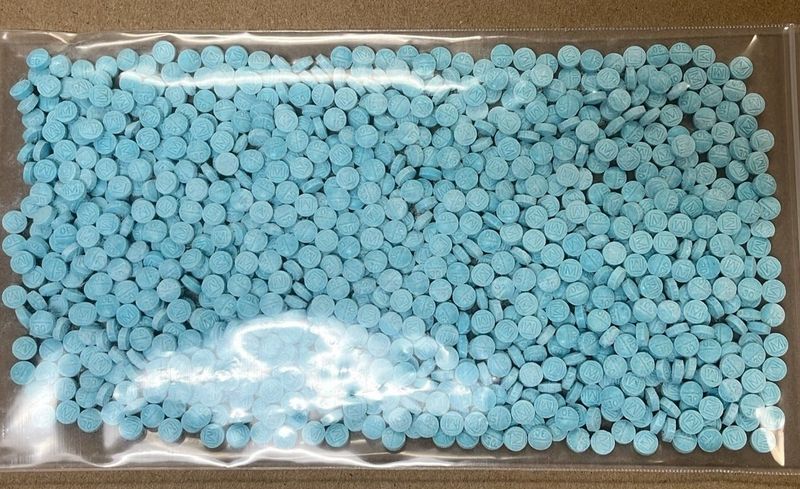
One kilogram (2.2 pounds) of fentanyl “has the potential to kill 500,000 people,” the U.S. Drug Enforcement Administration says on a webpage about the drug. Seven kilograms would have represented many thousands of individual doses.
Juan was one of four people indicted together in Jacksonville in August 2025 on charges of conspiring to distribute and possess fentanyl.
Although two of those apparently haven’t been arrested yet, court records suggest the others were connected to significant crimes.
A court order from a hearing in Washington state involving the other one who was caught, Lesly Anahi Baeza, said that “the United States alleged that [the] defendant has been trafficking fentanyl ‘in brick form’ from Mexico to the United States from 2022 to 2025.” Minutes from an earlier hearing in Washington said the government reported Baeza “has ties to the Cartel,” but didn’t elaborate. The claims didn’t seem to sway a judge in Washington, who denied a request to order her detention.
Baeza pleaded guilty in Jacksonville in May, although a court record showed her plea agreement has been sealed, making it unclear what specific actions she admitted.
Wearing Nassau County jail-issued clothing, Juan appeared unfazed as he pleaded to a charge that Assistant U.S. Attorney John Cannizzaro said legally required a prison sentence of at least 15 years, up to life behind bars.
He had been under a federal prison sentence since 2021 for a drug and money-laundering conspiracy in Texas and by December 2023 was serving his time at a low-security unit of the Coleman Federal Correctional Complex in Central Florida, court records show.
The factual basis filing for Juan’s new case said that while he was locked up, he had used a contraband cell phone to communicate with Kennedy Avina-Aurello, a drug courier or “mule” who was arrested in April 2025 carrying fentanyl from Lawrenceville, Georgia to Jacksonville.
Avina-Aurello “told investigators that he had made several trips to deliver drugs for the defendant in the past,” according to the June 25 court filing, which said “electronic evidence” indicated Juan had been part of the current drug ring since December 2022.
Although prison has traditionally been an impediment to planning crimes, Juan is at least the second Coleman inmate to be in Jacksonville’s federal court this year about communicating drug trafficking plans from behind bars.
In April, former Raines High School football quarterback Aaron McGhee was sentenced to 35 years in prison for running a Jacksonville drug ring while serving an 11-year sentence at Coleman.
Cannizzaro said it’s not clear how significant a role Juan played in the ring of people he admitted conspiring with.
This article originally appeared on Florida Times-Union: Prison inmate admits sending fentanyl mule, big load, to Jacksonville
Reporting by Steve Patterson, Jacksonville Florida Times-Union / Florida Times-Union
USA TODAY Network via Reuters Connect
By Steve Patterson, Jacksonville Florida Times-Union | USA TODAY Network