Warning: This article contains a description of suicide ideation. If you are in crisis, call or text the 988 Suicide & Crisis Lifeline at 988, available 24 hours a day, seven days a week.
Chapter 1: The search

The nurse pulled into the cemetery late on a chilly Saturday afternoon in November 2025 and through tears that made everything fuzzy, searched the expansive grounds for a freshly dug grave.
The death, itself, was sad — another person taken too soon ― but the circumstances surrounding it were crushing.
It didn’t have to be this way, the nurse thought.
It didn’t have to be this way.
But it was, and this is the story of why.
Chapter 2: The decision
No matter how many times he denied it, deep in his mind and also in his heart, the nurse knew the truth, though it wasn’t until the all-consuming demands of the COVID-19 pandemic left him completely frayed that he did something about it.
He was 23 and a second-year nurse when the pandemic began in March of 2020 and day after day, he showed up at the west Michigan hospital where he worked, clocked in at the critical care unit and focused his attention and energies on caring for the sickest people he had ever encountered. Their fingers and lips turned blue from lack of oxygen, their faces bloated from intravenous therapies and misshapen from lying prone, pressed against mattresses or pillows for days, even weeks.
Before attaching them to ventilators, the nurse urged patients to FaceTime family members and loved ones who were kept out of hospitals in an effort to tamp down spread of the sickness. He knew the breathing machine’s tubing would pass through their vocal cords and pump air into their lungs, leaving them unable to speak for as long as they remained on the device, just as he knew their odds of dying on the ventilator far outweighed their chances of ever being weaned off. Sometimes, the sick fought his instructions because they thought he was being dramatic or spouting propaganda or because they were otherwise in denial about the severity of their illness. “You’re going to call your wife,” the nurse ordered an especially stubborn patient. “You’re going to tell her that you love her.” The man finally did as told and when he died, his wife at least had that last conversation to cherish. It’s what the nurse would want should he find himself or a dear one in a similar situation. A final goodbye, one last chance to get things right.
The nurse knew something about sickness and death, specializing in critical care, but nothing prepared him for the relentlessness of COVID. How many of his patients died? He lost count. Often, he held their hands during their last moments, hoping to keep them from feeling alone. Other times, he mustered only the emotional strength to stand sentry, watching silently as death took another of his charges. Then, the postmortem ritual – calling family members, disconnecting medical equipment, the tubes and lines and leads, bathing each of his deceased patients with hospital wipes and dressing them in clean gowns, attaching an identification tag to one of their ankles and maneuvering them into body bags which he zipped shut.
At the end of a 12-, 14- or 16-hour shift, depending on what the day called for, the nurse returned home and tried to find a sense of normalcy caring for the infant daughter he had with his wife. He changed her diapers and read to her and put her to bed. In the middle of the night, too wired from work to fall asleep or too tormented by visions of his patients’ faces to stay asleep, the nurse crept back into the baby’s room, sat in the rocking chair near her crib and listened to the sweet sound of her breathing.
Nearly three years passed before the pandemic slowed enough for the nurse to begin recognizing the trauma of it all. He was even more restless at home. At work, the incessant ringing and beeping from bedside monitors grew nearly unbearable, the racket a signal of more disaster. In the middle of a shift one day, the nurse felt his chest tighten. He couldn’t catch his breath. Everything was closing in on him, as if he was trapped in a room that kept getting smaller and smaller. “Keep it together, keep it together,” he told himself as he stood at the nurses’ station and tried to work through what he later realized was a panic attack. It seemed to go on forever, though in reality, it lasted only a couple minutes. Regaining his composure, the nurse made a decision. He would find a therapist to help put the horror of COVID behind him.
Their first meetings took place in the winter of 2023. After several weeks, something other than the pandemic became the focus of the sessions: the truth the nurse had always known but had been loath to address. He couldn’t suppress it any longer; he’d witnessed too much upheaval, been rattled by too much death. He knew more than most about the fleeting nature of life. He didn’t want to waste a day. He wanted to live. Except now he realized he wasn’t living − at least not as he should. “I need to be myself,” he thought. “Otherwise, what am I doing?”
The nurse decided to transition from male to female.
Jake Nicholls, as he was known at the time, would become Jackie Nicholls.
The journey would mark a beginning and an end, a time of great discovery and searing loss. And all of it would be complicated by an atmosphere of suspicion and hate surrounding members of the transgender community, with the president of the United States leading the charge.
Although the Free Press does not generally publish deadnames − the name a person used before transitioning − it is doing so in this article. For the clarity of the narrative and with Jackie’s permission, she will be referred to as Jake when she appears as a boy or young man and will be referred to as Jackie when this publication documents her current life. “I’m open and honest with all my friends about my deadname,” Jackie said. “It’s part of me.”
Chapter 3: The lonely kid
Born in the mid-1990s and growing up in a conservative, religious west Michigan family that didn’t take to outsiders or their beliefs, Jake was lonely. His mother homeschooled him and his three younger brothers − instructing them in math and reading and the Bible − because she and their father believed public schools indoctrinated children in ungodly ways. Though he had his brothers (as oldest he felt great responsibility for them and tried to set a good example) and knew other homeschooled kids, Jake’s circle was small. He played on a basketball team with other homeschoolers and later joined a crew club, rowing on the Grand River, but never felt the camaraderie that is supposed to come from sports. He didn’t fit in. The other guys, their arms and legs moving fluidly, seemed in perfect sync with their bodies; Jake did not. The other boys talked about what they wanted to be when they grew up − plumbers, construction workers, husbands and fathers; Jake couldn’t envision any sort of future for himself. But what set him most apart was that he knew of no other 10-year-old boy who sneaked into his mother’s room when no one else was home and put on her skirts and tops and bras. He knew of no other boy who wanted to be a girl.
It was Satan putting these thoughts in his head, trying to lure him down the wrong path, Jake decided. He knew that’s what his parents would say if he could ever get up the nerve to tell them and if they said it, it must be true. He tried to be strong, tried to be a good boy. He swore off dressing in his mother’s clothes and sometimes abstained for a month or more only to find himself back in her wardrobe. In bed at night, desperate from shame and guilt and fear, he prayed to God for help. I don’t want to go to hell, he pleaded. I wish I could stop. I don’t want to be gay. Please, God. Jake wasn’t gay, but it would be years before he knew the word “transgender” or anyone who identified that way.
The transgender community is a small one. Roughly 2.8 million people or about 1% of the nation’s total population ages 13 and over identify as transgender, according to the Williams Institute, a UCLA law school think tank that studies gender identity and its impact on law and public policy. About 78,000 adults and 22,000 transgender teenagers live in Michigan, the Williams Institute estimates.
The population tends to be young and, because of lack of acceptance, also tends to be vulnerable. Three-fourths of people who identify as transgender in the United States are between the ages of ages of 13 and 34. Transgender people are four times more likely to be victims of violent crimes than are cisgender people, those who identify with the gender they were assigned at birth. They are seven times more likely to contemplate suicide and four times more likely to die by it . They also are more likely to experience homelessness, due, in large part, to family estrangement.
With the dawning of the second administration of President Donald Trump, transgender people are even more vulnerable. The president has used executive orders to reverse long-fought gains in an attempt, critics say, to erase transgender people from public life. He has forbidden the federal government from recognizing trans people − it now acknowledges only genders assigned at birth and requires U.S. passport holders to identify themselves that way. In addition, Trump has banned transgender soldiers from serving in the U.S. military. And even though studies show, and the American Academy of Pediatrics and other medical organizations agree, that hormones and puberty blockers vastly reduce the odds of depression and suicidality among transgender young people, Trump has used threats of investigation, prosecution of doctors and the pulling of federal monies — Medicare and Medicaid — to bully hospitals into discontinuing such care. Hospitals all over the country — including Michigan Medicine and Corewell Health, the largest health system in Michigan — have capitulated.
Civil rights activists say the government’s actions are wrongheaded and that they create a dangerous precedent that should worry every American, regardless of gender identity. Because once the federal government strips away the rights of a group it deems undesirable, what’s to prevent it from doing the same to another group it decides it doesn’t like? And another? And another?
But the attacks aren’t coming only from Washington; across the country, they’re being lobbed by state legislators, too. In Michigan, Republicans in the state House of Representatives, have introduced bills that echo Trump’s anti-trans agenda. To become law, bills that have cleared the House, which has a GOP majority, would need to win approval in the Democrat-controlled state Senate − which has, so far, refused to consider such legislation. Even then, anything passed by the state Legislature would need to be signed into law by Gov. Gretchen Whitmer, a staunch supporter of LGBTQ+ rights who has said she will not put her name on anti-trans legislation.
But how long the push and pull between the House and Senate with Whitmer as a backstop will last is unclear. Every seat in the state Legislature is up for election in November, creating the potential for a shift in control that could influence the future of transgender rights. Michigan’s voters will also select a new governor.
Meanwhile, the general public’s support for transgender people seems to be eroding. The Pew Charitable Trust reports the percentage of Americans who believe trans people should be protected from discrimination in jobs, housing and public spaces declined from 62% in 2022 to 56% in 2025.
As a child praying to God all those years ago, Jake, of course, had no clue his thoughts would someday become political. His biggest concern was his parents. He wanted to make them proud.
Chapter 4: The Christmas secret
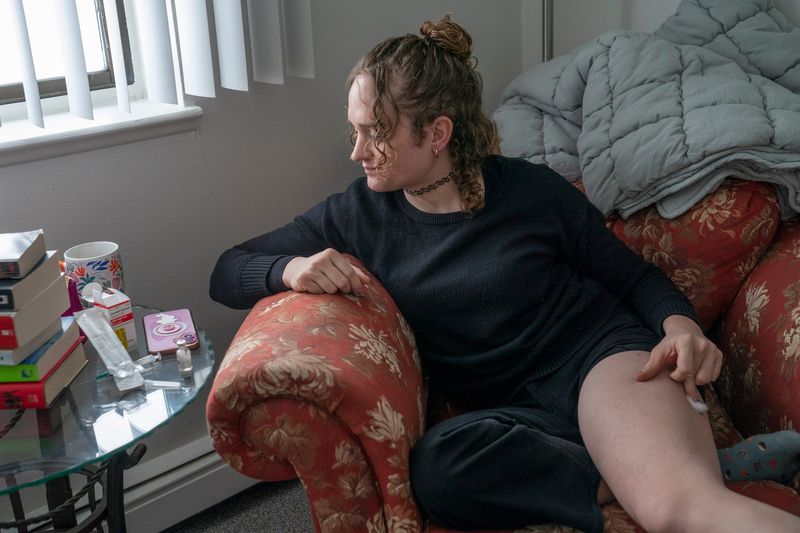
At his mom and dad’s house for Christmas dinner with his brothers, sister-in-law, his wife and 4-year-old daughter in 2023, Jake had a secret: He had begun injecting himself with estrogen. While accustomed to giving shots to patients, he was squeamish about sticking an inch-long needle into his own thigh and spent 90 minutes or more sitting on the cold bathroom floor before his first injection, staring at the vial and syringe, working up the courage to jab himself. When he finally did, he teared up − not from the pinch of the needle but because he was on his way to becoming the person he had dreamed of being since he was a kid. With his daughter already in bed and his wife somewhere else in the house, Jake, emotionally spent, dragged himself to the living room and stretched out on the couch. The family dog, a lab-pit bull mix that favored girls and women over men, did something she’d never done. She snuggled next to him. She knows, Jake thought as he slid into sleep. Within days, he noticed changes in himself. Colors seemed more vibrant, fruit tasted sweeter, Jake felt somehow lighter, happier, more present in his body. lf his parents noticed a change in his affect during their Christmas get-together, they didn’t say anything.
Jake’s relationship with his folks was tense. He had grown up in their house but it had been years since he shared their beliefs. He was 13 and hooked on a late night science program that aired on his MP3 player’s FM radio when he began to doubt them. The program explained the science behind the big bang theory and evolution; it wasn’t the crock he had been led to believe it was. And the Earth — it was billions of years old, not 6,000 as his parents taught. Their entire worldview is wrong, Jake thought. And that meant for years, his entire worldview had been wrong, too. The discovery left him shaken and angry. His folks had seemed certain about what they taught. Jake didn’t think questioning them would do any good. They’ll just tell me I’m wrong and Dad will make me feel stupid and say I’m too easily influenced by outsiders, he said to himself. No, a confrontation would only cause problems. Jake lived with his mom and dad, he was their dependent, they made the rules as they saw fit and he followed them.
Jake’s world opened more when he enrolled at a small commuter college and spent a large part of most days away from home. He met people who had grown up attending public school. He met people who had been vaccinated as children; his parents opposed vaccinations. He met people who practiced a type of Christianity that seemed less closed, less skeptical of science than the evangelical brand he knew. He met people who were gay and lesbian and otherwise queer and learned about sexual orientation and gender identity. I’m bisexual, he told a friend in a Facebook messenger note sent from the family computer in the den.
It never occurred to him that someone beside the intended recipient might see it.
“You know this is wrong,” his mother said after she found the note. She was angry but talked quietly so Jake’s brothers wouldn’t hear. “You know this is against our beliefs.”
“I don’t think I’m a believer,” Jake, now 19, said, so tired of keeping so much to himself that he spoke words he’d never dared before. “I don’t believe the things I was taught growing up.”
In an effort to restore his faith, Jake’s parents ordered him to attend weekly meetings with a pastor. Afterward, Jake stopped talking about his sexuality. He managed, once again, to convince himself that he and his thoughts were wrong. He found a girlfriend, a religious young woman his mother adored, though the relationship didn’t last. He pursued a career in nursing and other than getting the vaccinations he needed to attend nursing school, tried to do what his parents expected of him. He was afraid he would lose them − and his brothers, too − if he didn’t and then what would become of him? “My family is all I have,” he reasoned.
So, years later, at Christmas in 2023, Jake saw no reason to upset his parents by telling them about his transition. Instead, he would wait until summer when the estrogen’s impact would be obvious. He’d have the beginning of breasts by then. His skin would be softer. His hair, brown with blond highlights, would be longer and curly like his mother’s and it would be uncanny how much he resembled her. They no longer believed the same things, but Jake admired his mother. She had a quiet air of confidence about her. She never seemed to doubt herself. How lucky she is, Jake thought.
The only person who knew Jake’s secret was his wife. Their courtship had been a whirlwind. Within a couple months of matching on the dating app Tinder, they settled in together and had a baby on the way. “You know this cross-dressing thing I like to do,” Jake said once as they lay in bed. “What if it’s more than that?” His wife didn’t respond and would later say she remembered no such conversation. Jake didn’t broach the subject again for some time. They welcomed their daughter, the first grandchild on Jake’s side of the family, near the end of 2019. Even his usually reserved brothers had a certain look of awe on their faces when they met the newborn at the hospital and that thrilled Jake. He and his wife, who asked that neither her name nor the name of their daughter be published, married in October 2020 in the backyard of the house they bought. They looked lovely together, he in a white shirt with floral tie that matched perfectly the orange-pink hydrangea and golden roses she carried in her DIY bridal bouquet, both smiling happily at the promise of a shared future. Jake liked being married. Liked being part of a couple. Liked having someone who found him attractive and showed affection and stood by his side. It was a good life they had, and for a long time he tried his hardest to keep from losing it. He tried to forget he’d ever wanted to be a woman.
Leaving his parents’ that Christmas, Jake hugged his mother and father. They reciprocated with their usual embrace, one Jake found perfunctory and lacking in emotion. He couldn’t remember ever receiving a hearty hug from either of them. It was just their way, he realized. Still, he always hoped for more.
Chapter 5: The long walk
Jackie, for the third night in a row, had spent hours walking across sidewalks and overpasses — sometimes lingering to fantasize about free-falling into traffic — when she showed up at the emergency room of her hospital in October 2025 and told a triage nurse she feared she might harm herself.
Then, she threw up.
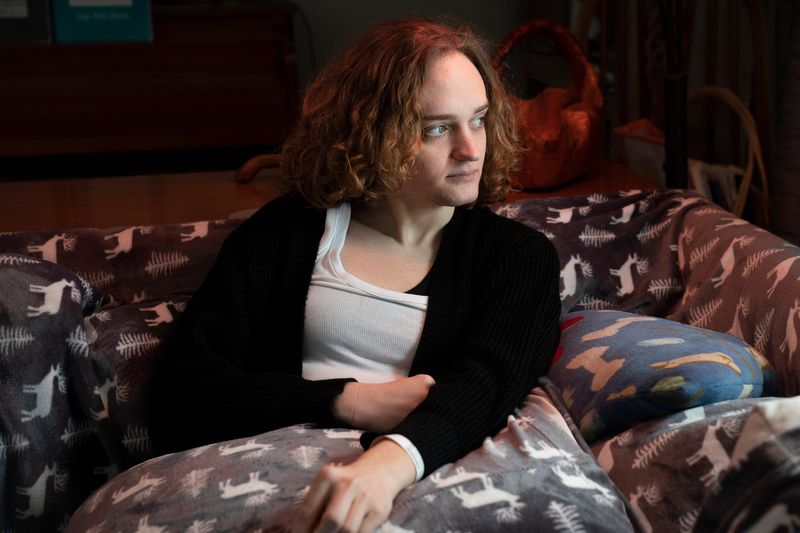
On the outside, Jackie, now 29, appeared to be flourishing. She had been living as a woman since the summer of 2024 and had worked diligently to establish a community for herself. She attended social groups for transgender and nonbinary people. She was nervous about being the newbie, afraid no one would like her. But group members welcomed her and she found it affirming to be with others in situations similar to her own. “I’d never met a roomful of people like me,” Jackie said afterward. “Everything looks a little different when you … know you’re not alone.”
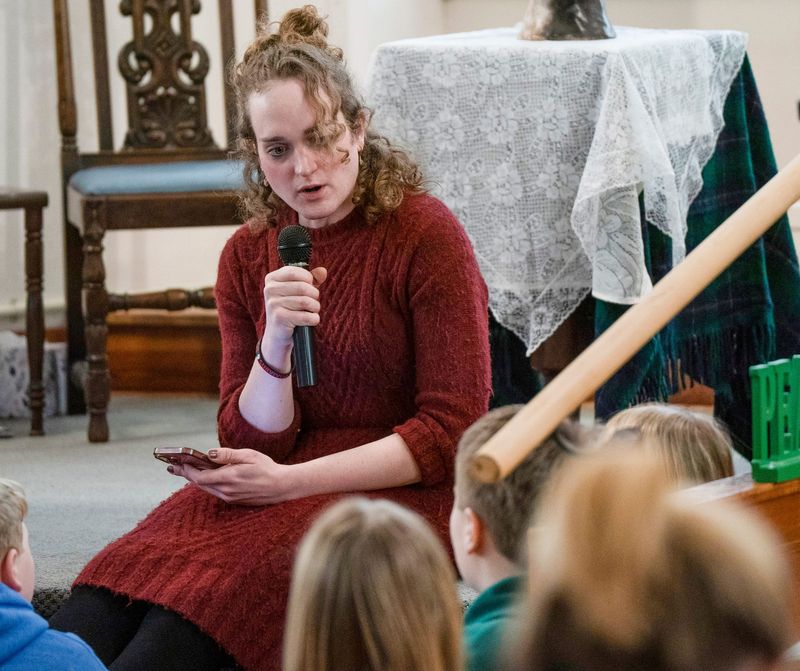
She joined the others for a trip to the beach; she loved the beach and had warm memories of childhood outings at Lake Michigan with her family. She attended a local LGBTQ+ Pride celebration. She found a spiritual home at a small Unitarian church that flew a trans pride flag on its mast and she joined its choir, too. Months later, when she would undergo outpatient surgery to remove her testicles, a church friend would drive her to the surgery center and a new friend from one of the social groups would take care of her afterward. Jackie hadn’t had friends like that before, real friends on whom she could count and who offered no judgment in return.
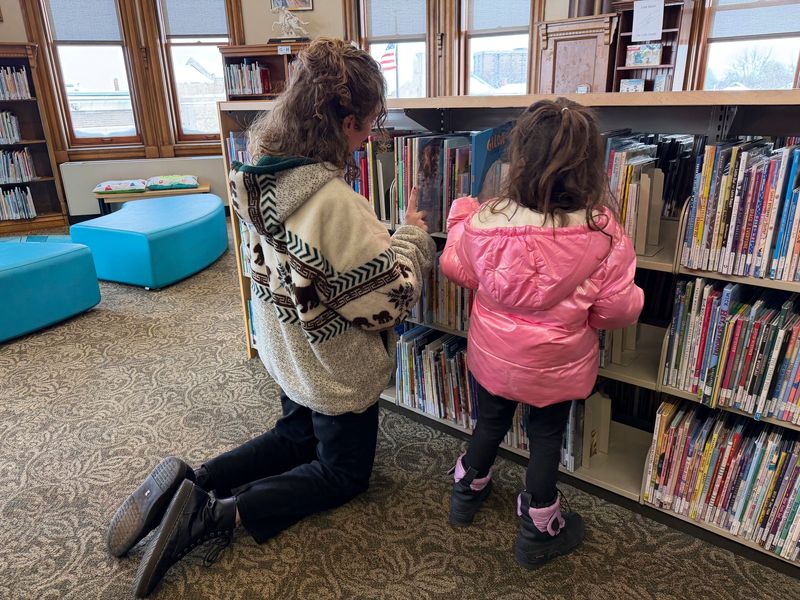
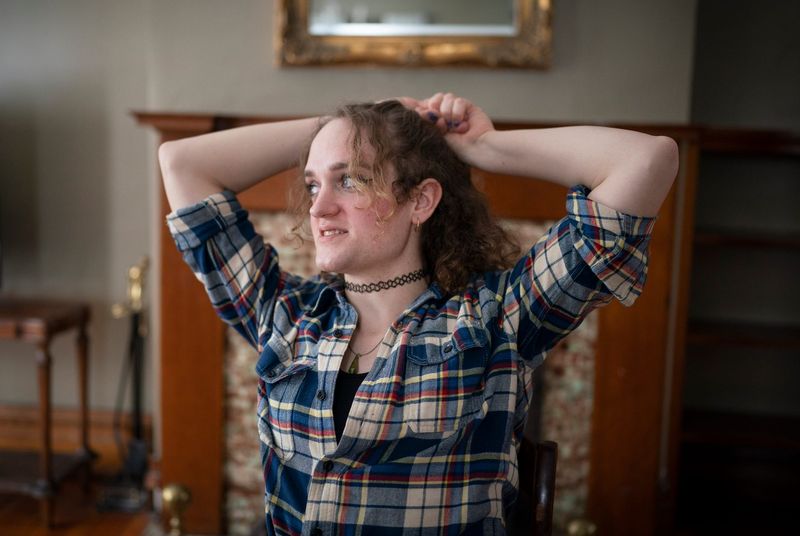
Everything was new. The hormones reshaped Jackie’s body. She was still tall and slender but now she had curves and bought bras in size 36C. She was adept with an eyeliner and mascara and kept bottles of nail polish on her desk at home. She changed her first name to Jacqueline, though everyone called her Jackie. At kindergarten pickup, Jackie’s daughter referred to her as her dad, confusing a classmate. This won’t do, Jackie thought. She no longer looked or felt like a dad. She asked her daughter to call her Amma − a common term for mother in several Indian languages − and the girl obliged. She also adapted to Jackie’s new pronouns. At work, Jackie seemed more approachable. She had always been a good nurse and sometimes worked as a preceptor but with her transition, she became more social. She started joining other nurses for breakfast after the night shift and showed up at staff karaoke nights. “When she went by Jake … she was super reserved. Didn’t smile a lot. She just kind of came to work and got her job done,” Ashley Benner, a colleague and close friend of Jackie’s, said. “(Now) she smiles all the time … She engages and asks me questions about what’s going on in my life. … She pretty much tells other people everything that’s going on in her life.”
In truth, Jackie, who spent so much of her life hiding her thoughts and feelings, was selective about what she shared. Many in her orbit knew she was in the midst of a divorce, but Jackie didn’t talk much about the emotional whiplash that accompanied the breakup. She felt guilty for waiting until she was married with a child to come out as transgender. She felt guilty for upending the life of her wife, who had initially questioned her decision to begin hormone therapy but had also combed thrift stores for women’s clothing in Jackie’s size and offered makeup tutorials. Still, Jackie filed for divorce. She believed she and her wife had grown so far apart as a couple that staying married − which her wife wanted to do − didn’t make sense. “I think she really hated herself and thought she wasn’t worth loving,” Jackie’s wife said. “The way she was raised … I don’t know how you begin to unlearn some of that.”
Jackie worried about her daughter, who was in elementary school now. Would having a transgender parent make growing up more difficult? Would she miss having a father figure? It didn’t surprise Jackie to learn her daughter had questions. “Who’s going to be my dad now,” the girl had asked her mother. “[You] might not necessarily have a traditional dad, but you still have two parents that love you,” her mother answered. But would that be enough, Jackie wondered. Would other kids tease her? They hadn’t so far, but what if they got older and meaner?
Jackie knew that plenty of people hated her for being transgender. She believed Trump and his acolytes legitimized, if not fueled, the hate. “Just hearing the most powerful people in the world say trans people … [are] perverts or they’re against God’s creation … makes you kind of jittery,” Jackie said. And then, the trickle-down: hoots and catcalls from strangers when she was out and about; fearing for her safety, she began carrying pepper spray.
At work one night, the daughter of a patient recorded video of Jackie and demanded her father be assigned a new nurse; she didn’t like that Jackie was trans. (“I felt like she didn’t see me as human,” Jackie said later.) Another night, an agitated patient who had been profane with other nurses, grew louder and angrier when Jackie tried to quiet him.
“Dude, bro,” the man said.
“Excuse me, I’m not a bro,” Jackie replied.
“Mister, dude, whatever the f— you are …” the man said, his voice rising so loudly a supervisor and hospital security officer showed up at his room. “I want a new f—ing nurse,” the man yelled as his girlfriend threatened to bite Jackie. “Get this bastard out of here.”
Another nurse took over the patient’s care and Jackie retreated to the nursing supervisor’s office where she cried a few angry tears before going back to work.
But nothing left Jackie more distraught than her family’s reaction to her transition. Believing such news would not be received well in person − she thought her mom would weep, her dad would yell and what good would that do anyone? − Jackie sent her parents an email in the summer of 2024. “I’m medically transitioning,” she wrote. “My name is Jackie. My pronouns are she/her. I don’t expect understanding, but I’m hoping for acceptance.” And then, she waited for a response.
After a couple weeks of silence, her mother asked Jackie, her wife and their daughter to dinner.
“Before I answer that, did you get my email?” Jackie asked.
“Yes,” her mother replied.
“What do you think? Do you have anything to say?” Jackie said.
“We need time to pray on it,” her mother said.
Jackie refused the invitation. They have no intention of accepting me, she thought.
About eight months passed before Jackie heard from her parents again. Her mother sent a text. “I have Stage 2 pancreatic cancer,” it said. “I’m starting chemotherapy. A tumor is wrapped around my aorta.”
“I want to see you,” Jackie replied.
“No,” her mother responded. She asked to see Jackie’s daughter instead and after considering it, Jackie decided against allowing such a visit. Either mom’s going to see both of us or neither of us, Jackie thought. Otherwise, what kind of message am I sending my daughter — that it’s OK for my parents to shun me?
“How are you,” Jackie asked her mother in subsequent text messages. “I want to see you.”
“Maybe when I’m feeling better,” her mother demurred.
On Oct. 7, 2025, Jackie sent another note: “Mom can I please come see you? No arguments or fights, I just want to see you.”
On Oct. 10, her mother replied: “Honestly, seeing my son dressed as a woman would be heartbreaking to me. I love you but I just don’t have the strength right now. I hope you can understand that. … Let’s talk about it when I’m feeling better.”
Jackie wrote back on Oct. 13: “… I don’t know what it’s like to have pancreatic cancer. I haven’t been to your oncologist appointments or know anything about the state that you’re in. I have taken care of multiple people with pancreatic cancer and I’m scared. I’m your daughter and I’m scared of losing my mom. I’m the same person. Yes, there have been a lot of changes — if I’ve learned one thing working in critical care it’s that life is change.
“PS I’m somewhat of an expert on feeding tubes and pain management so if you need help, I can help no strings attached. Love you.”
A few days after her last text message, Jackie found herself walking through the night, carrying the weight of so much upset: the situation with her mother, the impending divorce − she’d cried the day she moved out of the house she’d shared with her wife and daughter and into an apartment. The patients who had made her feel unsafe. Her brothers − they’d stopped speaking after Jackie came out as transgender and she grew wistful when she remembered the good times they’d shared as kids, running around the backyard with their dog, challenging each other to wiffle ball bat sword fights, setting off firecrackers and bottle rockets for the Fourth of July. And when they got older: holiday ping pong tournaments at their parents’ house. They were competitive, each and every one of them, always playing to win, always wanting to be the fastest and the best. It was no coincidence that Jackie had pursued one of the most difficult areas of nursing: critical care nursing. How she missed them. They’d been each others classmates and friends. And now, what? Her youngest brother had gotten married without inviting her to his wedding. Through her transition, Jackie had found herself and a new life, but she’d lost her family in the process.
Doctors at the emergency department kept Jackie under observation until they found a place for her at a psychiatric hospital, where she stayed for a few days, receiving medication and counseling with more to follow from the therapist she saw regularly. She called her stay a grippy sock vacation, in honor of the rubber bottomed socks hospitals dispense to patients.
On a hospital worksheet, a counselor asked Jackie to list the thoughts that run through her mind when she felt herself heading into a deep depression.
“I will always be alone,” Jackie wrote.
“I am unlovable.”
Chapter 6: Where is my mom?
Jackie got the news on Saturday, Nov. 15, 2025.
She texted her mother about 1:30 p.m. − “how is it going?” − and wasn’t alarmed when she didn’t hear back right away. Jackie figured her mother was resting and went about her day off from work, spending time at her apartment with her daughter.
A phone call from her soon-to-be-ex-wife interrupted the afternoon. “Can you come over?” she asked. “I have to talk to you.” And Jackie knew from the tone in her voice something had happened.
Jackie’s father had seen the text she sent her mother and rather than respond to Jackie, contacted Jackie’s wife. Jackie’s mother had been dead almost a week. Her funeral had already taken place.
Jackie wept at the news. She wept again when she read the obituary. Her 49-year-old mother’s four boys were the joy of her life, it said, listing each by name: Jacob (which had been shortened to Jake years earlier), Noah, Caleb, Elijah. Jackie simply didn’t exist.
She drove to the cemetery late that afternoon, its enormous grounds bisected by a public road. With tears in her eyes, she searched for her mother’s grave. She hadn’t been able to help care for her mother. She hadn’t touched her mother since their hug at Christmas 2023 that left her wanting more. She’d been so careful about arranging for her patients and their loved ones to have a last conversation, a final goodbye, but no one arranged that for Jackie. She didn’t know whether her mom had died at home or in a hospital or in a hospice facility. She didn’t know who was with her mother at the end, who, if anyone, held her hand. And now, after almost an hour of searching, she couldn’t find her mother’s grave.
It didn’t have to be this way, Jackie thought.
Jackie called her father − who did not respond to requests for comment from the Free Press − for the location of her mother’s plot. “Where is mom buried?” Jackie asked. “You at least owe me that.”
“I don’t know who Jacky (sic) is,” her father responded via text. “My wife was entitled to see her granddaughter while she went through a horrible terminal illness.”
“You know damn well who I am,” Jackie wrote back. “I’m your eldest child. I wasn’t notified of my mother’s death until after the funeral. You’re a coward. Where is my mom buried?”
Over the next few months, Jackie returned to the cemetery, but left without locating the grave. She hated the idea of having to call a groundskeeper or a secretary to ask for the location of her mother’s plot. Doing so, she thought, would only serve as a reminder that she was an outsider. In the end, a friend made the call for Jackie.
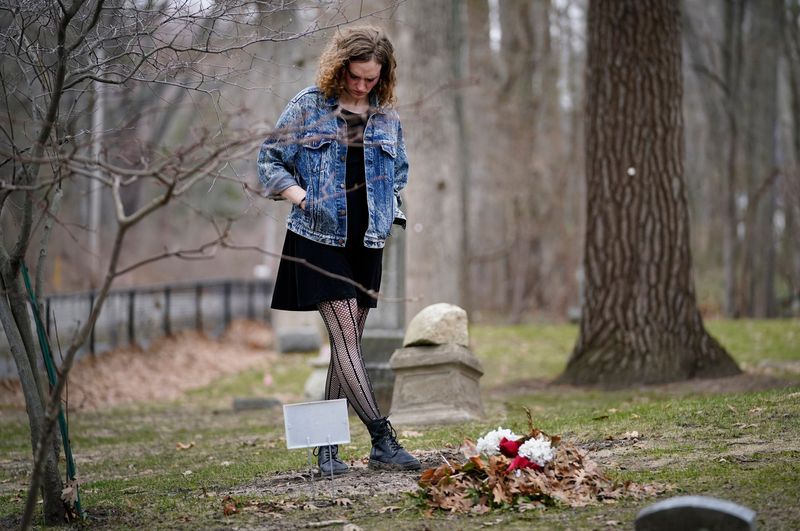
Absent a headstone, the grave, which sloped down a short hill, was marked with a photo of Jackie’s mother attached to stakes and pushed into the ground. How she’d missed it before, Jackie didn’t know. But now, in the middle of March 2026, Jackie sat on the cold dirt atop the grave and cried.
“I’m here,” she said.
“I love you.”
It was the closest she’d been to her mother in a very long time.
Contact Georgea Kovanis: gkovanis@freepress.com
For help in a crisis, here is where to call, text
If you, or someone, you know are in crisis, there are resources to help:
If the danger to yourself or someone else you know isn’t immediate, here are resources for counseling and compassion:
This article originally appeared on Detroit Free Press: A nurse decided life was for living. What happened next was devastating.
Reporting by Georgea Kovanis and Mandi Wright, Detroit Free Press / Detroit Free Press
USA TODAY Network via Reuters Connect
By Georgea Kovanis and Mandi Wright, Detroit Free Press | USA TODAY Network