The city’s $100 million pedestrian pathway project that’s meant to draw crowds Downtown is instead driving some businesses out, owners say.
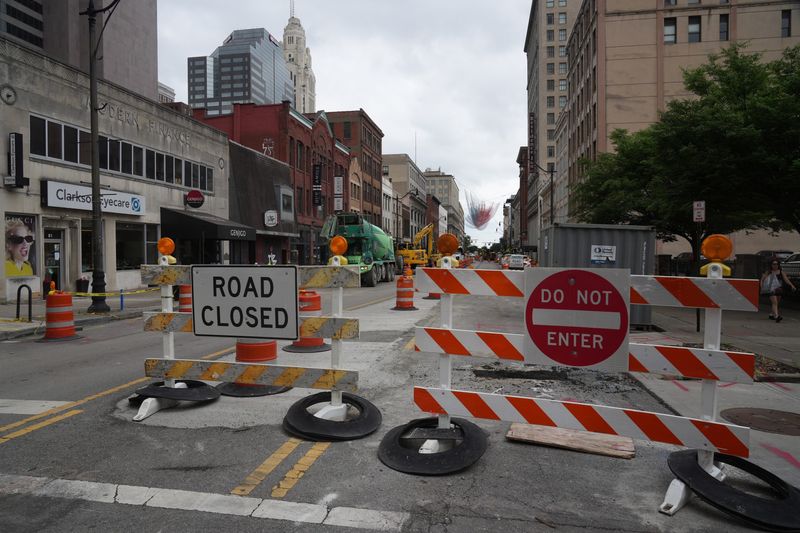
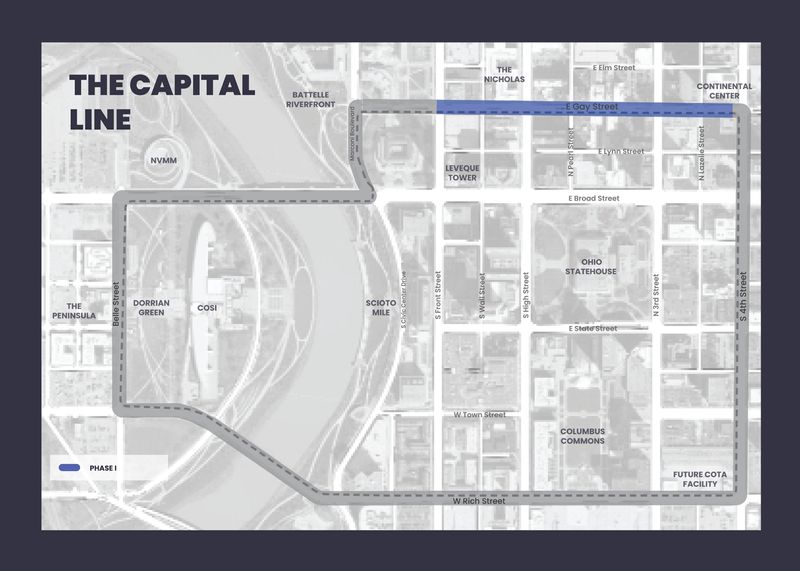
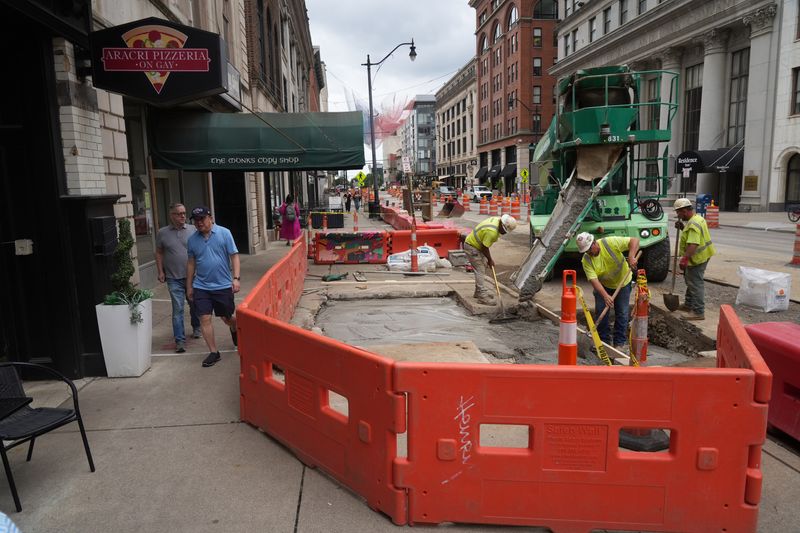
The Capital Line, a 2-mile route of walkways, outdoor seating, greenery and performance space looped through downtown Columbus, began construction months ago. Since then, stretches of East Gay Street have been reduced to one-way, one-lane traffic, with street parking removed and traffic funneled past clusters of orange cones, barricades and “Do Not Enter” signs.

City leaders say it’s necessary work to transform the Downtown experience. But nearby businesses, especially those already struggling to stay afloat, say it’s hampering their operations, with owners reporting drops in sales and some even linking the disruption to their decision to close altogether.
“I had a plan where I think we could have gotten out of things and gotten into a better [financial] position,” said Don Ziliak, a partner in Due Amici, which recently went out of business after 22 years. “But with The Capital Line, it was like the final gut punch.”
The longstanding Italian restaurant isn’t alone in seeing business decline as construction continues. James McDevitt-Stredney, owner and director of No Place Gallery, said both attendance and sales have dropped for his art venue since work on Gay Street began.
“I would be naive if I wasn’t concerned and didn’t have these fears [about closing],” he said. “I think these are real for all small business owners, especially someone who’s doing something like running a gallery here in the Midwest.”
Capri, a sports lounge and bar on Gay Street, has been closed since the end of May, owner Sam Chedid said. In a text statement, he said Capital Line construction wasn’t the only factor – citing broader buildingwide infrastructure issues – but it has contributed. For instance, water service has been shut off periodically as road work continues.
“We’ve done everything we can to stay open, but the conditions have left us uncertain whether reopening is even possible at this point,” Chedid said.
City Councilmember Nick Bankston, a key player in the project as chair of the Economic Development & Small Business Committee, said he’s not surprised to hear this type of feedback from businesses, especially given The Capital Line’s scale.
“The sentiment that still rings true is that we want to do everything we can to make this the least disruptive as possible,” he said. “But I think we all knew it was going to be disruptive.”
To help alleviate the burden for businesses, city leaders have implemented strategies such as garage parking validation for people patronizing Gay Street businesses, a marketing campaign to remind the community that those businesses remain open and a rent support grant program. The initiative offers one-time payments starting at $6,300 to businesses with first-floor frontage along the affected parts of Gay Street, with amounts based on square footage.
Due Amici applied for the maximum amount of $12,500, Ziliak said. But the restaurant’s rent alone exceeded $11,300 a month, with payroll totaling roughly $30,000 every two weeks.
“Any money is always appreciated; it just wasn’t going to be enough that would have an impact on whether we could survive or not,” Ziliak said. “When you’re talking the dollars that it costs to run a restaurant nowadays − and you don’t want to kick the gift horse in the mouth − but it’s a drop in the bucket.”
What is The Capital Line?
First announced in February 2024, The Capital Line project is a partnership between quasi-public development agency Downtown Columbus Inc., the city and development firm Edwards Cos. Construction on just the Gay Street part is expected to wrap in October 2027, after which point work will move to one of the other street segments.
Downtown Columbus Inc. President Amy Taylor said city partners are considering the South 4th Street segment next, which would run from Easy Gay Street to West Rich Street. They’re also working to determine how to address the Broad Street bridge part, which crosses the Scioto River.
Despite the hardship that may come with construction, city leaders say the completed Capital Line project will redefine downtown Columbus. When asked about impacted Gay Street businesses at a media gaggle June 10, Mayor Andrew Ginther said he knew there’d be “growing pains” over the next year or two but that Downtown will be “dynamic” after The Capital Line is complete.
“This is going to be an incredible amenity for Downtown, connecting a lot of other great places Downtown, making it more walkable, safer for people on foot [and] gathering places for live performing arts and music,” Ginther said.
That may be the case, Ziliak said, but it doesn’t mean he or other Gay Street business owners are happy about the toll construction is taking.
“Quite possibly and probably, [the project] will be beneficial long term, but there’s collateral damage,” he said. “And we’re the collateral damage.”
Construction hurts Gay Street activity, but city says it’s necessary
Though Ziliak said Due Amici was on shaky financial footing for some time, The Capital Line construction was “the nail in the coffin.” He estimated a 40-50% drop in sales over the last few weeks before the restaurant closed its doors for good.
“Our sales were not fabulous by any stretch, but I was making ground up,” Ziliak said. “There was hope. But when the construction started, it was like falling off a cliff in sales.”
Chedid echoed the sentiment. He said sales decreased dramatically from the very first day of road work, and that night business specifically was “nonexistent.”
Beyond dwindling foot traffic and revenue, McDevitt-Stredney said ongoing construction has forced him to adapt how his gallery operates. He’s adjusted his hours to avoid the loudest periods of jackhammering, and moving the sculptures and paintings he sells in and out has a much more cumbersome process now that street parking is gone and loading zones are often occupied.
“It’s not easy to be sitting there, trying to do the work that you’re doing, and you’re being distracted at every turn,” he said. “We’re being asked to keep up financially, and we’re having to reinvent the wheel here.”
From Downtown Columbus Inc.’s perspective, Taylor said renovating Gay Street has been especially challenging, both because the street is 100 years old with 25 utilities beneath it and because it’s the only part of The Capital Line being redesigned from property line to property line. Other segments will see only the pathway built.
“Progress is painful, but that’s not the end of the story,” Taylor said. “When we are completed with this, Gay Street will be the most special place in the region.”
But until then, Ziliak said, Gay Street is “a tough sell.” He tried to sell Due Amici but said potential buyers backed out because they “didn’t want to weather the storm” until The Capital Line is complete. He said going out of business will cost him and another owner roughly $160,000 out of pocket.
Project leaders stressed that Gay Street businesses remain open during construction and are urging the public to continue supporting them.
“We recognize construction can create temporary challenges, but the character of this community is worth investing in,” an Edwards Cos. representative said in a statement.
McDevitt-Stredney said he supports The Capital Line project and recognizes the need to invest in physical infrastructure. But he worries whether “the things that make Downtown special” will remain when it’s all said and done.
“You can rebuild a street in a year, but rebuilding the cultural ecosystem that gives the street its identity can take decades,” he said. “My hope is that when this project is complete, 18 to 20 months out, that the independent businesses that helped build and make downtown Columbus are still here to enjoy it.”
Reporter Emma Wozniak can be reached at ewozniak@dispatch.com or @emma_wozniak_ on X, formerly known as Twitter.
This article originally appeared on The Columbus Dispatch: ‘We’re the collateral damage.’ Gay Street businesses hurt by Capital Line construction
Reporting by Emma Wozniak, Columbus Dispatch / The Columbus Dispatch
USA TODAY Network via Reuters Connect
By Emma Wozniak, Columbus Dispatch | USA TODAY Network