

History is complicated, as one might say today.
The origins of Ontario County and its municipalities are tied, in many cases, to clashes — some of them deadly —among the Native Americans who lived here for hundreds of years beforehand and the somewhat newly arrived White settlers desiring more land.

Treaties, including the controversial Buffalo Creek Treaty that opened the Native American land here for sale to the Whites, are part of the story. Especially so is the Pickering Treaty, also known as the Canandaigua Treaty, was among the first the young U.S. government signed in 1794, brokering peace with the Grand Council of the Six Nations of the Haudenosaunee.
Why? During the American Revolution, Seneca warriors and Loyalist Rangers used villages at Canandaigua, Honeoye, Naples, and Geneva as staging areas for frontier raids. Gen. John Sullivan, acting on Gen. George Washington’s orders, retaliated for those raids by devastating Native American towns in 1779 as part of the Clinton-Sullivan Campaign, according to an Ontario County history account.
In later years many of those Revolutionary War soldiers returned to live, attracted by the agricultural potential of the Finger Lakes region and acting on a desire to move westward and own land, according to Ontario County and Canandaigua City Historian Preston E. Pierce.
“The place to put your money if you wanted to get rich was land,” Pierce said. “So, there’s a huge push to get land after the American Revolution and even before.”
In the years following the Revolution, Ontario County, then all the land west of Seneca Lake, was settled quickly. In 1788 the Phelps and Gorham purchase meant that land between Seneca Lake and the Genesee River formerly owned by the Seneca Nation was now ripe for settlement. A year later, Ontario County was established, with Canandaigua as the county seat.
The floodgates, relatively speaking for the time, were opened for development and settlement.
As Pierce said, it is complicated and confusing, with a lot of different interests involved.
But the rest, as they say, is Ontario County history.
The history of the two cities, 16 towns, and eight villages of Ontario County is fascinating. Including every fact and detail in this space about these communities, some of which are nearly as old as the 250-year-old country itself, is nearly impossible.
A nation and well, the people who live in the Finger Lakes region, owe debts of gratitude to the local historians and historical societies who collected and recorded this information from the beginning and kept at it through the decades, and to the current historians like Pierce who safeguard the past while ensuring present day events and happenings are preserved for future generations.
What follows are brief snippets of the early days of the cities, towns and villages many call home.
City of Canandaigua
Canandaigua was referred to as Kanandarqua all throughout the mid-18th century to later in the 18th century, according to a researcher with the Ontario County Historical Society in a Daily Messenger story in 2013.
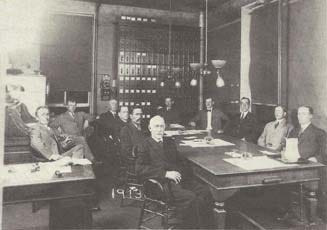
The town of Canandaigua was founded in 1791, and many years later, the village of Canandaigua became the 50th city chartered in New York state in 1913. It wasn’t an easy process.
In fact, according to an account by then Canandaigua Historian Lynn Paulson for the city’s centennial celebration in 2013: “No two weeks in Canandaigua history were more tempestuous than those prior to the Jan. 31, 1913, referendum for becoming a city.”
People on both sides of the issue “held meetings, hired bands to stimulate interest in their cause, took out major ads and wrote articles in local newspapers, and even used automobiles with banners hung on their sides to tell their story.”
You can guess the rest. On April 28, 1913, Gov. William Sulzer signed the bill creating the city of Canandaigua. Former Village Mayor Peter Turner was elected the first mayor of the City of Canandaigua.
— Canandaigua Historian Lynn Paulson for the Daily Messenger in 2013
City of Geneva
Inhabited first by the Algonquin then later by the Seneca Nation, members of the Haudenosaunee Confederacy, the first mention of the “Geneva” settlement — later to become a village and then the city — occurs in 1788. Settlers began to move in after 1792.
Geneva became a village in 1806, although incorporation papers were not made official until 1812. Citizens passed a charter to make Geneva a city in 1897. The state legislation approved the charter later that year. Geneva officially became a city Jan. 1, 1898.
— City of Geneva history
Town of Bristol
According to former Bristol Town Historian Helen Corser Fox, the history of the town was first recorded in 1669, when the explorer, Robert de LaSalle, wrote of his visit to the Burning Springs, where the Seneca Indians had escorted him to see this “magical burning water.”
The Goodings were Bristol’s first settlers, and in 1789 the town was formed.
Richmond, Bristol and South Bristol were all purchased by Bristol County, Massachusetts, and South Bristol was organized from Bristol in 1838.
— Bristol Historian Helen Corser Fox’s account
Town of Canadice
Writer and historian Margaret Bott in 2015 wrote of Canadice as a “Stealth Town” in “A History of Canadice NY.”
Until 1829, Canadice was part of the town of Richmond. Town government was formed in 1830. Canadice people came to this area from Vermont, New Hampshire, Massachusetts and some from Maine, attracted by cheap land, good soil and no doubt, pristine lake water, Bott wrote.
As for the Stealth Town designation, Bott writes: “Make as you may of that, but the people of Canadice are a proud people and always have been.”
— Margaret Bott in “A History of Canadice NY.”
Town of Canandaigua
Canandaigua Town Supervisor Israel Chapin led the town’s first meeting in April 1791, but it would take 16 years before the town of Canandaigua and village of Canandaigua, which became a city in 1913, would become separate entities.
The original town encompassed several areas that ring familiar today: Cheshire, Centerfield and Academy. The now-defunct Padelford Station near what is now the town of Farmington may be no longer, but it served as a crucial stop for steam engine supplies and passenger services.
— Town of Canandaigua
Town of East Bloomfield
Deacon John Adams of Alford, Massachusetts, founded the town of East Bloomfield. In spring 1789, the deacon purchased the Bloomfield tract from the Phelps-Gorham Purchase. He and 24 others settled in the Bloomfield area and by the end of 1790, 65 people, 20 of them women, had settled in Bloomfield.
Town records show that the first official meeting of the Town of Bloomfield Board was on April 5, 1796. Amos Taft was the first town supervisor, and Jared Boughton was the first town clerk.
— Town of East Bloomfield
Town of Farmington
Farmington was established in 1788 and was named after Oliver Phelps’ hometown in Connecticut.
To the victors go the spoils, and the first sale of land made from the Phelps and Gorham tract, a portion of which would become Farmington, was to American Revolution veterans, patriots of the war and members of the Society of Friends (Quaker) faith, many of whom came from Massachusetts, Town Historian Donna Hill-Herendeen writes.
At the time, Farmington and Manchester operated as one, with Nathan Aldrich hosting the first town meeting in 1797. Beginning in 1821, townships were officially incorporated, and town borders were created.
— Farmington Historian Donna Herendeen-Hill’s account
Town of Geneva
The earliest inhabitants of this area were the Senecas, many of whom lived in a village near what is now the corner of Country Roads 4 and 6.
Now known as the Gateway to the Seneca Wine Trail, this community 50 miles east of Rochester was recognized as a town on Nov. 15, 1872.
— Town of Geneva
Town of Gorham
Gorham was known as East Town when it was erected — the term of the day when Ontario County authorized the town to form its government — in November 1796.
The town of Easton was organized April 7, 1797, but its name was changed to Lincoln on April 17, 1806, and finally, Gorham, on April 6, 1807.
— Town of Gorham
Town of Hopewell
The Seneca village of Onnaghee (or Onaghee, aka Snyder-McClure village) was located in Hopewell and was abandoned sometime before 1750.
The town began to be settled in 1789 and was originally part of a tract of land first called “District of Easton” then “Lincoln,” and was part of the Phelps and Gorham Purchase of 1788.
In 1807, the name of the town was changed again, this time to “Gorham,” in honor of Nathaniel Gorham. The town of Hopewell was formed out of the northern section of the town of Gorham on March 29, 1822.
— Town of Hopewell
Town of Manchester
The township of Manchester was originally included in the 1789 civil organization of the town of Farmington, although almost from the beginning, some residents wanted “self-rule” and to be their own town, former Ontario County Historical Society Director Ed Varno wrote for the Daily Messenger in 2014. It finally happened March 31, 1821, when a state legislator agreed to quietly introduce a bill in Albany that drew up and established a dividing line between the two areas.
Manchester’s first settler is credited as Joab Gillette.
— Ed Varno, The Daily Messenger
Town of Naples
First called Watkinstown, then changed in 1795 to Middletown, the town was named Naples in finally, in 1808.
The first town meeting was held on April 5, 1796, at the home of Nathan Watkins. Elected were: William Clark, supervisor; Joel Watkins, town clerk; Jebez Metcalf, Edward Kibbe and Edward Lane, assessors; Nathan Watkins, William Dunton and Elijah Clark, commissioners of highways; Captain William Watkins, Captain E. Cleveland, Robert Wiley, poor masters; Elisha Parrish, constable; Louis Parrish, Ruben Parrish, John Weaver and Issac Post, path masters; John Johnson, Benjamin Hardin and Isaac Whitney, fence viewers; and Jabez Metcalf, pound master.
In 1808, the town was renamed Naples. According to local lore, Louis Philippe, the exiled “Citizen King of France,” stayed at nearby Metcalf’s Tavern and remarked that the valley reminded him of Naples, Italy. His compliment inspired the town’s lasting name.
— Naples NY Historical Society
Town of Phelps
John Decker Robison, a young aristocrat who fought in the French and Indian War and later was a regular in the Continental Army in the Revolutionary War, in June 1788, joined by his family, settled where the Canandaigua Outlet flow met Flint Creek. For $100, he bought properyy and became the first settler in Phelpsburg.
In 1796 the township was renamed Phelps.
Jonathan Oaks, who founded Oaks Corners in 1796, was the first elected Phelps supervisor.
— Ed Varno, for The Daily Messenger in 2016
Town of Richmond
Peter and Abigail (Richmond) Pitts, who married in 1764, arrived in what was then known as Honeoye Flats in 1790 with eight children in tow. Being the only inhabitants, it was called Pittstown.
In 1808, a portion of the town became Livonia; the remaining portion, which at that time included present-day Canadice, was called Honeoye. At a town meeting in 1815 the idea was introduced to rename the township yet again, this time in honor of its founding “mother” Abigail Richmond Pitts.
Its centerpiece natural attraction, Honeoye Lake, was depicted in a pen-and-ink drawing by Raphael Lamar West, who came to America in 1789 with his father, according to a history account by then Richmond Historian Joy Lewis for the Daily Messenger in 2016.
— Richmond Historian Joy Lewis for the Daily Messenger in 2015
Town of Seneca
Like most townships at the time, the town of Seneca was a pioneer land in what was then the frontier of this young country.
The town, which originally included what is now the town and city of Geneva, was established Jan. 27, 1789.
Soon, people from New England, Pennsylvania, Maryland, England and Scotland, along with Revolutionary War soldiers, began to arrive and buy land. Dr. Caleb Benton, a speculator, purchased much of what is now the towns of Seneca and Benton.
— Town of Seneca
Town of South Bristol
With the help of the Phelps and Gorham Purchase in 1788, the Bristol Hills Historical Society notes Gamaliel Wilder was able to secure what was to become the township of South Bristol.
In March 1838, the town of South Bristol was formally named and partitioned from the town of Bristol because of the commute — the distance required to travel for meetings was too great. And so South Bristol established its own local government, which first met at Allen Brown’s Tavern at Brown’s Stand.
— Bristol Hills Historical Society
Town of Victor
Victor’s heritage dates to its first inhabitants, members of the Seneca Nation. But in 1687, the Marquis Denonville and his French army invaded the Seneca territory and on July 13, 1687, they waged a successful battle near the present village of Victor and destroyed their village.
After the Revolutionary War, the town was purchased from Oliver Phelps and Nathaniel Gorham for 20 cents an acre by Enos Boughton in 1788.
In 1812, the land was set apart from Bloomfield and named Victor in honor of Claudius Victor Boughton, a hero in the War of 1812.
— Victor Historian Babette Huber
Town of West Bloomfield
The Seneca who occupied the West Bloomfield land before the arrival of White settlers had constructed three villages: Fort Hill on Honeoye Creek, Factory Hollow and West Bloomfield Station. Gen. Amos Hall, Robert Taft, Ebeneezer Curtis, and Nathan Marvin purchased the land of what is now West Bloomfield, according to a history account by Mary Twardokus and Pat Talley for the Daily Messenger in 2014. The first settler in the area was Col. Peregrine Gardner, who built a house on what is now Routes 5 and 20.
On Feb. 11, 1833, West Bloomfield was set off from the old town of Bloomfield.
— Mary Twardokus and Pat Talley for the Daily Messenger
Village of Bloomfield
The town of East Bloomfield, which included the village of East Bloomfield, was formed in 1789 as part of the Phelps and Gorham Purchase.
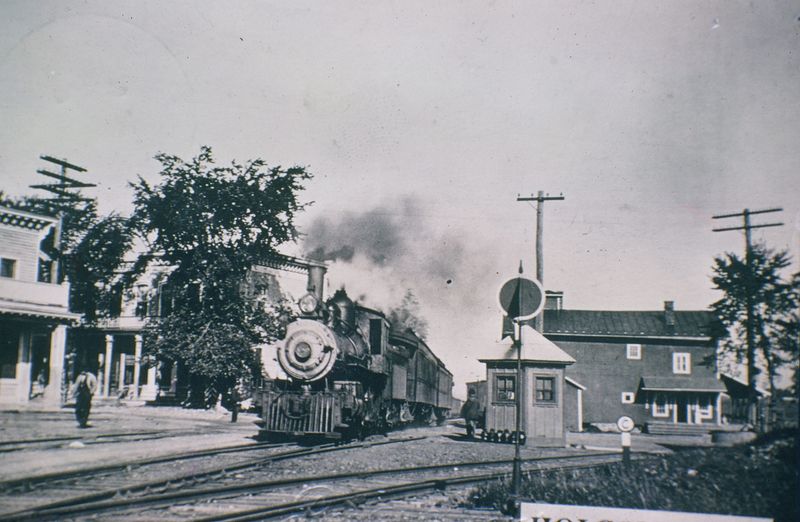
The village of East Bloomfield started out as one village stretching about a mile in length, then became known as East Bloomfield Station because the railroad, built in 1854, ran through the business district.
A new village was created in 1916 called Holcomb. On June 1, 1990, the villages were reunited and consolidated into a single village of Bloomfield.
— Village of Bloomfield
Village of Clifton Springs
Dr. Henry Foster came to what would become the village of Clifton Springs in 1849. He was looking for a place to begin his water cure.
Conventional wisdom of the time thought that the waters and a strong religious revival could restore many who had fallen ill for a variety of reasons to active and useful lives.
Clifton Springs was the hub, becoming well known throughout the eastern part of the U.S. and drawing hundreds of people for the benefits of the water, rest and restoration of health.
— Village of Clifton Springs
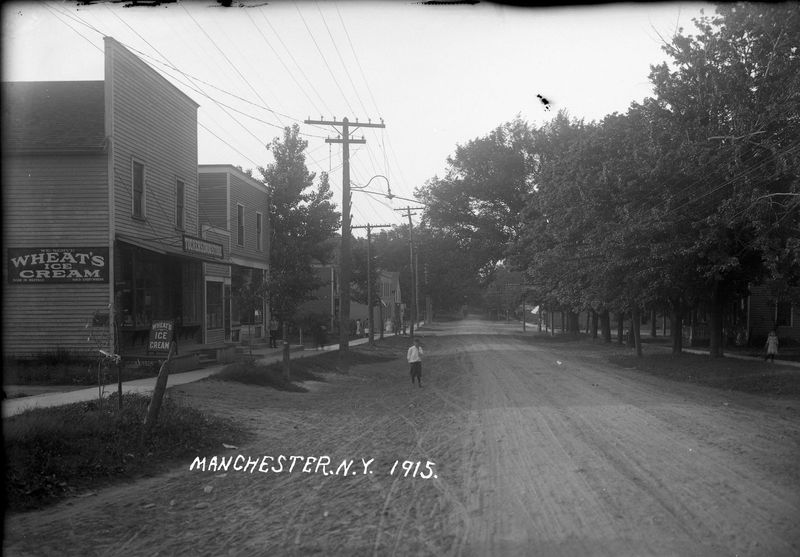
Village of Manchester
The village is the oldest settlement in the town of Manchester. The first settlers arrived in 1793 and the first deed was issued to Joel Gillet on June 23, 1796, who built the first log home.
As mentioned earlier, Manchester was part of the town of Farmington, which was divided in half in 1821. The new Eastern town was named Burt, after a member of the Legislature who sponsored the bill. This name was not liked by town residents and on April 16, 1822, it was changed to Manchester.
On Aug. 16, 1892, at the barbershop of John Moore, a vote passed 71 to 0 for incorporation as a village. Dr. John R. Pratt, became the president of the village and William Wilson, Walter Mason and Levi Redfield were the trustees.
— Nancy W. Johnsen, village historian
Village of Naples
According to Bob Vierhile and his “A Page from the Past,” dated Sept. 21, 1989, the “Old Square” was the original center of the village, just west of the “Commons” area. This was around which this area’s earliest colonial settlement, Watkinstown, was founded, later to become Naples.
Long before that, however, this fertile valley was home to a peaceful Seneca community who called it Kiandaga, meaning “Between the Hills,” according to information from the Naples NY Historical Society.
Colonial settlement began around the spring of 1790 with the arrival of a mixture of families and Revolutionary War veterans from Massachusetts. This first wave of settlers included the Parrish, Watkins, Clark, and Cleveland families, who had been part of a group that negotiated purchasing over 21,000 acres of land called Township No. 7 for about 12 cents an acre through the Phelps and Gorham Purchase.
As the village grew, it was renamed Middletown in 1796, because it was midway between Canandaigua and Bath.
Village of Phelps
John Decker Robison not only was a pioneer of the town of Phelps, but also of the village, as his purchase included a part of the village tract.
Historians said Robison laid the real foundation for the subsequent village by erecting a tavern in 1793, and the locality soon became known as a trade center, according to a history of both the town and village published in 1893 and found on the Phelps Historical Society website. Known by various names, an order of incorporation was granted in February 1855. The first elected village trustees were Zenus Wheeler, Dolphin Stephenson, Harvey Carey, Anson Titus and John Trisler.
— Phelps Historical Society
Village of Rushville
The village of Rushville is one of a handful of villages in New York that are in two towns and two counties. The village is in the northern part of the town of Potter in Yates County, and the southern part of the town of Gorham in Ontario County.
Elias Gilbert was one of the earliest settlers, who came here circa 1790. He purchased land from Arnold Potter, the original owner of the land that comprised the town of Augusta, which are now Middlesex and Potter.
The name of the village was changed in 1818 from Federal Hollow to Rushville. Rushville became an incorporated village on April 24, 1866.
— James Rice, village of Rushville, for the Daily Messenger in 2014
Village of Shortsville
Theophilus Short took a liking to what he found when he came to what would be known as the village of Shortsville.
In 1804 he erected his first flour mill, making use of the water power from the Canandaigua Outlet. That same year he built a sawmill on the east bank of the stream. His home, a log house east of the outlet, was the one and only house in what became known as Shorts Mills and later, Shortsville, according to then Shortsville Historian Maude S. Fiero.
In 1889 Shortsville became an incorporated village and elected Oliver Titus as the first village president, as the mayor was then called.
— Maude S. Fiero, village historian in April 1971
Village of Victor
Although the area was renowned for farmland, buildings began appearing in the village of Victor in the late 1800s.
The village of Victor was incorporated in 1879 and James Walling, a prominent businessman, became its first president.
One of the first actions by the Board of Trustees was to be sure that the dirt main streets of the village were sprinkled and well lit.
— Babette Huber, Victor historian for the Daily Messenger in 2014
Mike Murphy covers Canandaigua and other communities in Ontario County and writes the Eat, Drink and Be Murphy food and drink column. He can be reached at mmurphy@messengerpostmedia.com. Follow him on X at @MPN_MikeMurphy.
This article originally appeared on Rochester Democrat and Chronicle: Discover the origins of Ontario County communities
Reporting by Mike Murphy, Rochester Democrat and Chronicle / Rochester Democrat and Chronicle
USA TODAY Network via Reuters Connect
By Mike Murphy, Rochester Democrat and Chronicle | USA TODAY Network
