

June 19 (Reuters) – A U.S. Iran deal is in place for now but the next few weeks will test whether a more permanent agreement can be reached.
Key U.S. and Australian economic data are due, Colombians head to the polls, and London hosts a major climate gathering.

Here’s all you need to know about the coming week in financial markets by Lewis Krauskopf and Rodrigo Campos in New York, Rocky Swift in Tokyo and Simon Jessop and Alun John in London.
1/ GO STRAIT ON THROUGH
U.S. President Donald Trump and Iran’s President Masoud Pezeshkian have signed a memorandum of understanding to end their war, with Trump signing at France’s Palace of Versailles.
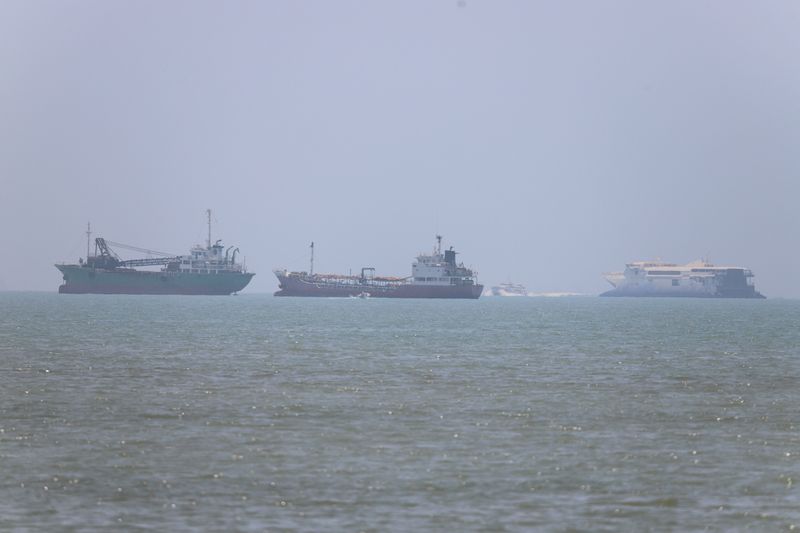
Tankers broadcasting their positions sailed through the Strait of Hormuz on Thursday, after weeks of trying to conceal their locations, sending oil below $80.
Global stocks and bonds have rallied, but the key question now is whether a deal can hold and the waterway stay open.
Lebanon remains a potential flashpoint, with Israeli airstrikes continuing. Doubts persist over a final U.S.-Iran accord, and planned talks in Geneva on Friday were called off.
Markets will be driven by headlines signalling progress or setbacks. Investors will also get a snapshot of pre-deal business conditions when June flash activity data is released on Tuesday.
2/ INFLATION, STILL HIGH
Geopolitics isn’t the only focus.
Investors will get a key U.S. inflation update on the heels of a Federal Reserve meeting that prompted a hawkish market reaction.
The personal consumption expenditures (PCE) price index, due on June 25, follows Fed projections that core PCE will end the year at 3.3%, well above the 2% target.
Rate hike bets rose after the meeting, though some investors say easing oil prices reduce the need for tighter policy.
Quarterly results from Micron Technology on June 24 bring fresh attention to the scorching semiconductor trade. Earnings on June 23 from global delivery company FedEx, a bellwether for economic activity, will also be in focus.
3/ PRICES DOWN UNDER
Australia releases key inflation and labour data that could shape the policy outlook.
After three hikes this year, the Reserve Bank of Australia held its cash rate at 4.35% on Tuesday, the highest in developed markets, while flagging that another increase may be needed to tame price pressures.
Figures in late May pointed to slowing inflation. The next print for the consumer price index will be released on Wednesday.
Labour figures are due the following day. The unemployment rate unexpectedly rose to a 4-1/2-year high of 4.5% in May, part of a raft of softer economic data that fed into the RBA’s decision.
Interest rate swaps show a one-in-four chance of a rate increase in August, and around a two-in-three chance of a move by year-end.
4/ COLOMBIA HEADS TO THE POLLS
Colombians vote Sunday in a presidential runoff offering sharply different economic paths from right-wing lawyer Abelardo De La Espriella and leftist senator Ivan Cepeda.
The winner inherits weak public finances, soft private investment and a divided Congress. Markets prefer De La Espriella, whose platform includes a smaller state, lower corporate taxes and a restart of oil exploration. His victory would likely support Colombian assets and business confidence, and much of it is already priced into markets.
Risks remain: fiscal tightening may fall short.
Cepeda has pledged to extend President Gustavo Petro’s social and economic agenda, raising taxes on the wealthy and large companies, and limiting new oil and coal exploration, with Ecopetrol stock in the crosshairs.
Economists expect a Cepeda win would weigh on markets and investor confidence, with fiscal constraints limiting spending plans.
5/ A CHALLENGING CLIMATE
London hosts its largest-ever climate week, with more than 75,000 participants across over 1,000 events.
Policymakers, financiers and corporate leaders will focus on mobilising private capital for the low-carbon transition, and the role of governments and development banks.
The debate comes as many developed economies cut aid while boosting defence spending.
Energy security remains in focus amid the Iran conflict and rising power demand from AI data centres – a backdrop likely to energise activists, particularly during a forecast heatwave.
Attendees will also have one eye on the COP31 climate talks in Turkey in November.
(Compiled by Alun John. Graphics by Pasit Kongkunakornku. Editing by Dhara Ranasinghe and Mark Potter)
By Reuters | Reuters | © Copyright Thomson Reuters 2026.
