Everyone is welcome at the Daisy Garton Community Farm, located along a busy eastside street in Bloomington.
Robert Frew and Juan Carlos Arango and their Sobremesa Foundation are expanding community agriculture at the farm by developing an urban agriculture and farmer training site. Utilizing regenerative growing practices they are providing a location to grow not only fruits and vegetables but new farmers and more access to local food for people who work the land as well at several local food pantries and kitchens.

The farm is at the corner of 10th Street and Pete Ellis Drive. It’s the remnant of the once 80-plus acre farm that covered the area that now houses St. Mark’s United Methodist Church, many apartment complexes and businesses.
The gates into the fenced area are always open — please latch them after walking in or out to keep the deer out. Once inside, people can view what’s growing, wander along the rows of growing plants and even stop to help weed.
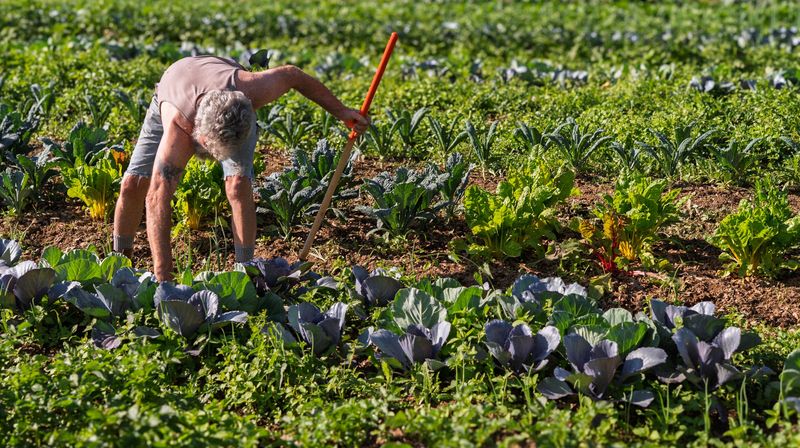
Tom Felcon, who lives in a nearby apartment, was weeding a row of chard and another of cabbage early on a Tuesday morning. Felcon said he enjoys working at the farm in the cooler mornings. He’s lived in the area for four years, having come from New Jersey. Being on a farm is something he looks forward to and it’s a short walk from his residence.
Beginning for new farm venture
This is the first year that Sobremesa has been leasing the farm from Bloomington Restorations Inc. (BRI). Besides volunteers, Sobremesa has up to 10 registered participants who work at the farm. Several are from other countries — India, China and, of course, the United States. The work at the Garton farmstead is an outgrowth of Sobremesa’s Growing New Farmers in New Lands project that assists refugees.
The ultimate goal is to increase farming and business skills for everyone while also providing a source for organically grown produce. Frew and Arango first started the Growing New Farmers project on land near their Unionville-area Sobremesa Farm. But transportation to that area was difficult for most people who live in Bloomington or elsewhere. Since the Garton farm is urban, people can walk, bike, take bus or drive to the location.
The new location also provides a chance to transition for Sobremesa to widen the Growing New Farmers project to encompass people from a wider range of cultures and backgrounds. Everyone is invited to farm together, Arango explained. Even Arango and Frew are learning about new crops from some of the participants.
“They learn from each other. They share from each other,” he said, adding that includes sharing information on the plants they’ve raised elsewhere and other agricultural practices.
Current projects include greenhouse propagation, vegetable and perennial crop production, orchard development and educational programming designed to help people gain practical growing experience. Participants and volunteers help with seed starting, soil preparation, planting, regenerative growing techniques and seasonal farm management. In addition to agricultural abilities, participants and volunteers develop workforce skills.
Participants and volunteers can grow plants and eat what they grow, sell the bounty of their plants or share it with food pantries and kitchens. Currently Arango said some produce from the farm is going to Pantry 279 and Community Kitchen of Monroe County.
Farm stand on Wednesdays
Part of the Hinkle-Garton Farmstead project is operating a farm stand, which will be located on the property just off Pete Ellis Drive.
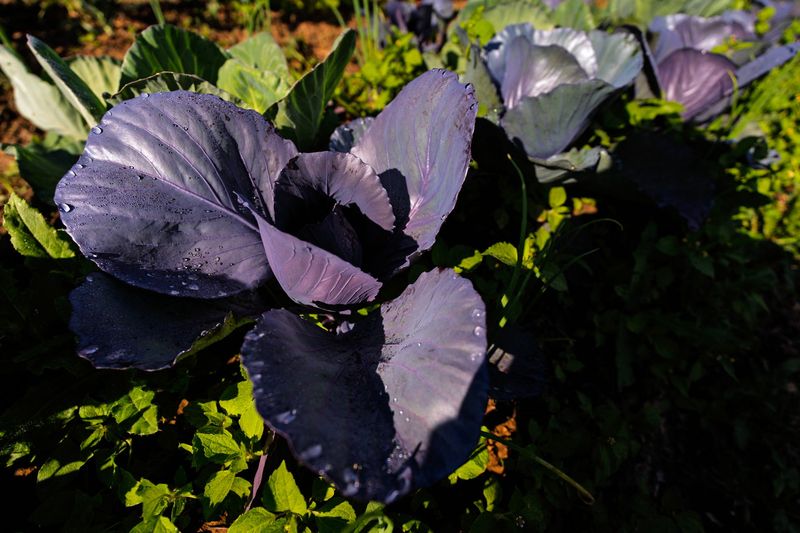
The farm stand will open for its first week on Wednesday, June 24. It will be open 3-7 p.m. Produce available is expected to include kale, Asian greens, cabbage, chard and radishes. As they ripen tomatoes, potatoes, various types of peppers, squash, eggplants and okra will be available as well.
What’s planned at the farm
As in the past with the Growing New Farmers program, Frew and Arango will have workshops to provide more skills and information about urban farming practices. A three-day workshop is already planned for August, with the first day about the business of farming and two days of learning practices of farming with an agronomist from Columbia scheduled to share his knowledge.
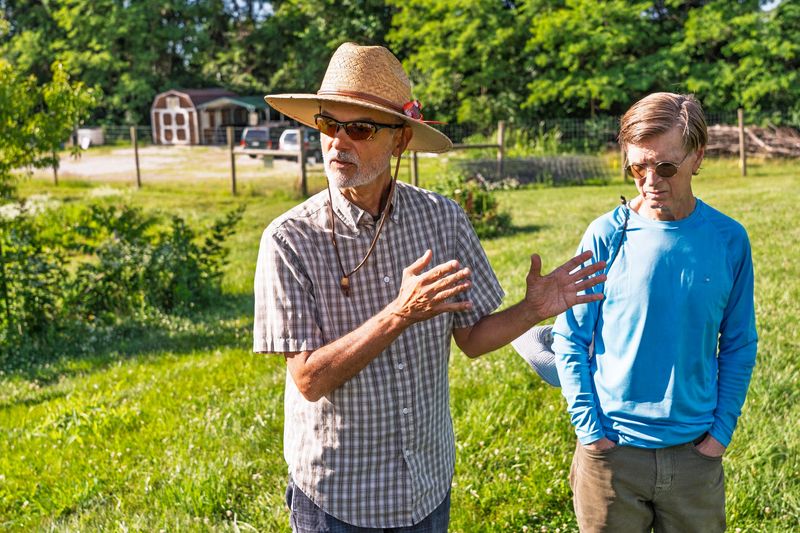
“This is an urban farm, the only one in Bloomington,” Arango said. “We hope to inspire others to grow food” on their own properties.
He believes the model they’re developing could work well in other communities, providing local food grown in urban areas.
“It’s not about the food,” Arango said. “It’s about the community. It’s a healing process.”
The healing is for people and the land. The two have secured a grant from the Natural Resources Conservation Service to help rid the wooded area on the farm’s edge of invasive plant species. They also are working with the Monroe County Soil and Water Conservation District and have received funds from Duke Energy Foundation to help support some of their projects.
History of Hinkle-Garton Farmstead
Before Sobremesa Foundation took over the farmland at the Hinkle-Garton Farmstead, Indiana University was operating the IU Campus Farm there.
The IU Campus Farm began leasing the land at the Hinkle-Garton Farmstead in the fall of 2017, according to James Farmer, who headed the now-closed Food Institute at IU and helped with the IU Farm. IU’s farming venture officially closed this past fall, Farmer said.
While IU Farm was teaching farming practices to students and growing produce, it operated a farm stand and also provided produce for IU dining halls and Crimson Cupboard, the university’s food pantry.
The Hinkle-Garton Farmstead is operated by Bloomington Restorations Inc., a nonprofit dedicated to the preservation of historic architecture and old neighborhoods in Bloomington and Monroe County. The property is on the National Register of Historic Places, something its former owner Daisy Hinkle-Garton accomplished while living in the farmhouse.
Hinkle-Garton and her husband, Joseph Garton, lived on the farm that was in Hinkle-Garton’s family for generations. It was her desire to keep the property with barns and land for farming as a way to educate future generations.
For more information on Sobremesa Foundation and its program, call 812-606-0865 or email sobremesafoundation@gmail.com.
Contact Carol Kugler at ckugler@heraldt.com.
This article originally appeared on The Herald-Times: Sobremesa Foundation takes over Daisy Garden Community Farm
Reporting by Carol Kugler, The Herald-Times / The Herald-Times
USA TODAY Network via Reuters Connect
By Carol Kugler, The Herald-Times | USA TODAY Network