Hello! My name is Kendalyn Town, and I am the new watersheds technician for the Chippewa Luce Mackinac Conservation District. I am an alumna of Central Michigan University, where I earned my bachelor’s degree in environmental science, and I recently earned my master’s degree in environmental science and ecology from the State University of New York at Brockport. I grew up in Midland, Michigan and spent numerous summers visiting family in Luce County, so I am excited to be serving this area through my work at CLMCD.
We all live within a watershed: a land area where water drains into a single body such as a river or lake. In watersheds, there are many types of ecosystems, and among the most important for watershed health are wetlands.

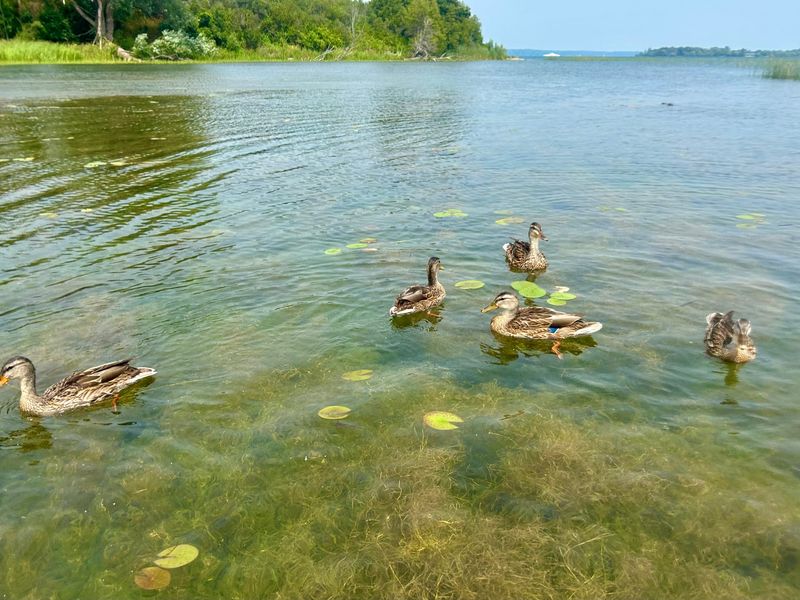
What is a wetland? You have likely heard the words marsh, swamp, bog or fen, which are all types of wetlands. Broadly, a wetland is an area that is permanently or temporarily flooded or saturated, containing hydric soil (soil formed under waterlogged, low-oxygen conditions) and hydrophytic (“water-loving”) plants, such as cattails or water lilies. Wetlands are found throughout the watersheds in our region, from a pond in your backyard, to the edges of streams, rivers and lakes, and even along the coastline of the Great Lakes.
Wetlands provide numerous benefits to watersheds. They help prevent flooding by acting as “sponges” on the landscape. When it rains, the rainwater runs off the land, making its way into streams and rivers. Wetlands along rivers (“riverine” wetlands) soak up much of this runoff as it flows into the river, holding water in place and limiting flood peaks. Then, as the flood waters go down, these wetlands release water slowly, preventing it from flowing all at once. In areas where wetlands have been lost, flood peaks are higher, causing property damage and increased costs for landowners — this shows just how important wetlands are! In fact, wetlands are such good “sponges” that a single acre of wetland can hold over a million gallons of water, equal to one and a half Olympic-sized swimming pools!
In addition to flood prevention, wetlands also improve water quality by acting as the “kidneys” of the watershed. During rainfall or snowmelt, water running off from roads, lawns and farm fields carries nutrients from fertilizer (nitrogen and phosphorus), along with salt, sediments and other materials. Just as our kidneys filter waste materials from our blood, wetlands filter out waste particles from runoff as it flows into streams, rivers and lakes throughout our watersheds. As water passes through wetlands, plants like cattails, bulrush and duckweed absorb nutrients and some salts, while the sediments carried by runoff are deposited and stored in wetland soils. This leads to improved water quality for everyone to enjoy.
Beyond water quality, wetlands are also beneficial as habitats for species in our watersheds. Many fish depend on wetlands for at least part of their life cycle. Species like yellow perch, smallmouth and largemouth bass, northern pike and countless others use wetlands as spawning and nursery habitat, so maintaining healthy wetlands is crucial for supporting healthy fisheries. Wetlands are also important for waterfowl, which depend on wetlands for food, breeding grounds and stopover habitats during migration.
Considering how important wetlands are, you might wonder what you can do to help them. An easy step you can take is to plant native species! Wetlands are particularly vulnerable to invasive plants, which outcompete native species and hinder the wetlands’ important functions. Choosing native species for your landscaping is a simple way to help protect wetlands. Additionally, if you live along a pond or lake and want to promote healthy wetlands and water on your property, check out the Michigan Natural Shoreline Partnership for resources on establishing a natural shoreline with native wetland plants.
If you would like to know more about how the Conservation District works with landowners to protect their water, reach out to Kendalyn Town at kendalyn.town@macd.org or Madeline Drent, CLMCD watersheds coordinator, at madeline.drent@macd.org or 906-748-0837.
This article originally appeared on The Sault News: Chippewa Luce Mackinac Conservation District advocates for wetlands
Reporting by Kendalyn Town, CLMCD watersheds technician, Sault Ste. Marie News / The Sault News
USA TODAY Network via Reuters Connect
By Kendalyn Town, CLMCD watersheds technician, Sault Ste. Marie News | USA TODAY Network