“Rain, rain, go away” was a cry heard from many gardeners (and farmers) during the last couple of weeks. Rainfall in parts of Greater Columbus for the month of May was nearly double the historical average of 3.5 inches for the month.
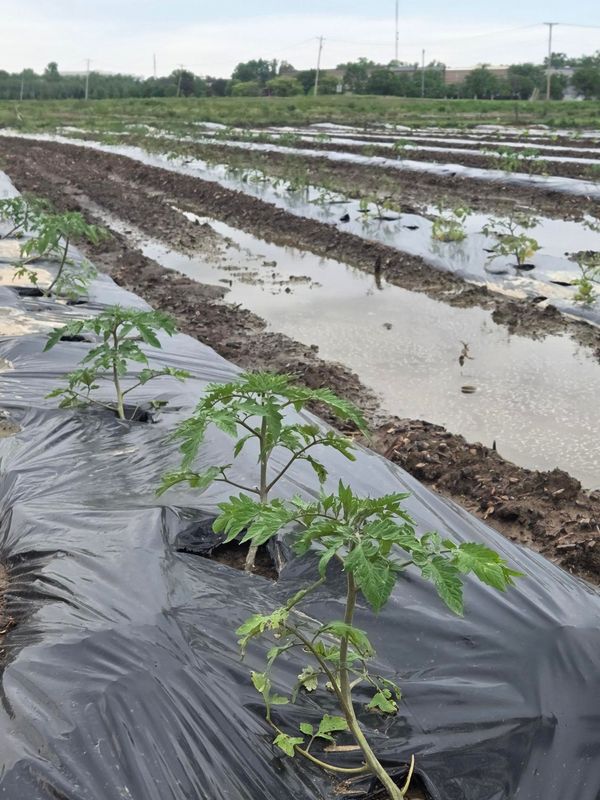
While the rain prevented many gardeners (including yours truly) from planting and completing other tasks in the garden and home landscape, the real challenge for some gardeners now is dealing with waterlogged soil caused by the increased precipitation. I have even seen some flooded backyards with a few inches of water on top of the root zone of trees, shrubs and turfgrass several days after the rain had ended.

Too much of a good thing
Soil that is soaked through with water can drown plants by depriving their roots of oxygen in a form that can be absorbed. A healthy soil should be composed of approximately 50% by volume of pore space between soil particles. Half of that pore space should be available for holding water, and the other half available for storing oxygen and other gases.
When all of the pore space fills with water, the soil’s balance of mineral particles, organic matter, air and water is thrown out of whack, and the soil becomes anaerobic and begins to have a foul odor. When the soil remains waterlogged for several days, plant roots, bulbs and tubers can begin to rot as soil-borne diseases begin to spread.
If the soil remains waterlogged for several days, it cannot support the insects, earthworms, microbes and small mammals essential to a healthy soil ecosystem.
Immediate response
If your garden or home landscape has areas with standing water for more than a day or two, determine if you can dig temporary trenches or swales to move pooling water to run off to a lower elevation or to a storm drain in the area.
Even when surface water has receded in the garden, don’t walk on wet soil or dig in it while it is muddy. Equipment such as tillers and even lawnmowers should never be used on wet soils as this will cause long-term soil compaction, which eliminates the pore space in the soil.
The very back of my lawn could not be mowed last week because the soil in that part of the yard was still waterlogged, and I’d rather have uneven tall grass for a couple of weeks than compacted soil forever. If you were wondering what those brown lines were which you saw this past week on mowed lawns, they are the tire tracks from mowers which traveled over waterlogged soils.
Long-term improvements
If you have experienced waterlogged soils in your garden or home landscape, you may want to consider some improvements as research is showing that rainfall events are becoming less frequent, but more intense. Those daylong light-shower events are being replaced by 2-inch downpours which cause waterlogged soils and flash flooding.
Adding organic matter to in-ground garden beds can help break up heavy clay soils which are more prone to waterlogging. Working 2 to 4 inches of organic compost, leaf mold or well-rotted manure into heavy clay or shale soils can break up dense soil particles and create more pore space in the soil.
Growing in raised beds can also be another strategy to avoid waterlogging of soils; just be sure to fill raised beds with lightweight soil mixes, not heavy native soil from your garden! There are many other benefits to growing in raised beds, including easier pest management and less bending and stooping!
An alternative to raised beds with lighter soil is to create ridges in your garden bed by raking soil into mounded rows, similar to hilling soil to grow potatoes. This strategy can be an inexpensive option for soils which are frequently waterlogged.
In chronically wet areas of your landscape, you may want to consider regrading the yard to direct surface water to storm drains, ditches or catch basins. You might also consider installing a small rain garden to collect excess storm water.
Water-loving species such as red twig dogwood, willows, ferns, and Astilbe can be planted in a rain garden or in other wet areas of the yard.
Mike Hogan is Extension Educator, Agriculture & Natural Resources and associate professor with Ohio State University Extension. He can be reached at hogan.1@osu.edu.
This article originally appeared on The Columbus Dispatch: Protect your plants from waterlogged garden soil
Reporting by Mike Hogan, Special to The Columbus Dispatch / The Columbus Dispatch
USA TODAY Network via Reuters Connect
By Mike Hogan, Special to The Columbus Dispatch | USA TODAY Network