For generations, El Paso’s economy has been built on one fundamental advantage: our position as one of North America’s premier gateways for cross-border commerce. Trade with Mexico is not simply one sector of our economy — it is the cornerstone upon which thousands of jobs, billions of dollars in economic activity, and countless business investments depend.
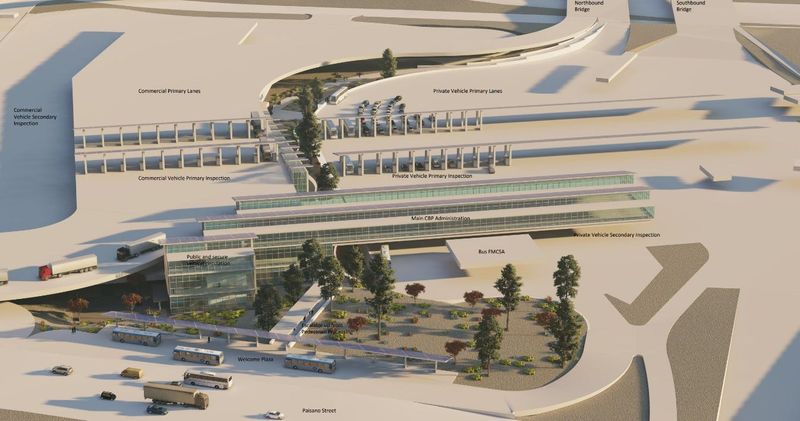
That is why the General Services Agency’s decision to remove commercial traffic from the Bridge of the Americas is deeply troubling. BOTA is El Paso’s only toll-free commercial bridge crossing. Shifting trucks to tolled crossing raises transportation costs for carriers and BOTA processes northbound and southbound empty containers that keep freight moving.

The proposal would eliminate six of the bridge’s fifteen commercial lanes, reducing commercial crossing capacity by approximately 40 percent. Less capacity means fewer trucks can be processed per hour and trucks wait longer. At a time when trade volumes are growing, this is precisely the wrong direction.
The timing could not be worse. Commercial activity through our ports of entry recorded a remarkable 34 percent increase in 2025, reflecting the continued expansion of North American supply chains and the growing importance of U.S.-Mexico trade. Rather than building on that momentum, the proposed reduction in capacity threatens to erase those gains and create new bottlenecks at one of our region’s most important trade gateways.
Businesses make investment decisions based on reliability, efficiency, and predictability. Manufacturers, distributors, and logistics firms cannot afford uncertainty at the border. When crossing times increase and capacity decreases, cargo does not simply wait — it seeks alternative routes.
The unfortunate reality is that El Paso does not compete only with neighboring communities. We compete with trade corridors throughout Texas and the Southwest. If commercial traffic is constrained at the Bridge of the Americas, companies will increasingly direct investment toward competing ports of entry and transportation hubs that offer greater capacity and fewer delays.
Once those investments are made elsewhere, winning them back becomes extraordinarily difficult.
The consequences extend far beyond trucking companies and customs brokers. Reduced trade activity affects warehouse operators, manufacturers, retailers, transportation firms, and the thousands of workers whose livelihoods depend on a healthy cross-border economy. It weakens our ability to attract new businesses and undermines our efforts to retain existing employers.
The decision also ignores a significant public investment already made to strengthen commercial trade through the Bridge of the Americas. The Texas Department of Transportation invested $96 million to directly connect the bridge’s commercial lanes to Interstate 10, creating a more efficient movement of goods between Mexico and the national highway system. That investment was made because state leaders recognized the strategic importance of the bridge as a commercial gateway.
Reducing commercial capacity now runs counter to the very purpose of that investment.
El Paso’s future prosperity depends on expanding trade infrastructure, not shrinking it. As supply chains continue to shift toward North America and nearshoring drives new manufacturing investment, our region should be positioning itself to handle more commerce, not less. We should be looking for ways to increase efficiency at our ports of entry, modernize facilities, and strengthen our competitive advantage.
The Bridge of the Americas has long been a vital artery connecting the economies of the United States and Mexico. Removing commercial traffic from the bridge would diminish that role and send a troubling message to businesses evaluating where to invest.
El Paso has spent decades building its reputation as a premier international trade hub. We should not jeopardize that position through decisions that reduce capacity, discourage investment, and weaken our competitiveness.
Cross-border trade built this region. It remains the foundation of our economic future. Public policy should strengthen that foundation — not undermine it.
Dee Margo is former mayor of El Paso.
This article originally appeared on El Paso Times: OPINION: Don’t undermine El Paso’s trade future
Reporting by Dee Margo, Guest columnist / El Paso Times
USA TODAY Network via Reuters Connect
By Dee Margo, Guest columnist | USA TODAY Network