Would I like to stop paying property taxes?
Of course I would.

Particularly if it won’t affect the state of my city — in a state that doesn’t have any income tax and has created a system where property tax is one of the main sources of revenue for nearly everything local governments do. Public safety, schools, parks, emergency management, road maintenance …
I’d also like to eat a giant bowl of ice cream every day and not gain a single pound. Or stay up late, have a beer or two, and not feel sluggish in the morning. And to get away with a lot of other things I could when I was younger.
But that’s another story for another day. This is about the topic of the week, something I do pay more attention to at my current age: property taxes.
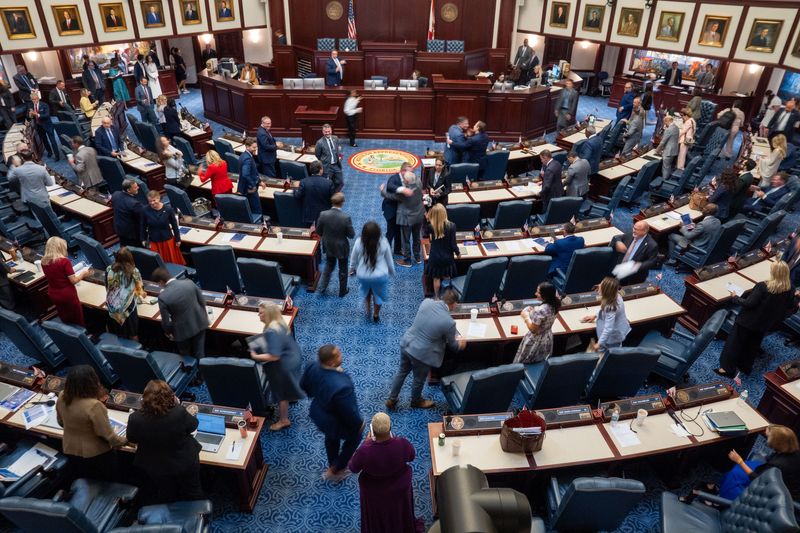
Gov. Ron DeSantis had Florida lawmakers return to Tallahassee for a special session and, in less than 24 hours, on June 2 they passed a sweeping restructuring of the property tax system.
It doesn’t eliminate property taxes, as DeSantis has been talking about as a goal, but it does raise the state’s homestead exemption to $250,000. Lawmakers inserted provisions to protect public schools from any cuts — and stripped out a DeSantis’ proposal to have a state trust fund to help local governments deal with shortfalls.
The amendment now heads to voters in November, where it will need 60 percent to pass.
For what it’s worth, according to a Sachs Media survey, this special session had something rare. Broad bipartisan support: 80% of Republicans and no-party voters, 66% of Democrats and about 75% across all age groups.
It’s easy to understand the lure of lower taxes, particularly these days. With rising inflation, and higher gas prices and utility bills compounded by the war in Iran, 55 percent of Americans say their financial situation is getting worse — the highest level since Gallup began asking that question 25 years ago.
Our household is among those in that situation. So when our latest tax bill arrived in the mailbox Tuesday, just a few hours after the Legislature’s vote, a cut in property taxes sounded really good.
But what would that mean for my city, Jacksonville, and, beyond that, towns all over the state?
Just one example: Winter Haven City Manager Michael Stavres traveled to Tallahassee to lay out some of the math of what his community could be facing. He said Winter Haven collects about $31.5 million in property taxes; that police and fire alone costs $34 million; and that cutting property taxes would mean $10 million less to work with.
“As I left Winter Haven to drive here, I saw children going to summer camp for the first day, going to swim lessons, going to our parks — places that they love, places that make families want to live in our community,” he said. “Those are the things that suffer when we don’t have the dollars to pay for them.”
Officials from other cities and counties went to Tallahassee with similar messages, warning of the potential cuts to basic services. Firefighters and paramedics filled rows of seats in committee hearing rooms.
One point some have made: It isn’t just that cities will collect substantially less money. It’s the unanswered questions of what this might mean. Will taxpayers simply end up paying in other ways?
“I’d love to get rid of property taxes,” U.S. Sen. Rick Scott, former governor of Florida, said on Fox News before the session. “Unfortunately, you gotta think about, OK, what are you going to replace it with? We are a very efficient state, so you’ve got to come up with, how are you going to fund education, the environment, things like that.”
And then there’s the simple fact that a lot of Floridians who aren’t homeowners wouldn’t see any benefit from a property tax cut — but might feel the impact of cuts to social services and increased fees elsewhere. For these Floridians, this could be a double-whammy.
Jeff Brandes, a former Republican lawmaker who is now director of the Florida Policy Project, was among those pushing back for a reason beyond the tax cut itself — saying this could dramatically shift power away from local governments and to the state.
“The sales pitch is simple: property taxes are unpopular, homeowners are angry, government has grown, and cutting tax bills will provide relief. Who doesn’t like that?” he wrote in an op-ed. “But there is a difference between cutting taxes and changing who controls government. Florida is not debating a tax cut. Florida is debating a fundamental redesign of how local government is financed.”
Brandes said there is an irony here that should give conservatives pause: a proposal intended to shrink government could ultimately centralize it. And by centralizing it, local officials — and, in turn, local citizens — lose control of what happens in their backyard. The governor of Florida, whoever that is in the future, effectively becomes the mayor of communities he or she was never elected to run.
So much for home rule.
For decades, Tallahassee has been chipping away at home rule, passing laws that forbid cities and counties from enacting local ordinances about cruise ships, tree preservation, Styrofoam containers, DEI and, perhaps more than anything, land use and growth management.
Now this.
To some degree, there always have been state leaders rewarding (and sometimes punishing) local governments. But in recent years, we’ve seen the governor’s office openly, sometimes brazenly, doing this. And this could only take that dynamic to unprecedented levels.
Dramatically limiting one of the main sources of local revenue undercuts local control unlike anything before.
Would Florida cities control their own destiny? Or would Tallahassee?
Before the special session, the Jacksonville City Council Auditor’s Office projected that the homestead exemption could mean the city would collect $300 million less in property tax revenue.
“As it stands now, property tax revenue barely covers Jacksonville’s police and fire costs,” Jacksonville Mayor Donna Deegan said. “Eliminating or dramatically changing this funding source will hurt public safety efforts, as well as core services that improve quality of life and affordability.”
City Council member Rory Diamond posted on X: “We can easily cut economic giveaways, non-profit, and arts spend and hit that mark with zero effect on police, fire or infrastructure. The waste has to go.”
When my former colleague Nate Monroe, now executive editor of The Florida Trib, noted that Jacksonville has a local DOGE committee that hasn’t identified even remotely close to $300 million in cuts, Diamond insisted they’re there.
“Economic development deals #1,” he said. “All of them. Every rev grant also. Non-profit and arts spend. That’s $300 million right there.”
I know I’ve said this before, but every time Diamond does this, decrying “giveaways to billionaires and millionaires,” it’s worth repeating. Diamond voted FOR taxpayers chipping in hundreds of millions of dollars to help a billionaire (Shad Khan) develop Lot J. And after that failed to pass, Diamond voted FOR an incentives package worth more than $100 million to help Khan build a Four Seasons hotel, arguing that a REV (Recapture Enhanced Value) grant was a good deal for taxpayers.
That’s more than $300 million right there, in just two Rory Diamond votes.
He was for that use of taxpayer money, but wants it known that he’s against the city using tax dollars for things like “new useless parks.” (For my money, some of our new parks, which are getting a lot of use, represent some of the best economic development around.)
This is but a glimpse of what lies ahead on the way to November. But at least voters have five months.
The Legislature spent less than two days debating what the Tampa Bay Times said “could become the most sweeping restructuring of the state’s tax system — and city and county governments — in a generation.”
Would I like my property taxes cut dramatically? Who wouldn’t? But I want to know what that would mean for my city and future generations here.
mwoods@jacksonville.com
(904) 359-4212
This article originally appeared on Florida Times-Union: Property tax relief: the no-calorie ice cream of Florida? | Opinion
Reporting by Mark Woods, Jacksonville Florida Times-Union / Florida Times-Union
USA TODAY Network via Reuters Connect
By Mark Woods, Jacksonville Florida Times-Union | USA TODAY Network