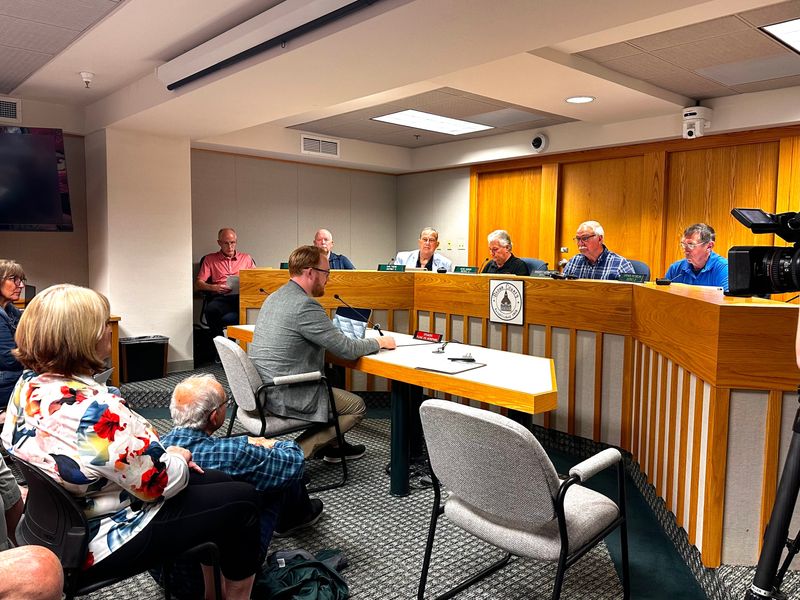
Brown County’s Planning, Development & Transportation Committee on June 2 declined to move forward a data center moratorium request by County Board member Christopher Welch.
Home » News » National News » Wisconsin » Brown County committee declines to pursue data center moratorium
Wisconsin

Brown County committee declines to pursue data center moratorium

(This article has been updated to correct a misattribution.)

Brown County’s Planning, Development & Transportation Committee members on June 2 unanimously declined to consider a countywide data center moratorium over public objections, reasoning that such a measure would be moot in the county with no authority to dictate local zoning laws.

Video Thumbnail

Instead, an informal survey to gauge the feelings of local governments on data centers will be done by County Board members Dan Theno, Jim Pyle and Christopher Welch.

Welch first requested a look into a countywide moratorium and does not sit on the committee.

The de facto three-person subcommittee would then report their findings to the wider group, along with what Theno said would be “constructive suggestions” on how the county could, and should, be involved in local data center matters.

No deadline for a report was set.

“We can actually create something that’s constructive, that is within our bounds, that we are able to do that still gives municipalities all their power to control their destiny,” Welch told the audience of about 80 spilling into the second-floor hallway at the Brown County Northern Building in Green Bay.

Moratoriums on development, under state law, postpone any rezoning or land approvals related to a project deemed overburdensome on public utilities or that pose a significant health or safety risk.

It’s a kind of measure that’s become increasingly popular as data center developers continue to eye Wisconsin and the state’s northeast for future development in the face of public opposition over socioeconomic and health anxieties. Residents in the Village of Wrightstown, posed with data center developer Cloverleaf Infrastructure’s interest in a nearly 1-gigawatt AI data center in the region, have repeatedly asked their Village Board to adopt a moratorium.

On the heels of local opposition, Welch requested to pause any data center project in the county, including acquiring land or permits, until state legislation could enforce regulations and monitoring on such projects, according to the committee agenda.

The committee had been expected not to entertain Welch’s ask on legal grounds.

David Hemery, the county’s corporation counsel who gives civil legal advice to county officials, told the committee that it was unclear if the state law on moratoriums was relevant to data center developments.

In any case, no town, village or city in Brown County is subject to county zoning authority as they’ve all adopted independent zoning laws, rendering any countywide moratorium moot. Vice Chair Kevin Gannon referred to Manitowoc County’s data center moratorium, which he said was applicable only to three towns in that county without their own zoning laws.

“So whatever we do here is not going to affect anything,” committee Chair Norb Dantinne told the committee.

Welch then walked back his initial moratorium request, saying his intention had been to “give the county options” and act as a model for municipalities to follow. He later also retracted suggestions that the county create boilerplate moratorium language to give to local governments or write a resolution in opposition to data center development.

Several committee members raised concerns that the county was overstepping its role on the issue. Gannon said the towns association or League of Wisconsin Municipalities should be the entities giving local government guidance on data centers.

Pyle said in conversation with several municipal government officials, none had been interested in the county getting involved in their zoning authority.

Pyle and Theno placed ultimate responsibility for implementing restrictions on state agencies, like the Wisconsin Department of Natural Resources and the state Legislature. Theno, who indicated his alignment with Welch on his concerns about data center developments, said the county currently lacked the authority to limit such projects.

The 21 members of the public who spoke during public comment, including several politicians, were critical of what some characterized as county officials’ lack of imagination and courage on the issue. Some framed the county’s decline to pursue a moratorium, resolution, or other measure immediately as an abdication of authority.

Jeannette Knill, a Green Bay School Board member, pointed to Green Bay being the first municipality in the state to put a line on tax bills of school voucher payments. The decision, for which the school district had no power over, followed a School Board resolution. Knill suggested that the county could take a similar approach on an issue it had no jurisdiction over.

“A resolution is easy,” Knill said. “It doesn’t cost you any money. It costs you time, but it shows that you care. Write a resolution. It’s not a big deal.”

Rebecca Kitchen of Suamico said the county needed “to start somewhere” on an issue that would affect those living beyond the boundaries of a community that approves a data center development, from effects on well water to power usage in the larger grid.

“We have to fix the fact that some small-town councilman somewhere either gets stars in his eyes or takes a bribe and says, ‘Oh, hey, we want a data center here in Podunk, Wisconsin.’ And now everybody here is affected by that,” Kitchen said. She added, “So I understand what you’re saying is, ‘We’re stuck. We can’t fix this,’ but we got to start somewhere.”

Frustration was so great at times during the nearly two-hour-long meeting that several commenters interjected proceedings or directed expletives at committee members, actions that Theno attributed to a decline in civility in political affairs.

“Enjoy those seats while you can, cowards,” one attendee yelled at the end of the discussion, “’cause we’re going to get you the [expletive] out!”

Jesse Lin is a reporter covering the community of Green Bay and its surroundings, as well as politics in northeastern Wisconsin. He also writes a weekly column answering reader questions about Green Bay. Contact and send him questions at 920-834-4250 or jlin@usatodayco.com.

This article originally appeared on Green Bay Press-Gazette: Brown County committee declines to pursue data center moratorium

Reporting by Jesse Lin, Green Bay Press-Gazette / Green Bay Press-Gazette

USA TODAY Network via Reuters Connect
Image

Related posts

Leave a Comment

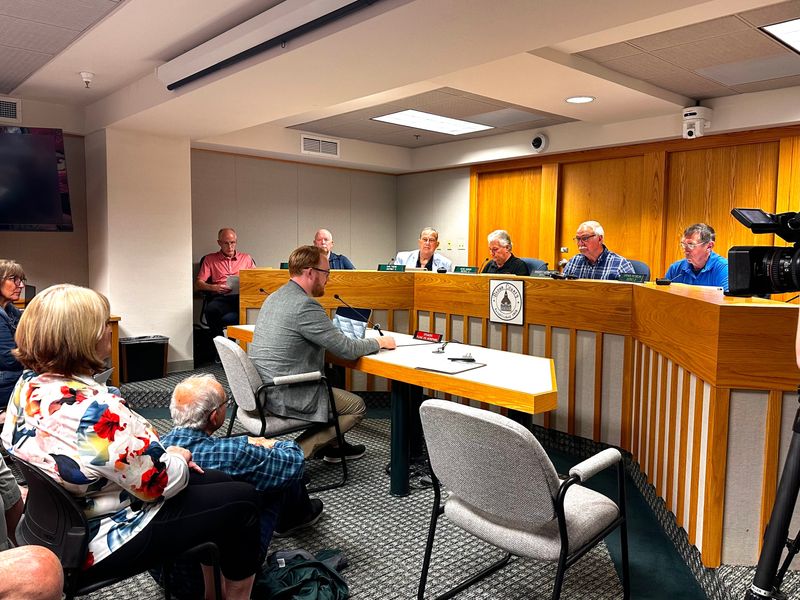
Brown County’s Planning, Development & Transportation Committee on June 2 declined to move forward a data center moratorium request by County Board member Christopher Welch.
Home » News » National News » Wisconsin » Brown County committee declines to pursue data center moratorium
Wisconsin

Brown County committee declines to pursue data center moratorium

(This article has been updated to correct a misattribution.)

Brown County’s Planning, Development & Transportation Committee members on June 2 unanimously declined to consider a countywide data center moratorium over public objections, reasoning that such a measure would be moot in the county with no authority to dictate local zoning laws.

Video Thumbnail

Instead, an informal survey to gauge the feelings of local governments on data centers will be done by County Board members Dan Theno, Jim Pyle and Christopher Welch.

Welch first requested a look into a countywide moratorium and does not sit on the committee.

The de facto three-person subcommittee would then report their findings to the wider group, along with what Theno said would be “constructive suggestions” on how the county could, and should, be involved in local data center matters.

No deadline for a report was set.

“We can actually create something that’s constructive, that is within our bounds, that we are able to do that still gives municipalities all their power to control their destiny,” Welch told the audience of about 80 spilling into the second-floor hallway at the Brown County Northern Building in Green Bay.

Moratoriums on development, under state law, postpone any rezoning or land approvals related to a project deemed overburdensome on public utilities or that pose a significant health or safety risk.

It’s a kind of measure that’s become increasingly popular as data center developers continue to eye Wisconsin and the state’s northeast for future development in the face of public opposition over socioeconomic and health anxieties. Residents in the Village of Wrightstown, posed with data center developer Cloverleaf Infrastructure’s interest in a nearly 1-gigawatt AI data center in the region, have repeatedly asked their Village Board to adopt a moratorium.

On the heels of local opposition, Welch requested to pause any data center project in the county, including acquiring land or permits, until state legislation could enforce regulations and monitoring on such projects, according to the committee agenda.

The committee had been expected not to entertain Welch’s ask on legal grounds.

David Hemery, the county’s corporation counsel who gives civil legal advice to county officials, told the committee that it was unclear if the state law on moratoriums was relevant to data center developments.

In any case, no town, village or city in Brown County is subject to county zoning authority as they’ve all adopted independent zoning laws, rendering any countywide moratorium moot. Vice Chair Kevin Gannon referred to Manitowoc County’s data center moratorium, which he said was applicable only to three towns in that county without their own zoning laws.

“So whatever we do here is not going to affect anything,” committee Chair Norb Dantinne told the committee.

Welch then walked back his initial moratorium request, saying his intention had been to “give the county options” and act as a model for municipalities to follow. He later also retracted suggestions that the county create boilerplate moratorium language to give to local governments or write a resolution in opposition to data center development.

Several committee members raised concerns that the county was overstepping its role on the issue. Gannon said the towns association or League of Wisconsin Municipalities should be the entities giving local government guidance on data centers.

Pyle said in conversation with several municipal government officials, none had been interested in the county getting involved in their zoning authority.

Pyle and Theno placed ultimate responsibility for implementing restrictions on state agencies, like the Wisconsin Department of Natural Resources and the state Legislature. Theno, who indicated his alignment with Welch on his concerns about data center developments, said the county currently lacked the authority to limit such projects.

The 21 members of the public who spoke during public comment, including several politicians, were critical of what some characterized as county officials’ lack of imagination and courage on the issue. Some framed the county’s decline to pursue a moratorium, resolution, or other measure immediately as an abdication of authority.

Jeannette Knill, a Green Bay School Board member, pointed to Green Bay being the first municipality in the state to put a line on tax bills of school voucher payments. The decision, for which the school district had no power over, followed a School Board resolution. Knill suggested that the county could take a similar approach on an issue it had no jurisdiction over.

“A resolution is easy,” Knill said. “It doesn’t cost you any money. It costs you time, but it shows that you care. Write a resolution. It’s not a big deal.”

Rebecca Kitchen of Suamico said the county needed “to start somewhere” on an issue that would affect those living beyond the boundaries of a community that approves a data center development, from effects on well water to power usage in the larger grid.

“We have to fix the fact that some small-town councilman somewhere either gets stars in his eyes or takes a bribe and says, ‘Oh, hey, we want a data center here in Podunk, Wisconsin.’ And now everybody here is affected by that,” Kitchen said. She added, “So I understand what you’re saying is, ‘We’re stuck. We can’t fix this,’ but we got to start somewhere.”

Frustration was so great at times during the nearly two-hour-long meeting that several commenters interjected proceedings or directed expletives at committee members, actions that Theno attributed to a decline in civility in political affairs.

“Enjoy those seats while you can, cowards,” one attendee yelled at the end of the discussion, “’cause we’re going to get you the [expletive] out!”

Jesse Lin is a reporter covering the community of Green Bay and its surroundings, as well as politics in northeastern Wisconsin. He also writes a weekly column answering reader questions about Green Bay. Contact and send him questions at 920-834-4250 or jlin@usatodayco.com.

This article originally appeared on Green Bay Press-Gazette: Brown County committee declines to pursue data center moratorium

Reporting by Jesse Lin, Green Bay Press-Gazette / Green Bay Press-Gazette

USA TODAY Network via Reuters Connect

Image

Related posts

Leave a Comment