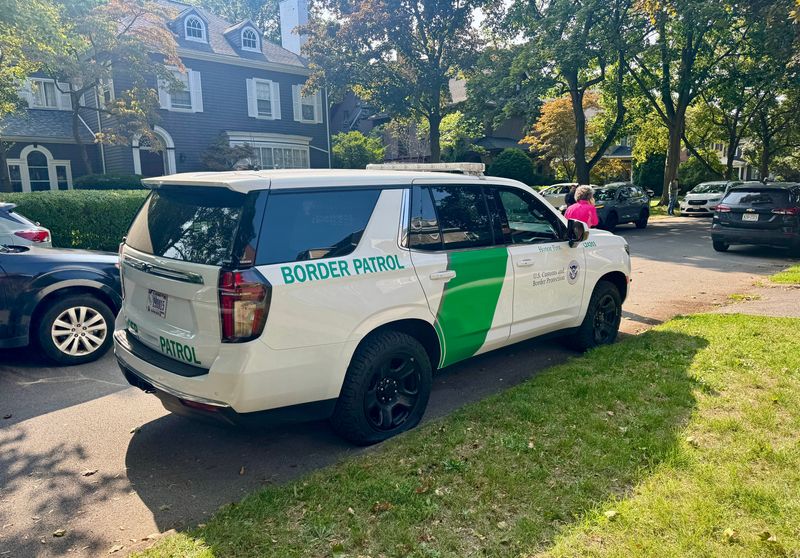
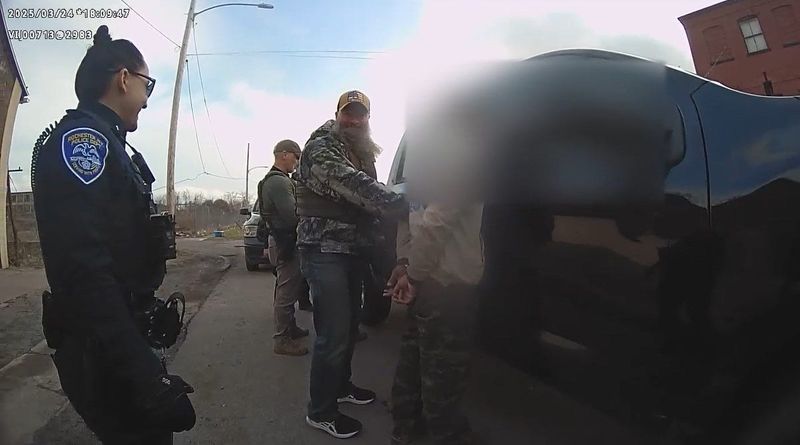
Two immigration officers were drawing attention downtown. Did they bring a bigger force with them? And who were they after?
“ICE on State St in front of Innovative Field 2/12/26 @9:46am.”

A Rochester Reddit post clocked their appearance. A half hour had passed before the warning made it online and details were sparse. But in an environment of super-charged emotions and politics, life-altering government action and state silence — any tidbits at all about the actions of ICE in Western New York were prime news on social networks during the end of winter.
“Did you call Rochester Rapid Response Network?” one person asked in a comments section that ran 175 posts deep. “What do their cars look like?” another asked.
Desperate attempts to track ICE activity in Rochester ramped up and may do so again. Information is scarce. The usually skimpy warnings from passerby are frequent. And they are by nature unconfirmed and incomplete. More than a year after the Trump administration launched the largest mass deportation operation in U.S. history, there is no true accounting of what’s happening in our backyard.
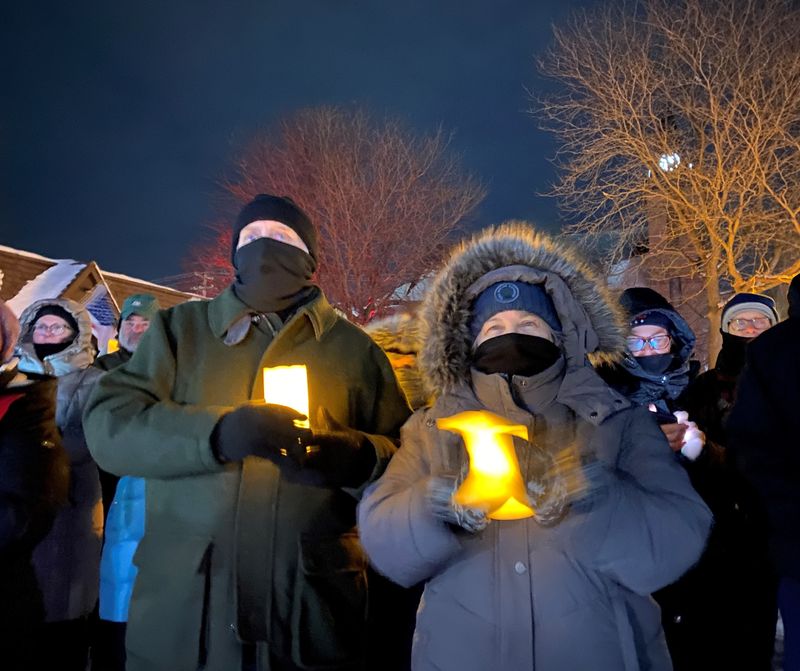
Administration supporters are pleased by the work, cheering on immigration policing and glad to see federal action on important policy. Other community members are worried, including legal immigrants, diverse families and neighbors who might just bear witness to or get swept up in a raid at any moment.
Young people are getting involved in the cause, too. A handful of Penfield students demonstrated in support of ICE in March, holding signs and an American flag at the entrance of the high school as students arrived. Later, amid an anti-ICE protest at the school, a truck with a thin blue line flag — a pro-police symbol — circled the parking lot.
The division over immigration policy in America is on clear display.
For undocumented immigrants, however, the topic is much more personal: It is impossible to know how many immigrants ICE has detained in Rochester or where the federal agency will strike next. Several immigration advocates said the uncertainty has shifted from being unsettling to being frightening.
“I have people who are scared to go to work,” said Daisy Ruiz Marin, the director of migrant services at the Ibero-American Action League. “They have left their jobs. They are hiding in their houses.”
Others, including the pastor of a predominantly Hispanic church and the director of a refugee agency, declined to talk about the toll of immigration enforcement in Rochester out of fear it would endanger the very people they have set out to protect. Phone calls and emails to several other organizations went unanswered.
U.S. Immigration and Customs Enforcement did not respond to questions about the frequency or extent of its operations in Western New York. An agency spokesperson supplied a statement that read, in part, “ICE conducts law enforcement operations nationwide every single day to protect Americans ― this is not new, nor will it change.”
“… Violating immigration laws is a crime and carries consequences, which includes arrests, detention, and removal from the United States,” the spokesperson said.
The eerie silence around ICE activities, process, results and tactics is no mistake. It has been a common theme across America as the administration pushes an active but low-information campaign targeting immigrants.
The Democrat and Chronicle spent weeks researching and reporting the state of things surrounding ICE in Rochester. One thing is clear: Information is in short supply and that has framed the scene as much as the results of their actions.
Mitra Naseh, a migration policy scholar, says we are at a flashpoint in America. People often call the assistant professor at Washington University in St. Louis, asking her to find their loved ones in ICE detention centers across the country.
“This time, it’s very secretive,” she said. “That part, the lack of transparency, is very disturbing.”
Bearing witness: An early morning immigration stop in Rochester
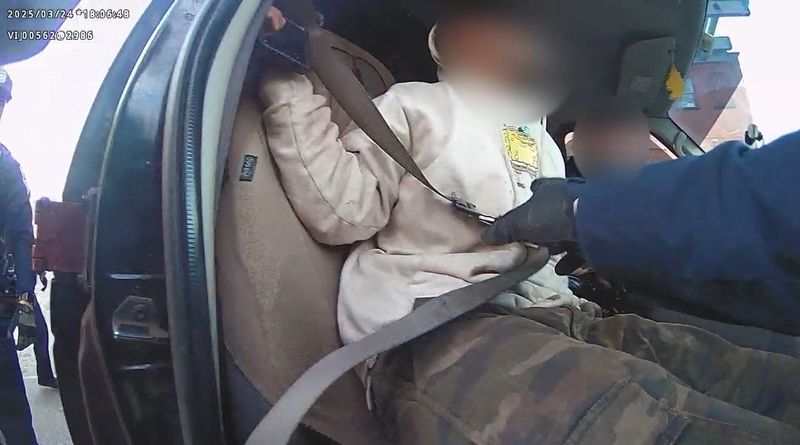
Hani Ali had just parked outside of her office on South Plymouth Avenue when two unmarked SUVs tore into the plaza next door, blocking both entrances.
The strip mall in the Genesee-Jefferson neighborhood is home to several small businesses, including a Jamaican restaurant, an Islamic culture center, a nail salon and a fish market. She trotted over to see what was happening and found ICE agents questioning a young mother in the parking lot. The woman said she was in the United States legally but did not have documentation with her.
The Trump administration has repeatedly declared its mass deportation campaign will rid America of the “worst of the worst” criminals. A recent Guardian analysis, however, found 77% of immigrants targeted for deportation in 2025 had no criminal history.
The ICE spokesperson said collateral arrests are consistent with the agency’s mission.
It was 8:30 a.m. on one of the frigid days that gripped Rochester this January. There was a baby strapped into a car seat in the back of her car. The ICE agents held the driver’s side door open, and Ali could see that the woman was growing anxious.
“Don’t get overwhelmed,” Ali told her. “’Let them do what you need to do. … If you have a family member, call them. I’ll stay with you.’”
After about 15 minutes, someone arrived with paperwork and the woman was released.
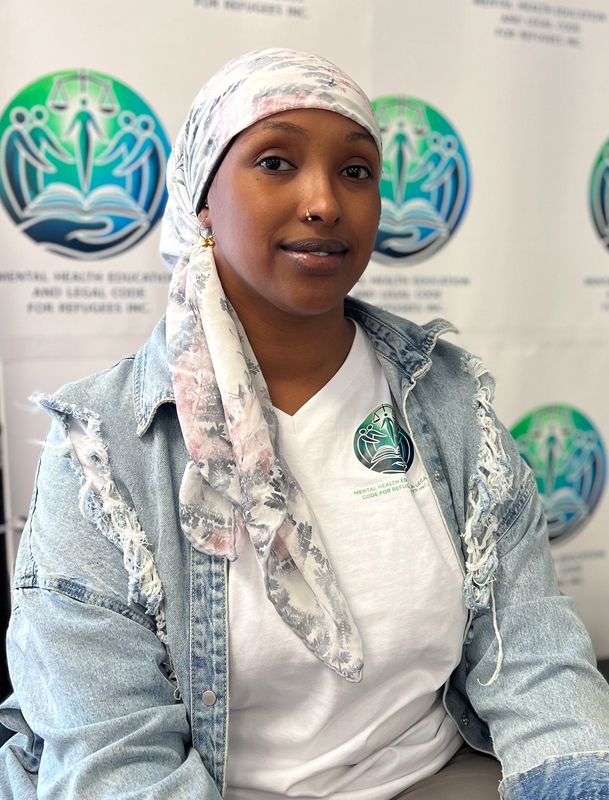
When Ali founded a nonprofit last year, she hoped the agency could fill a gap in mental health services for Rochester’s community of refugees. She never imagined herself on the frontlines of immigration defense. “The fact that they were here,” she said, “it scares everyone that lives in this neighborhood.”
As ICE activity remains unpredictable, advocates ask: Who is safe?
The stop on South Plymouth Avenue never became a news headline or a Reddit post or a sighting logged on a nationwide ICE tracker. Immigration enforcement is swift by design and rarely leaves behind a public paper trail.
Federal officials have justified a surge in arrests by saying they are simply enforcing the nation’s immigration laws. The ICE spokesperson said pending cases would not shield undocumented immigrants from enforcement activity and encouraged them to self-deport.
The activity is a clear shift, a difference from past years of predictability, advocates say. How it has unfolded has stoked tension in communities raided by ICE.
Jose Perez, an immigration attorney that works throughout Western New York, said the federal agency is increasingly detaining populations once believed to be off-limits: Immigrants with open asylum cases or whose appeals are still swirling through the court system. Now, they are picked up off the street or arrested when they appear for routine check-ins and are denied bond hearings because of a new interpretation of a 30-year-old immigration law.
“We tell people don’t open the door unless they have a warrant — and they are tearing down the door,” Perez said. “We tell people don’t open the window of the car unless they tell you you’ve violated a law, and they’re smashing the windows. It’s very difficult.”
The migrant relocation program Daisy Ruiz Marin runs out of Ibero-American Action League has seen a surge in clients returning for help months after they graduate. The initiative began as an effort to resettle asylum seekers from overcrowded shelters in New York City to communities throughout the state. Participating families were put up in temporary housing while they worked to establish jobs, enroll in school and find their footing.
Ibero provided services for 363 families in Monroe and Albany counties; more than 60 percent of adults found work during their year in the program.
Ruiz Marin said their open asylum claims means her clients are here lawfully. Still, several of them were detained by ICE over the last year, sending faultlines through their family’s newfound stability.
“It wasn’t an easy journey making it over here,” she said. “We had individuals that had to cross jungles and multiple countries on foot to be able to come and find the American dream and apply for asylum due to things that were happening in their native country. And now that people are being hunted down — that is affecting a lot of people.”
Does skin color, hijab make her a target?
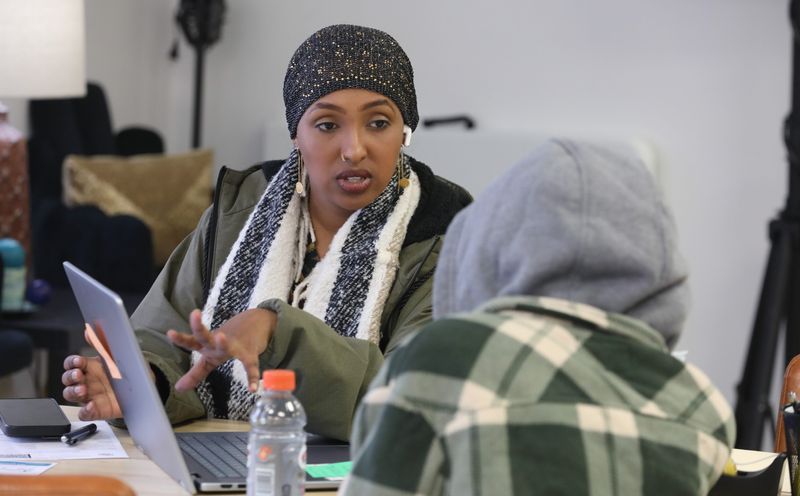
Hani Ali, the director of MELCORR, is Somalian. She grew up in a refugee camp and came to the United States when she was 16, following thousands of other Somali Americans that fled a civil war and famine in their country.
She is a naturalized U.S. citizen now. Still, Ali said her skin color, her accent and the hijab she wears makes her a target in the eyes of those who are trying to define what an American can and should be.
President Donald Trump last year called Somali immigrants “garbage,” fraudsters and gang members. He threatened to end the temporary protected status program for Somali refugees and halted all immigration applications from the country.
“A lot of people said it was the wrong time to open the center,” Ali said. “But it was never going to be a more perfect time than this.”
She works with about 300 refugees in the Rochester area, providing mental health support like she initially intended, yes — but also making home visits to check if families feel safe enough to go to the grocery store, work and school in today’s political climate. A friend that works as an EMS provider has stopped telling patients she is Somalian if they ask, worried they will turn on her in the close quarters of an ambulance rig.
Five of Ali’s clients have been detained by immigration officers, including a Somali man in his 30s who has lived in the United States since he was 9.
Many people have started to think about ICE before they leave the house. Ali has started carrying her U.S. passport in case she is stopped.
“I was born in the middle of the war, 1992, while everyone was migrating,” Ali said. “I don’t know what street, what day. There was no hospital for sure. It was in a pickup truck. For me, this is home. I don’t call nothing else home. So, if home looks like somewhere I have to migrate from, the question is, where do I go?”
Ida Salusky, a psychologist from Northwestern University who works with migrant communities, said the emotional impact of immigration enforcement can manifest in physical ways. Her clients report feeling anxious and having nightmares or difficulty concentrating. Salusky said that heightened levels of stress over time can have long-term consequences for someone’s cardiovascular health.
“It’s something that impacts not just people who are immigrants,” she said. “Many families are mixed status or multi-generational.”
Daisy Ruiz Marin worked with one three-generation family that refused for weeks to seek medical care for an elderly family member who fell ill, because of their undocumented status. By the time they brought the man to the hospital, he had a septic infection and was admitted to the intensive care unit, Ruiz Marin said. He later died.
Another client, a single father, found himself briefly detained by ICE before he was returned to his son. The man grew paranoid that he was now a sitting duck: Did ICE know what his car looked like? Were they tracking his daily routine? He fled the state after two weeks.
Ruiz Marin said others have returned to Ibero for help with groceries or bills because, afraid to leave their homes, they have reduced their hours at work. The physical resources are easy enough to organize. It’s the emotional support, Ruiz Marin said, that is harder.
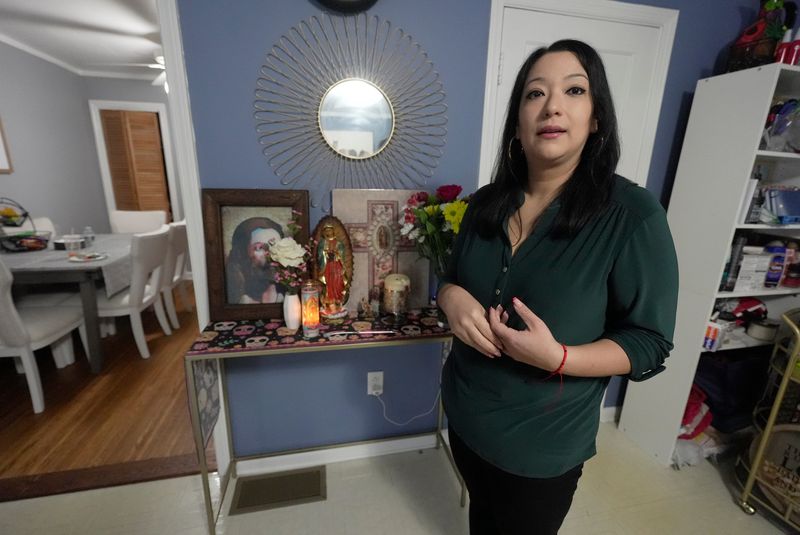
Her own parents immigrated to the United States more than 40 years ago and built a life here.
“This topic is very close to my heart,” she said. “I don’t know where is safe right now.”
Each morning, she lights a candle to La Virgen de Guadalupe, a Mexican patron saint that serves as a symbol of motherhood, hope and social justice.
And she asks La Virgen for protection.
— Includes reporting by Steve Howe and Kerria Weaver.
— Kayla Canne covers community safety for the Democrat and Chronicle with a focus on immigration, police accountability, government surveillance and how people are impacted by violence. Follow her on Instagram @bykaylacanne. Get in touch at kcanne@gannett.com.
This article originally appeared on Rochester Democrat and Chronicle: What ICE is doing in Rochester is unclear. The fear is not.
Reporting by Kayla Canne, Rochester Democrat and Chronicle / Rochester Democrat and Chronicle
USA TODAY Network via Reuters Connect