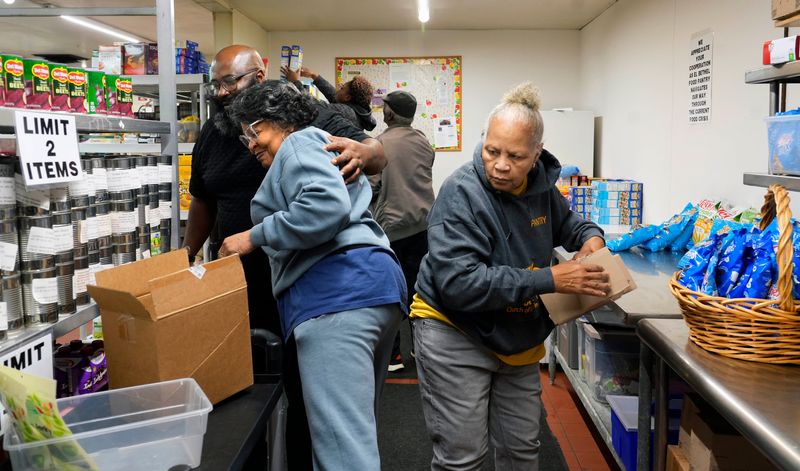
More than 200,000 adults 65 and older in Wisconsin are eligible for funding from the Supplemental Nutrition Assistance Program, but aren’t getting anything.
They’re among more than nine million seniors nationwide that didn’t enroll in government programs that can help pay for food, medicine and other daily expenses, according to the National Council on Aging’s Benefits Participation Map, which was updated in May.

Robert Gundermann, president and CEO of the Coalition of Wisconsin Aging and Health Groups, said he was surprised at how much money is being left on the table by seniors missing out on benefits they’re eligible to receive.
“(Older generations) don’t want to take anything unless they absolutely need it … ‘I can get by with what I’ve got,’ that sort of attitude,” Gundermann said. “We don’t want people to just get by. We want people to thrive.”
The report looked at three programs, SNAP, Supplemental Security Income and the Medicare Savings Programs.
Jessica Johnston, senior strategist for economic wellbeing at the National Council on Aging, said these three programs could be over a thousand dollars of income a month for seniors. Not having that money puts seniors in a tough spot, she said.
“An additional $1,100 a month would be a life-changing,” Johnston said. “It might mean that they don’t have to decide between healthy food or paying their rent on time.”
The Center on Budget Policy and Priorities found that people in food insecure households spend 45% more on medical care in a year.
Why do these benefit gaps exist?
Gundermann and Johnston both said there are a few reasons these gaps exist. There are people who simply don’t know about the programs, and there are also people who don’t know how to apply.
There’s also a segment of the population that won’t get the benefits unless they truly believe they need it. They tend to think they shouldn’t take benefits when someone else might need that help more, Johnston said.
Eliminating the stigma around enrolling in benefits programs will be key to addressing the issue, she said. There are some resources for seniors, including benefitscheckup.org or the National Council on Aging’s helpline at 1-800-794-6559.
Gundermann said seniors can also visit an aging disability resource center to see what programs they’re eligible for and how they can apply.
What Wisconsin counties are most missing out on benefits?
The counties with the lowest share of eligible people enrolled in the food assistance participation are:
Milwaukee County had the highest participation at 43.1%, according to the National Council on Aging.
The counties with the lowest share of eligible people enrolled in the Supplemental Security Income participation are:
Milwaukee County again had the highest participation rate at 49.2%.
The counties with the lowest share of eligible people enrolled in the Medicare Savings Program participation are:
Milwaukee County had the highest participation at 52.2%. The percentage for some counties was calculated together as part of multi-county groups.
This article originally appeared on Milwaukee Journal Sentinel: Thousands of Wisconsin seniors are missing out on these government benefits
Reporting by Blaise Mesa, Milwaukee Journal Sentinel / Milwaukee Journal Sentinel
USA TODAY Network via Reuters Connect