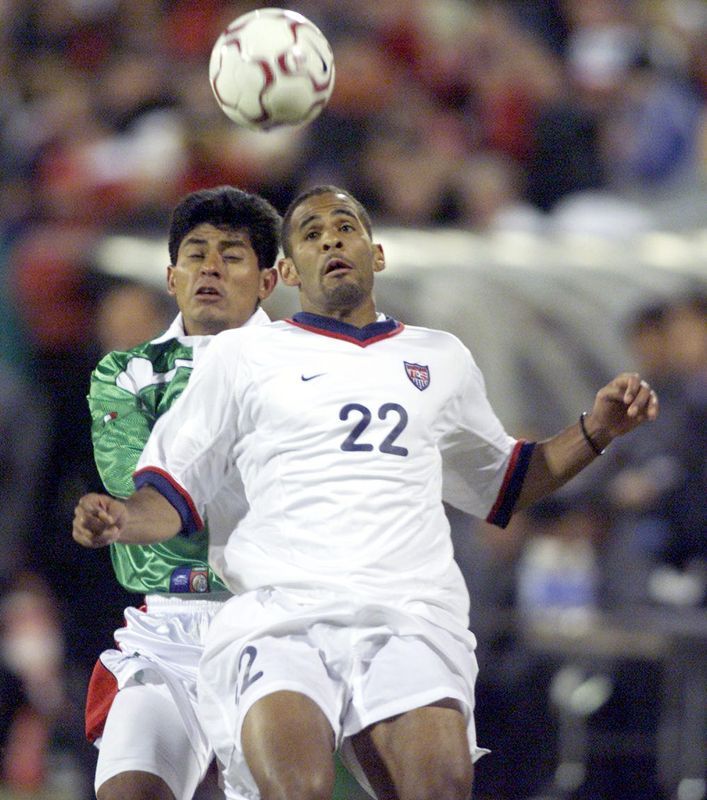
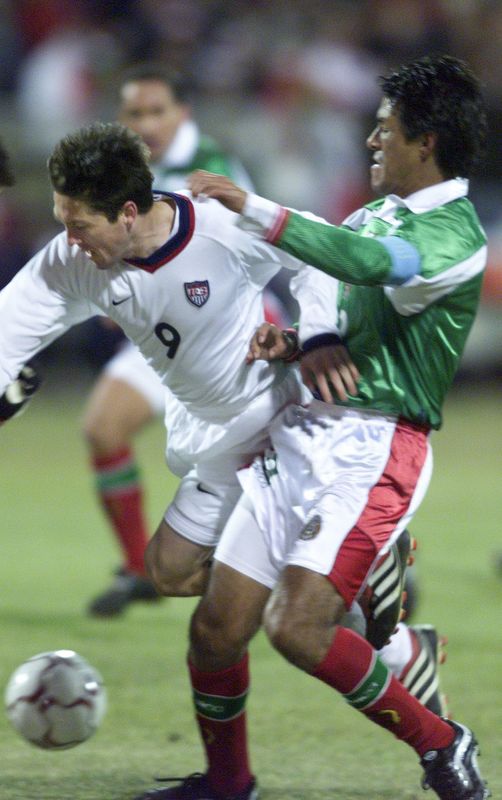
The United States men’s national team had recorded victories over rival Mexico before their Feb. 28, 2001, meeting in Columbus, but the legend of “Dos a Cero” was born that chilly night at Historic Crew Stadium.
The United States defeated Mexico during a World Cup qualifier in Columbus by a score of 2-0, or, in Spanish: dos a cero.

It was the first of four consecutive wins for the United States over Mexico at Historic Crew Stadium (formerly named Crew Stadium and MAPFRE Stadium).
All the victories occurred during World Cup qualifiers. All ended with the same score.
Dos a cero.
What happened during the 2001 US-Mexico soccer game?
Ahead of the 2001 matchup, the United States had built a two-game winning streak against its border-country rival, outscoring Mexico by a combined score of 5-0.
But the U.S. national team was still searching for a more meaningful result.
When playing in cities such as Los Angeles or East Rutherford, New Jersey, Team USA never truly felt the backing of a home crowd. The number of Mexican fans matched or exceeded the United States, despite playing on U.S. soil – until, that is, the World Cup qualifier in Columbus.
That game, former USMNT forward Josh Wolff said in a 2013 interview with U.S. Soccer, “was a tremendous atmosphere.”
“I think it was the first time we had a pro-U.S. crowd in a soccer-specific stadium. It was cold, brutally cold, and we had a fantastic crowd.”
According to Wolff, it was clear that the environment at Historic Crew Field was rattling the Mexican national team. With the temperature dropping below freezing, the Mexican team players stayed inside for warm-ups before kickoff.
The mix of an American-heavy fanbase in the stands and the cold temperatures meant this matchup favored the U.S. national team. A seemingly disastrous start, however, put the United States in jeopardy of having a long night.
Less than 20 minutes into the game, USMNT starting forward Brian McBride had to be substituted out after colliding with Mexican defender Rafael Marquez, causing his right eye to swell shut. McBride, a future Crew Ring of Honor member, was a crucial part of the national team’s lineup, with World Cup experience already under his belt.
Before the first half ended, USMNT captain Claudio Reyna needed to be taken off due to a left groin strain, leaving the United States without two key veterans.
After Wolff and midfielder Clint Mathis replaced McBride and Reyna, respectively, the two substitutions turned the misfortune into a scoring opportunity.
At the 47-minute mark, Mathis gained control of a loose ball on the United States’ side of the field and found Wolff on a run toward Mexico’s goal. Wolff received Mathis’s pass while inside Mexico’s box, and managed to stay onside as Mexico goalkeeper Jorge Campos went out of position, allowing Wolff to connect on an open-goal shot.
With a 1-0 advantage and the crowd even more electric than it was when the game began, Wolff helped set up the United States’ second goal when he found midfielder Earnie Stewart in the middle of a box, who scored.
Dos a cero.
‘La Guerra Fria’ vs. ‘Dos a Cero’
Mexican fans have their own name for the game, the first of four straight wins for the U.S. team. They call it “La Guerra Fria,” meaning “The Cold War,” a reference to the chilly temperature and scrappy nature of the showdown.
But when the teams faced off next, and in several matchups afterward, it was “Dos a Cero” that lived on.
That was what fans chanted each time the teams returned to Columbus, for a series of games in 2005, 2009 and 2013, that all ended with the same score:
Dos a cero.
bmackay@dispatch.com
@brimackay15
This article originally appeared on The Columbus Dispatch: ‘Dos a Cero’ was born in Columbus, Ohio. Look back at the legend
Reporting by Brianna Mac Kay, Columbus Dispatch / The Columbus Dispatch
USA TODAY Network via Reuters Connect