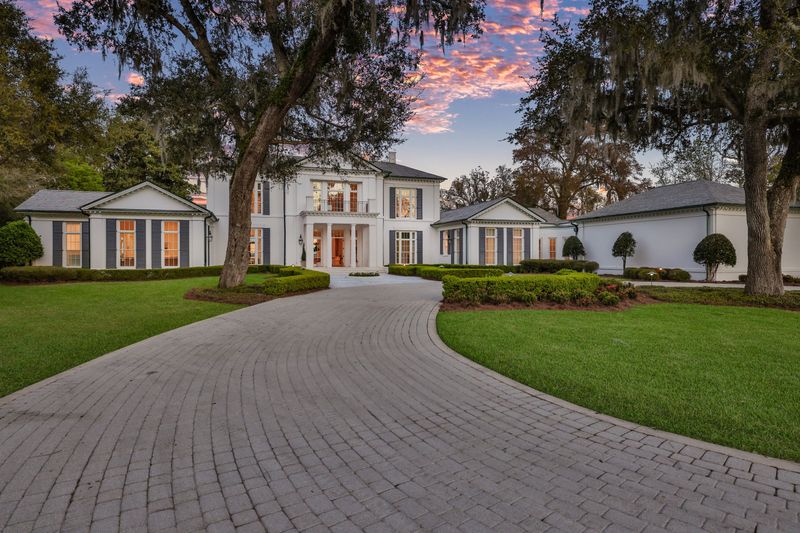
The heirs of the Winn-Dixie founding family have parted with a palatial Intracoastal Waterway home.
Built from the ground up in 2002 for the late Robert D. Davis, grandson of the supermarket chain’s founder, William M. Davis, the 8,815-square-foot home was listed on March 30 for $17.5 million, and went under contract roughly three weeks later. Situated on just over 12 acres, the sale closed May 22 at $16.5 million.

Calling it an “iconic legacy property,” listing agent Jennifer White of Ponte Vedra Club Realty said she wasn’t surprised it went under contract in less than a month.
“I knew it would sell quickly,” White said. “It’s truly remarkable and unlike any other estate in North Florida.”
Lowcountry beauty, built to last
The grounds feature open acreage and panoramic Intracoastal frontage, along with a coquina bulkhead. Never listed on the market before, it was designed by Thomas & Denzinger Architects, a South Carolina-based firm that views architecture as a “creative response to the land,” according to its website.
Graced with two large reflecting ponds at the front and the Intracoastal to the rear, the four-bedroom, 5.5-bath estate does indeed seem to rise organically out of the watery landscape. Its solid concrete block construction ― overlaid with tabby ― was meant to withstand whatever Mother Nature throws at the locale.
The building material known as tabby (a mixture of lime, water, sand, oyster shells and ash) was concocted out of necessity and convenience, due to the plentiful availability of the materials. Once synonymous with the cottages of settlers along the Southeastern coast, from North Carolina down through Georgia and Florida, it may have been used as far back as the 1600s by the Spanish.
Other historians suspect, however, that the British stole it when they attacked St. Augustine in the early 19th century.
Coquina, a close cousin of tabby, is a soft, porous sedimentary rock made up of millions of ancient clam shells and coral fragments, held together by calcium carbonate. The resulting stone is so sturdy, it’s one reason the Castillo de San Marcos still stands after 300 years.
Serenity on the water
Accessed by a private gate and winding private drive, the San Pablo Road property includes a 1,500-square-foot caretaker’s cottage, also overlaid with tabby. The listing description characterizes the entire estate as “unfolding like a curated private park,” thanks to its formal landscaping highlighted by blooming camellias and a gazebo.
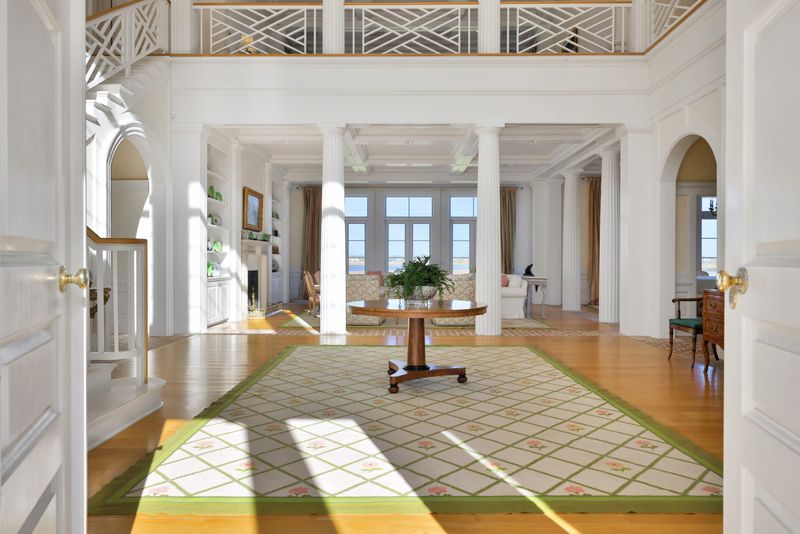
A unique blend of flooring styles are found throughout the home, such as white oak, brick pavers and cork inlays. Looking upwards, groin-vaulted ceilings, custom millwork and gallery-style hallways add to the drama.
Additional details include a spacious living room with coffered ceilings and French doors leading into the dining room, while a wood-paneled parlor/library with fireplace provides a more intimate setting. Expansive water views naturally dominate the setting, especially in the sunroom. Plus, the kitchen comes complete with a butler’s pantry, separate breakfast room and can be enclosed for easier entertaining.
The downstairs primary suite offers a private sitting room, dual baths and dressing rooms, and direct access to a marble veranda. Upstairs includes a secondary living area and three ensuite bedrooms, with water views and Juliet balconies (a type of shallow balcony with only a railing attached to an exterior wall).
Letting the sun shine in
White, who represented the seller of the top 2025 home sale for all of Northeast Florida, pointed out that her favorite rooms in the house are the sunroom and the breakfast room.
“I love these rooms because they are sun-filled and have panoramic views of the Intracoastal Waterway, with their floor-to-ceiling windows and doors. I also love the brick flooring detail,” she said. “They just feel happy.”
It is perhaps no surprise that Davis and his wife, Susan, chose to build such a classic example of Southern architecture for their dream home.
While difficult to pinpoint Susan Davis’ birthplace, Robert D. Davis was born in West Palm Beach, making him a Florida native. His father, Artemus D. Davis, was the son of William M. Davis, who first got into the grocery business in Arkansas around the turn of the 20th century.
He and his brother, Carl Davis, later built a successful retail operation in Idaho. Competition and a recession eventually motivated the brothers to relocate to Florida, in the midst of its boom years. William Davis made a bold move in 1925, offering cash to a small Miami grocer for the purchase of his store. His sons joined him a year later and proceeded to build their father’s vision of a large retail chain.
Founder William Davis passed in 1935, and his two eldest sons ― James and Artemus ― took the reins, ultimately building their holdings to 43 stores under the name Table Supply throughout Southeast Florida. After acquiring the 70-store Winn & Lovett chain in 1939, the Davis brothers moved their entire operation to Jacksonville.
In the 1950s, several more chains from South Carolina to Mississippi were added to the fold. A 1955 merger between Winn & Lovett and Dixie-Home expanded the company’s holdings beyond their wildest dreams, and the combined corporation was renamed Winn-Dixie.
Robert Davis joined the company that same year, serving in a number of different roles ― including financial vice president and chairman of the board ― before retiring in 1990. He was the last Davis family member to hold an executive position with the company.
The home he and his wife built on the shores of the Intracoastal will stand as a lasting legacy to one family’s business acumen and determination to succeed.
This article originally appeared on Florida Times-Union: Winn-Dixie family sells massive Jacksonville estate for $16.5M
Reporting by Anne Hammock, Jacksonville Florida Times-Union / Florida Times-Union
USA TODAY Network via Reuters Connect