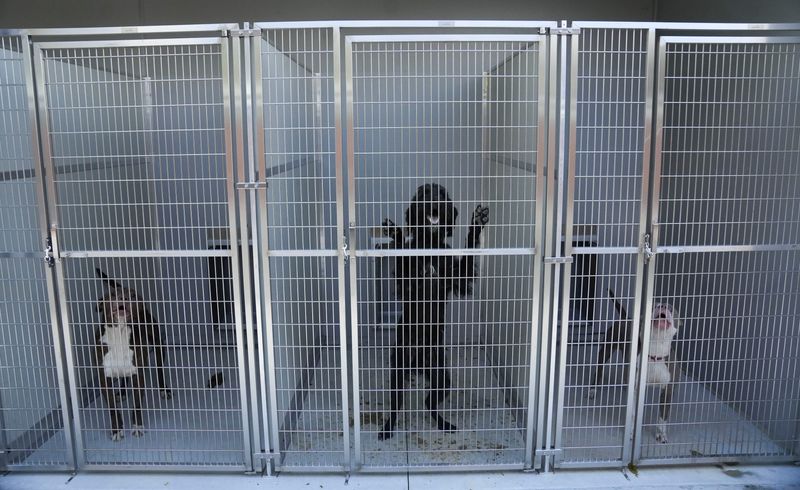
The 61,000 square foot Indianapolis Animal Care Services opened to great fanfare just a few weeks ago, doubling the amount of space it once used. But within days an all-too-familiar Facebook post appeared: The shelter was overflowing with animals.
While frustrating, it wasn’t unexpected, said the shelter’s director, Amanda Dehoney-Hinkle.

“We could build a million kennels in here and we would fill them up,” she said.
The $37.25 million building wasn’t designed to simply hold more animals, the Facebook post notes. “Space alone is not the solution,” the text declares over a short video of dogs in kennels.
IndyStar spoke with the shelter’s director and Indiana State Board of Animal Health officials to learn what is causing the overpopulation and what solutions exist.
Why do so many animals need homes in Indy?
Community members may be lacking the necessary resources to create a safe, long-term home for pets, she said, and others may not be taking the proper steps to keep animals off the streets and out of shelter kennels.
Spaying and neutering is the first step in helping prevent animal shelters from overflowing, Dehoney-Hinkle said.
Shelters often have to take in puppy litters after owners let their dogs roam free, which can be prevented by having pets spayed and neutered, monitoring them outdoors at all times and keeping them on a leash, she said.
Dehoney-Hinkle encourages pet owners to take advantage of local low-cost resources to spay and neuter their furry friends — one being the IndyHumane Downtown Clinic. The clinic offers appointments for cats at a price of $130 and dogs for $195.
Still, some people can’t afford these services, Dehoney-Hinkle said, and instead surrender their pets. In these cases, she said, pet owners need to plan ahead and give shelters advance notice that they will be bringing in an animal. Or, they can try alternative resources first, she said.
“Use Facebook, use family, use friends,” she said. “Do they know anybody wanting a dog or a pet so they don’t have to come here?”
While most of the animals the shelter brings in are strays and not previously owned, Dehoney-Hinkle said, backyard breeding of pets is also an issue that contributes to overflow.
The Marion County Unaltered Animal Registry exists to keep tabs on all dogs who haven’t been spayed or neutered and requires owners to report their dogs annually to be put on the list. By registering, owners agree to microchip their dogs and take them to yearly veterinarian examinations, record new litters and limit breeding efforts, among other agreements. Repeated violations of these rules can result in fines.
However, Dehoney-Hinkle said, Marion County needs to strengthen its enforcement of local laws and ordinances that aim to keep animals off the streets and out of kennels, like the unaltered animal registry. As for an overarching legal solution, she said, it’s hard to come up with a realistic idea based on the size of the county.
“There are lots of different ways we can try to combat it, but it takes the community,” she said.
Denise Derrer Spears, communication director for the Indiana State Board of Animal Health, said the state does not track spay and neuter information, and she doubts it could help play a role in providing a solution to shelter overflows. Rules and ordinances, she said, often come down to the decisions of counties and smaller entities across the state.
“You will be challenged if you call around the state to find a shelter or rescue or an animal control facility that’s not facing the same issue,” she said. “There are an abundance of animals out there versus the available space for them.”
Dehoney-Hinkle also encourages Indianapolis residents to report suspicious behavior if they see it — maybe a neighbor is breeding dogs without registering through the county, or another is violating local ordinances. Call animal care services, she said, who will then attempt to address the situation.
Often, pet owners just don’t know the rules for their county and can be helped through an educational meeting, Dehoney-Hinkle said.
What can non-pet owners do to help prevent shelter overflow?
Pets are expensive, Dehoney-Hinkle said, and not everyone can afford to adopt one. She and Spears said that’s where volunteers and foster care helpers can lend a hand, even if they aren’t in a financial position to own an animal.
Trevor Becu, 27, of Southport fosters a dog named Ally for Indianapolis Animal Care Services, taking her on walks through her favorite store — Home Depot — to get her out of her kennel inside the shelter.
“It’s a way I can help,” he said. “It decompresses her.”
Residents can apply to foster an animal by filling out an online form at Indy.gov.
How can Indianapolis residents adopt a shelter animal?
Anyone with questions about adopting can email the Animal Care Services shelter at adoptions@indycares.org or learn more about individual animals at the Indianapolis Animal Care Services Facebook page.
The shelter is open to the public from noon to 7 p.m. every day of the week.
Mia Thurow is the breaking news and criminal justice reporting intern for the Indianapolis Star. She can be reached at mthurow@gannett.com.
This article originally appeared on Indianapolis Star: Indianapolis Animal Care Services is overflowing. What’s the solution?
Reporting by Mia Thurow, Indianapolis Star / Indianapolis Star
USA TODAY Network via Reuters Connect