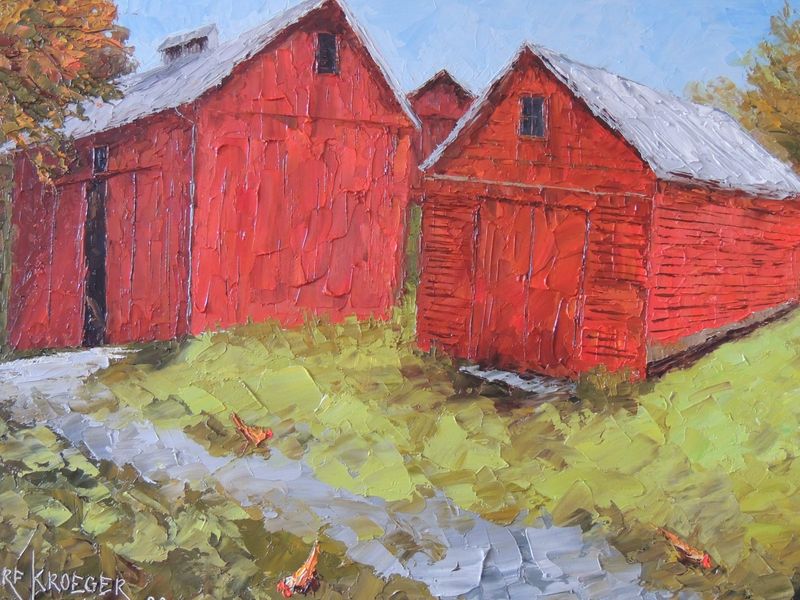
Robert Kroeger paints barns. Not whitewashing the exterior. On canvasses with a palette knife.
The Cincinnati artist has published “Historic Barns of Ohio” and other books of his impressionist paintings of the old barns of America.

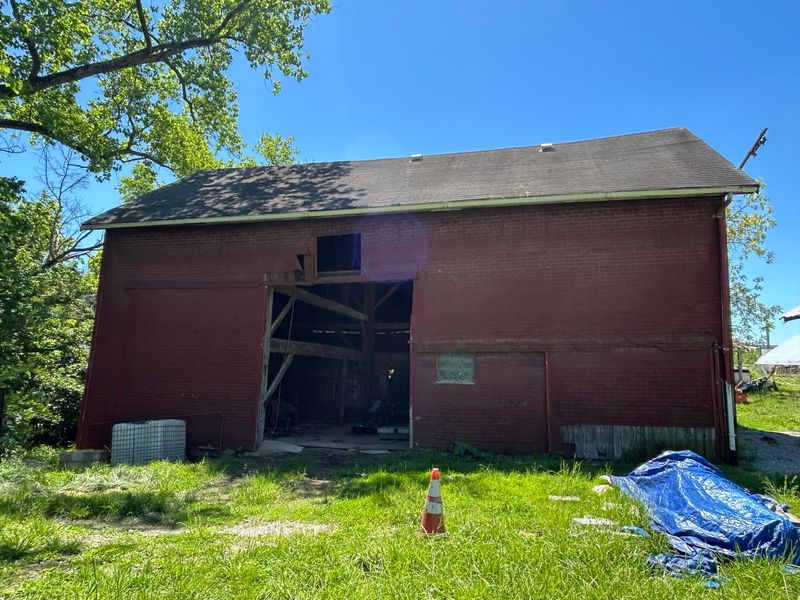
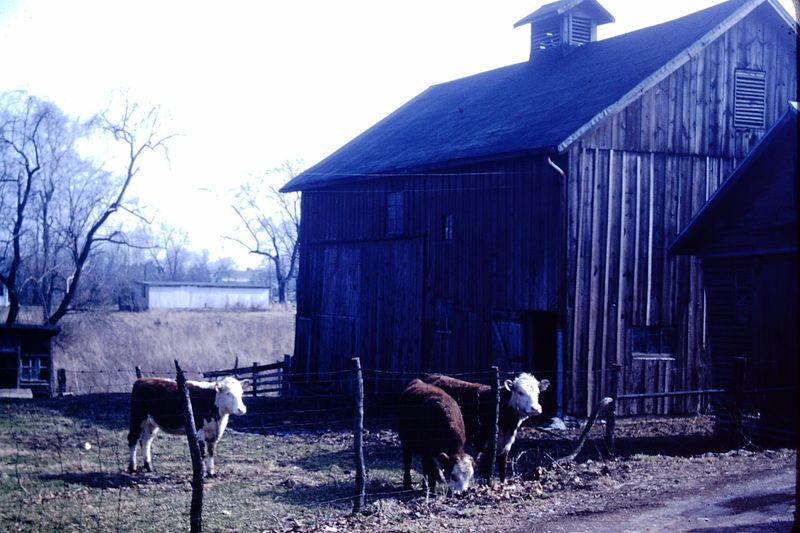
Kroeger’s new exhibit, “Barns Unlimited,” will be held June 5-26 at the Ethos Art Collective at 7507 Hamilton Ave. in Mount Healthy. The event doubles as a fundraiser to help restore the historic Bahr barn, built in 1809 and believed to be the oldest barn in Cincinnati.
His extensive knowledge of barns prompted a call from the Cardinal Land Conservancy to learn more about the old barn it acquired in 2021.
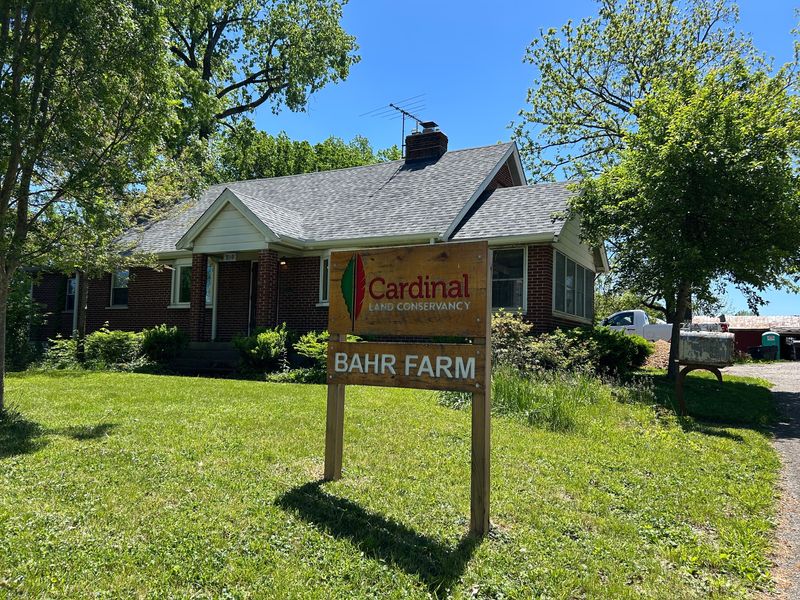
The Loveland nonprofit conservancy preserves natural habitats and agricultural lands in Southwest Ohio, including Bahr Farm.
Dale and Carol Bahr donated their 32-acre farm at 969 W. North Bend Road to Cardinal on the condition it continue to operate as a farm and never be developed.
The address is in Finneytown, but 30 acres sit inside Cincinnati’s city limits, surrounded by housing and a stone’s throw from a McDonald’s and a Gold Star on Winton Road.
That area along Winton and Gray roads used to be known as Wooden Shoe Hollow, where German immigrants cultivated gardens and greenhouses.
Bahr Farm is one of the last vestiges still active as a farm. And worth preserving.
A rare remnant of Cincinnati history
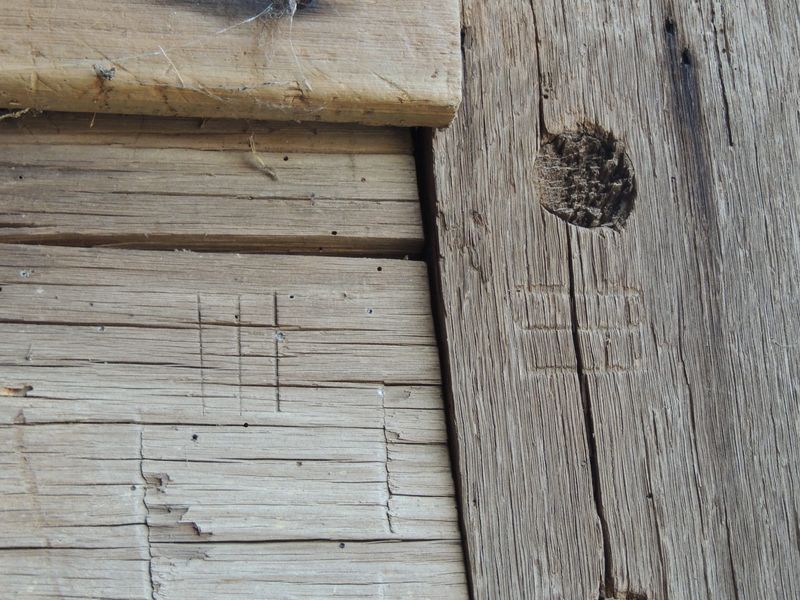
When Kroeger visited the barn, he recognized the timber-frame was more than 200 years old. The logs were cut by an axe and hewn into square beams, then assembled using mortise and tenon joints fastened with wooden pegs rather than nails.
Of particular note were the marriage marks, Roman numerals carved in the wood to mark which beams to connect. Think early versions of “insert Tab A into Slot B.”
According to Kroeger, builders in Europe used the technique for centuries before the square-rule framing method was developed in New England in the early 19th century.
“The marriage marks are incredibly rare and historic,” Kroeger said. “Out of thousands of barns I’ve visited, I’ve seen few of them.”
Kroeger recommended a dendrochronology study, the scientific dating of wood, and searching property records and plat maps for previous owners.
Cardinal brought in Nick Wiesenberg, a geologist with the College of Wooster Tree Ring Lab. He tested wood samples from the different beams and identified the wood – mostly white oak – and the dates and growth of the trees based on their rings.
The oldest tree used to build the barn in 1809 started growing in 1629.
The ownership of the property was traced back to John Cleves Symmes as part of the Symmes Purchase in 1788. He sold the land to the Rev. Ebenezer Ward in 1795 for $426.67 ($11,181.90 in 2026).
Among its many owners over the years: Ebenezer Ward Finney, founder of Finneytown; the Rev. John Smith, one of the first U.S. senators from Ohio; John Jessup Jr., who built the barn; and three generations of the Bahr family, beginning in 1916.
Before Dale Bahr died in 2024, Kroeger asked him why he donated the farm to Cardinal Land Conservancy rather than sell it to a developer. Bahr told him, “I had too much sweat and labor in this farm and I didn’t want it to be taken away.”
Cardinal continues to operate Bahr Farm, leasing 6 acres to Our Harvest, a cooperative growing produce for a Community Supported Agriculture, or CSA, and using the rest of the land for cattle grazing.
“It’s about building on the legacy of the Bahrs and keeping it as an operating farm,” said Mark Besserman, facilities specialist at Bahr Farm. “And then helping to teach the community and other farmers where food comes from, how you can grow local produce.”
To restore the Bahr barn, it will be taken apart, checked for damage and any need to add support, then reassembled with new floors, siding and roof, according to Nick Hartley, facilities manager at Bahr Farm.
The plan is for the barn to be a functional part of the working farm as well as a historic site to show people a piece of Cincinnati’s agricultural history.
This article originally appeared on Cincinnati Enquirer: Old barn discovered to be rare piece of Cincinnati history
Reporting by Jeff Suess, Cincinnati Enquirer / Cincinnati Enquirer
USA TODAY Network via Reuters Connect