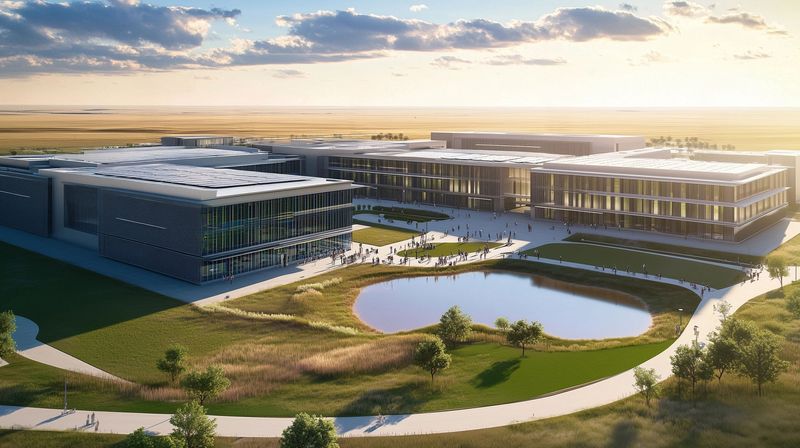
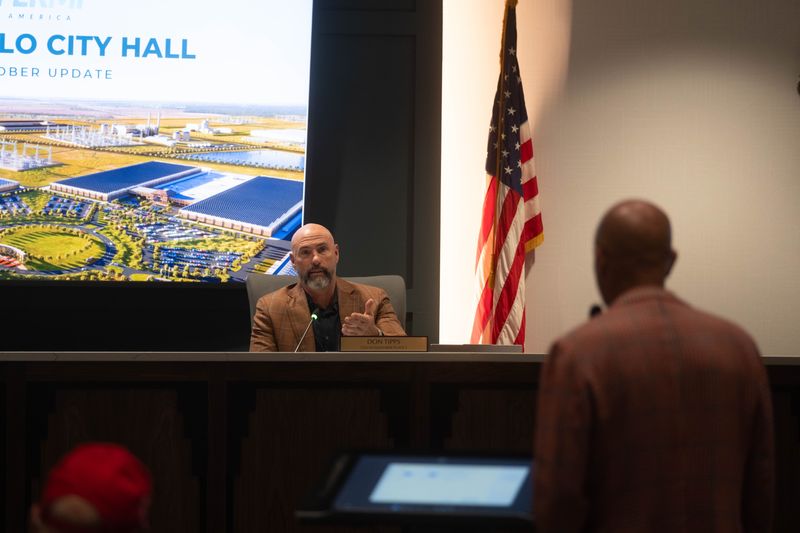
In another quickly called press conference Friday morning, May 29, Amarillo Mayor Cole Stanley went over the position the City of Amarillo has regarding large scale A.I. data centers, such as the complex Project Matador that Fermi America is building outside the city, which has caused much consternation and confusion.
The Amarillo City Council meeting Tuesday, May 26 had included a discussion item on a possible moratorium on data centers in the city.

“My big issue, and I’ll speak to it, was compatibility,” Stanley said at Friday’s press conference. “I think we should be concerned with all of the A.I. data centers. And to go back to the confusion … the council has never voted for an A.I. data center. But, if you read the news articles, you would think that those A.I. data centers were all inside the city.”
About Tuesday’s discussion item, Stanley said, “We just needed to get the topic out in front of council to discuss, within the city limits of Amarillo, and Amarillo is 110 square miles.”
“Amarillo’s Planning and Zoning, and our Master Plan, which is comprehensive, doesn’t have anything in it that speaks to large scale data centers,” he added. “And with all of the concerns with all of the potential data centers that are being constructed and built outside of the city limits, it’s been around the Panhandle and across Texas.”
Stanley said that he thinks it’s a very fitting discussion to go ahead and get on our toes and get in front of it. He stated that he did not feel like a large-scale data center would be compatible with the comprehensive plan the city has.
“So, the council decided to get Planning and Zoning to go ahead and review that document regarding the data centers, and really, bottom line, I think we don’t want to roll out the welcome mat inside the city limits for that type of industry because it’s so draining on a community.”
What is a large scale data center?
Stanley clarified what he thought was a large-scale data center. “You do have some data centers … that would fit within smaller area,” which was the size of a typical business office space, he said. “That’s not at all what we’re talking about. We’re not talking about computing and servers and things that are data storage. What we are talking about is A.I., large scale, hyperscalers, like you would think of when you think about Meta, Google, Oracle, all of those.”
He said that the city council needed to take its authority to understand that they are responsible for the planning and the growth of the community, along with the experts that they lean on, some of those being staff.
“We’re not being good leaders if we’re not talking about it, and not trying to educate ourselves,” he said.
Stanley said they’re learning more about moratoriums, which would only be for a set period of time.
“So, nobody said ‘ban all of them,’ but then in the zoning ordinance, the zoning could be changed in the future, and I think it needs to reflect what our sentiments and what our desires are here today for our community,” he said.
What concerns have been raised regarding data centers?
“I have received many, many concerns from lots of different people, most of whom aren’t even in my community, and most of whom are misinformed,” he said.
Stanley continued, “I think that most people thought the data centers were inside the City of Amarillo, and that they felt like it was something that this council voted for. This council never voted for any kind of a data center at all.”
City moved to restrict water purchases, not to approve Fermi
The mayor said that the only thing that the Amarillo City Council had done is previously it moved to try to restrict water purchases from what is a power generation plant.
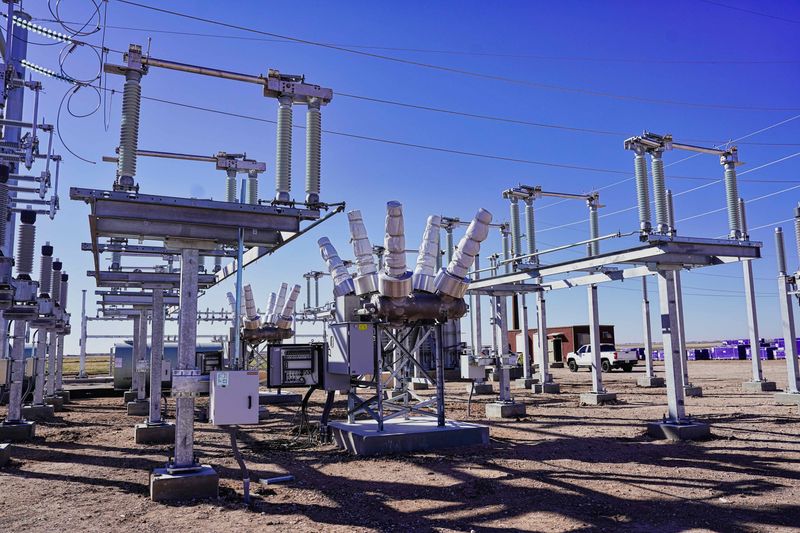
With Project Matador, Fermi America is working to incorporate a mix of power sources, including electric, nuclear and gas powered turbines, at their hypergrid site in Carson County near the Pantex Plant, and they looked to the city for a water agreement.
“And so, the City of Amarillo engaged in a contract where they could provide the wells for us, we would adopt that infrastructure, and then we would sell them a minimal amount of water back,” Stanley clarified. “And so, in trying to restrict that water usage, I think the media and maybe just social media took that as though it was an approval. This council has never approved anything like that.”
“Nor have we ever had the opportunity to actually discuss it,” he explained. “And so, the best place for this to be discussed is probably as it relates to the zoning and that ordinance.”
Mayor expresses concern on water usage, electric pull of data centers
“We do have heavy industrial use within our city limits, and that would be my goal to limit that,” Stanley said. “I would like it to not be appealing or attractive to large scale data centers that are looking to come inside of our city limits. I don’t believe that that’s a good comprehensive or compatible for our city.”
“There is a lot of wisdom in that council, and I sit on a strong team,” he said.
The mayor admitted that these things are progressing very rapidly, and it’s a constantly changing industry. “I think what they want to do is use caution in, we don’t know if data centers may get themselves to a cooling component that requires no water. We don’t know that they may be able to run with less electricity, but what we do know is the concerns are water usage and electrical pull,” Stanley said.
He emphasized that the city limits is the only place where the city council’s authority resides. “While we don’t vote on or say what comes to the rest of the State of Texas, we want to exercise caution when we’re talking about our infrastructure needs and how we grow,” he said.
He said he thought that the city is working to balance infrastructure concerns on how to grow and yet still take care of what they have. “Right now, the number one way that the city balances that is by reinvesting in our core function, which is public safety, number one, and infrastructure, number two.”
He said that people would see the council continue to push budget monies into their public safety components, so that Amarillo citizens can live as safely as possible. “And then for sewer and water, mainline extensions, and housing, and developments, and all of that.”
He said that there would be lots of places for input to be added, and council wouldn’t make a decision, most likely, without a recommendation. That would need to come from Planning and Zoning, as well as city staff.
“The next step would be to push it back down to staff and let them go ahead and pull the existing document, take it apart, see where it’s missing, identify those gaps where, you know, we didn’t know 10 years ago that this was something that was coming, and that we needed to plan for this,” he said.
“I think maybe we were looking more for, like, a coal refinery not being built inside the city limits,” he said of the original document’s wording and policy. “Now that we have something just as industrial heavy as data centers, we need to identify that.”
He said that staff would work to find the gaps in the document, go to P&Z, and then eventually bring it back to council.
Stanley added that he hoped that the criteria that they would use in the beginning stages is small. “If we’re talking about just computers and servers in a small space that doesn’t pull water and electricity usage in any kind of a large way, then I think we are comfortable with that continuing to move forward,” he said.
How big is too big for data centers?
One of the questions raised during the council meeting is how do you define “large” in terms of data centers.
“I think once you get to several million square feet of potential warehouse, data center, operation … and potential gigawatts, not kilowatts of usage (is too high),” Stanley said. “And then the water concern, I think, is where we want to be as rigid and restrictive as possible.”
Stanely said that Amarillo does have some small data centers within city limits, in container sized boxes. “So they’re literally 10’ x 40’,” he detailed. “So 400-square-feet, and technically, that could be called a data center, but in this context, it’s nowhere near what anybody’s talking about.”
“In wrapping this up is, it’s not necessarily about what council thinks is best or what we’re trying to do. It’s about using caution with what we don’t know,” he said. “So what you’re seeing right now is council be willing to put a discussion item up that could be … I would say controversial. But we’ve got to push past all that in order to get to what is best for the community, regardless of what’s going on across the State of Texas.”
Other points Mayor Stanley brought up during Friday’s conference
“I want people to have confidence in knowing we’re not selling water that we don’t have,” he said. “But we also want them to have confidence. We understand water is important. And we’re not trying to sell anything to anybody outside of what we need to efficiently run the city. The water contract with Fermi America was intended to be restrictive and costly for them.”
This article originally appeared on Amarillo Globe-News: Amarillo mayor clarifies city’s position on large data centers
Reporting by Nell Williams, Amarillo Globe-News / Amarillo Globe-News
USA TODAY Network via Reuters Connect