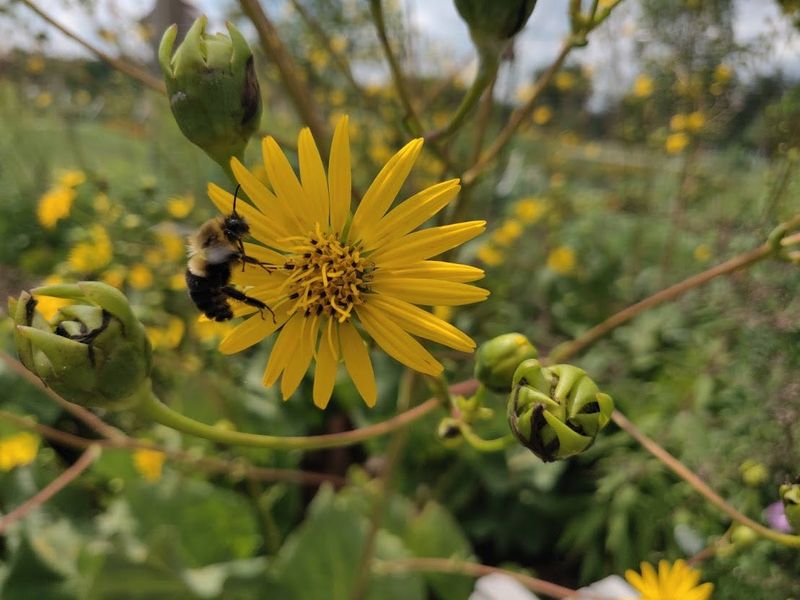
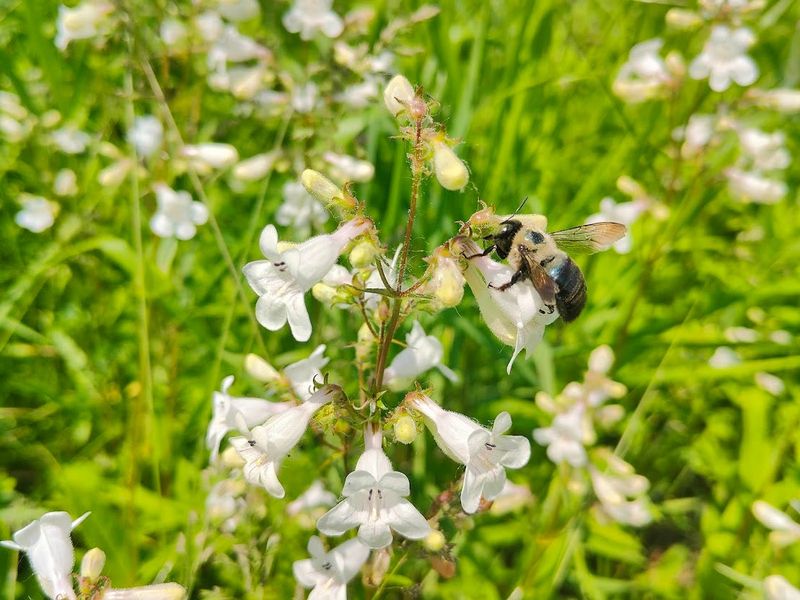
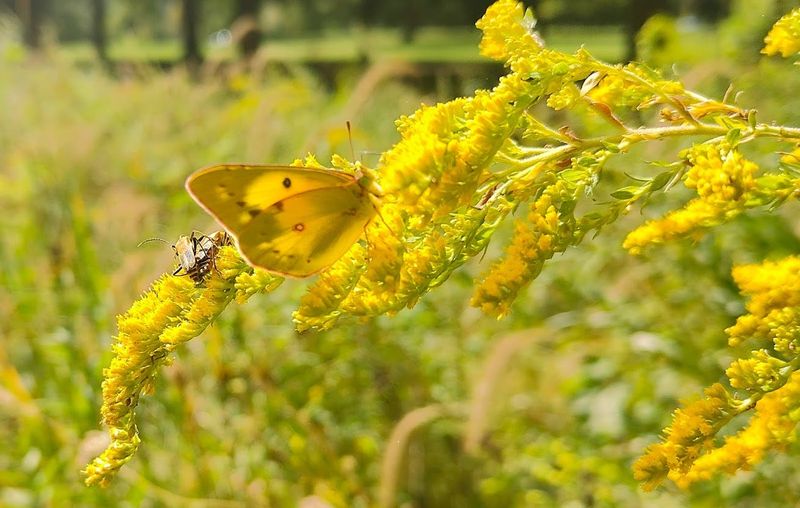
Most people know that honeybee numbers have been falling and this is a concern. We should also know the role that native insects, including native bees, butterflies and other beneficial insects, play in pollinating native plants and many garden plants. They also help pollinate food crops. You may not even have been aware that they have visited your garden since some, like solitary bees, are small and inconspicuous.
These native pollinator populations have also decreased. Much of the problem is due to a loss of habitat because of agricultural and housing development that eliminates wild, messy areas for pollinators to overwinter and repopulate in the spring.

Growing flowers goes a long way toward supporting these insects. Even a small oasis in our landscape can have a meaningful positive effect. Wild native bees nest within 50 feet of their foraging areas compared to honeybees, which can fly for miles. So, it is best to plant in blocks of five to allow the forager to load up.
Native bees prefer native flowers 4 to 1 but will feed on introduced species when no other choice is available. Native insects co-evolved with native plants so are adapted to their flower types. To support native pollinators, native plants are the best choice to grow especially if there are a series of flowering natives all season long.
Though people have been selecting for certain traits in plants for as long as there have been people growing them, in recent times plant breeding has made more drastic changes.
The term “nativars” has been coined to refer to cultivars of native plants. Plant breeders take native plants and breed them for brighter colors, different flower shapes and foliage, changes in height and width and longer bloom. However, in doing so they unintentionally cause changes in traits that are the most important to pollinators, such as nutritional value. Sugar percentages in nectar are often reduced, or nectar itself is eliminated entirely. Pollen, too, can be reduced in volume or in nutritional value or altogether eliminated.
Plants only have flowers so they can produce seeds and grow more plants. Anthers produce pollen, ovaries contain ovules and nectaries produce nectar to entice insects to enter the flower initiating pollination. Petals act as a visual cue that food is available.
Nectar provides sugars for energy. Pollen contains essential proteins, minerals, and essential sterols. It is rich in B vitamins, vitamin C and amino acids. This is often reduced or lost when plants are bred for other characteristics.
Generally if you can’t see the stamens, it’s probably not good as a pollen or nectar source. Double flowers, while beautiful, are sterile. In nativars with more petals, there are fewer reproductive parts. Often if a cultivar is touted as flowering for a much longer time, it probably will not have as much nectar or pollen and even be sterile.
Nativars closer to the original wild type will support native pollinators better. While nativars will give us much visual enjoyment from our gardens, straight native plants are the best choice for our pollinator oasis.
This article originally appeared on The Detroit News: Help feed native pollinating insects by planting native flowers
Reporting by Bob Dluzen, The Detroit News / The Detroit News
USA TODAY Network via Reuters Connect