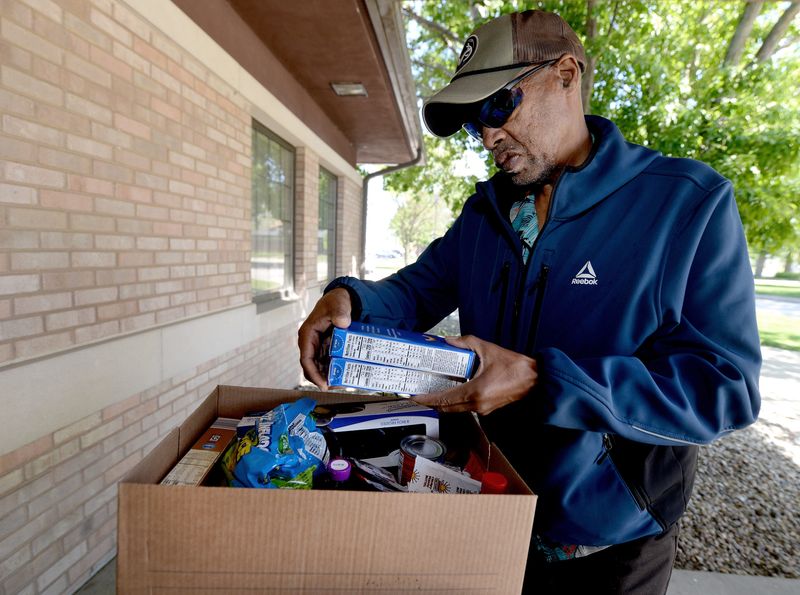
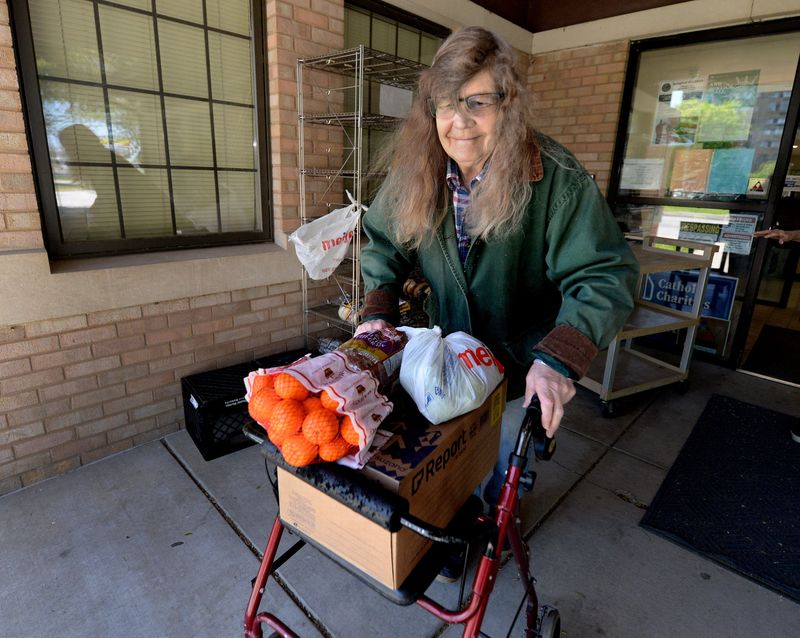
SPRINGFIELD – Davine Oliver doesn’t remember how long he’s been on the Supplemental Nutrition Assistance Program for. It’s a question that gives him a laugh as it takes him a moment to think the question over at the Holy Family Food Pantry line.
Oliver, 64, is happily retired after working at the Illinois Secretary of State as a film equipment operator for years.

He’s certainly not struggling, but high costs of living mean any food assistance can fill cracks at the end of the monthly budget.
“I would go to the food banks, the free meal places like St. John’s breadline,” Oliver said. “This helps because being disabled it’s hard to get around on the bus. Some days the bus don’t run.”
Without SNAP, he said he’d survive, but it would be hard. 30,000 people in Sangamon County rely on food assistance like Oliver every month.
Changes to SNAP under the One Big Beautiful Act signed by President Trump last July have recently impacted thousands of Illinoisans. The changes, which took effect earlier this year, were aimed to reduce federal spending and tighten eligibility for “work-orientation.” The last time a work requirement was set for SNAP stateside was March of 2020.
Over 120,000 people across the state, or just under 1% of the state’s population, were subject to potentially losing access to SNAP based on new rules for “able-bodied” Americans to stay in the program.
The rules call for people with no disabilities from age 18 to 64 with no dependents under 18 at the home to work or volunteer a minimum of 80 hours per month to keep benefits.
“I was hoping they didn’t cut me off,” Oliver laughed. “Luckily, I turned 64 on Feb. 2 and so (the new rules) don’t apply to me. I’m grateful for that. I really need this.”
The rules went into effect on Feb. 1 of this year, and if a person in the state does not meet the new standards to receive aid, benefits would drop after three months – meaning May and any month forward.
Over two weeks out from the cutting of services, the federal budget bill is having real time impacts on the local community. The Catholic Charities of Springfield, who run the St. Johns Breadline and Holy Family Food Pantry are seeing more faces, more often.
Who is being affected the most by the changes
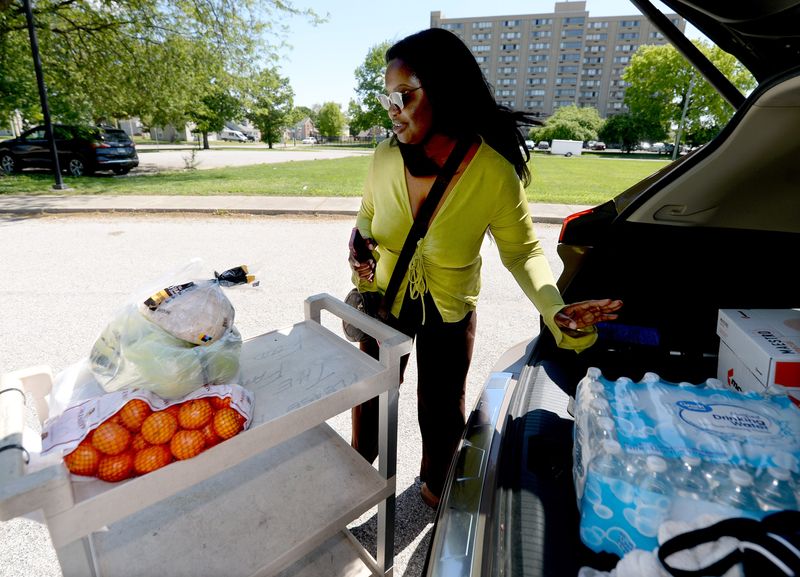
Aliyah Davis is five months away from her bachelors in psychiatry at Ultimate Medical academy, and at 28 years old, she’s been on SNAP for just over four years now.
It helps provide for her mother, who was on the phone with her to pick out a type of bread she’d actually eat. By being enrolled in university, she’s able to still get her monthly subsidy of under $200 a month.
“With cash you can probably only manage about $100 (a month) and there’s not much you can get from that,” Davis said. “It was kind of hard for me to balance that plus bills, rent, utilities, car note, just a lot of things you need to pay for. It’s not enough.”
If someone losing their benefits has gotten a notice, there are exemptions made for people ages 55 to 64 without disability, people with children 14 and older, unhoused people and veterans. The Illinois.gov Abe website can help check exemption status.
“The federal budget bill is designed to deliberately prevent Americans and Illinoisans from receiving assistance,” IDHS said in a statement to the SJ-R. “Through the SNAP program by implementing new requirements that burden states and individuals who rely on what has always been a 100 percent federally funded benefits resource.”
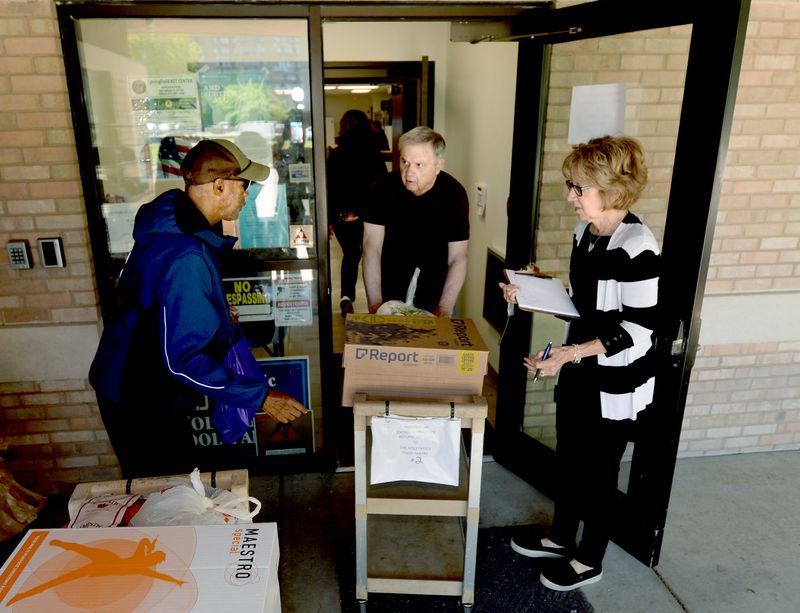
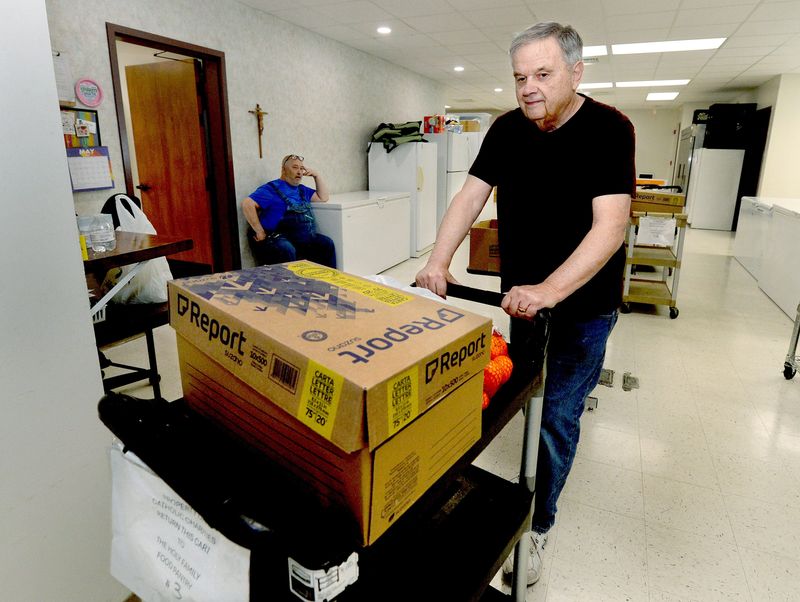
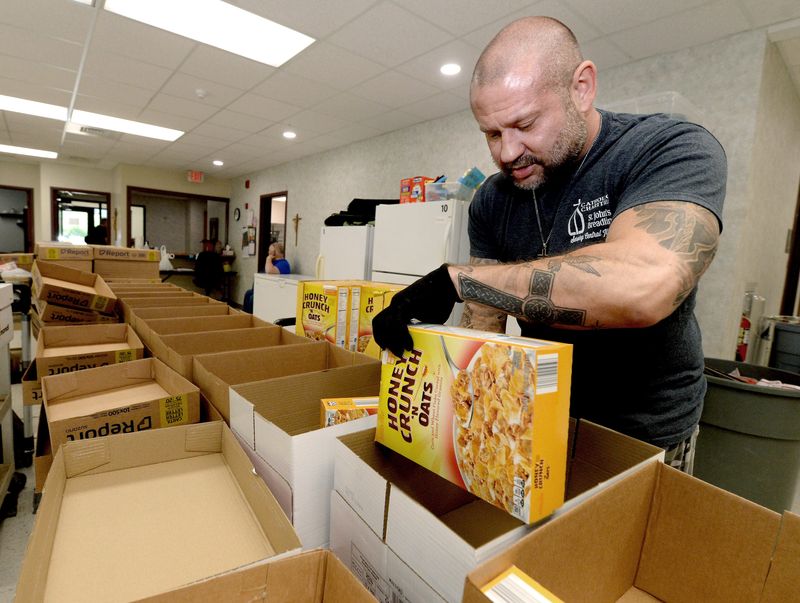
Dennis Langely, who works for the Catholic Charities both at the breadline and at the food pantry, said firsthand he’s seen an increase of people coming in the past three months.
Numbers are fluid of who comes in but on any given day, the food pantry is seeing up to over 50 visitors a day, compared to 30-40 at the start of the year. A visitor can only receive one box a month.
“It’s starting to go up now that criteria is changing for people with SNAP benefits,” Langely said. “Last time when the government shut down and everybody’s SNAP off, that’s when we saw our biggest numbers giving away 70, 80 boxes a day. But now we’re starting to see them go up (again).”
When the benefits stop coming in
For Gregory Qualls, this month was his last on SNAP. He lost it based on the new regulations, while also making more than the threshold.
Holding SNAP from 2023 to March of this year, Qualls said he never wanted to rely on SNAP, so falling off it, he’s still able to provide for himself as a caterer and cook.
“It’s depressing when you don’t have an income and you’re struggling,” Qualls said. “I don’t know how to feel about it, it didn’t really hurt me because I’m still going to find a way to eat but all the people who do need it need it.”
There’s a specific needle to thread, finding a job that both meets the hourly requirement, but doesn’t pay too much to drop you from the program completely.
IDHS recommends that customers of SNAP who lost benefits can check SNAPWorkRequirements.illinois.gov to learn how to regain their benefits through an exemption or by meeting requirements through work, volunteering, or training.
Training and volunteering online opportunities are also available through state run websites Job Ready IL and Serve IL.
Several pieces of legislation in the statehouse are also aiming to address loss of SNAP for Illinoisans in both the House and Senate.
Sealing the cracks in a crumbling middle-class budget
Like Qualls and Davis both echoed, SNAP isn’t the most crucial part of their budget – but without the food assistance, life is harder to juggle all the expenses.
Their experience is shared with the 1.65 million people in the state relying on the program to seal the small holes in the budget from growing costs of living.
In 2024, 20.7% of all households with children participated in SNAP compared with 10.7% without children. 43.7% of single female-parent households participated in the program compared with 3.8% of married-couple households without children under 18.
“The breadline has been in Springfield for 98 years and one of the biggest misconceptions is that it’s all homeless,” Catholic Charities area Director Patrick McConnell said. “The vast majority are people who are having some sort of income.”
Langely says anyone can drop off food to donate at the Holy Family Food Pantry at 120 S. 11th St. Monday, Wednesday and Friday between 8 a.m. to 2 p.m. and can ask about volunteering.
Springfield has several other food resources, including the Central Illinois Foodbank on Cook Street, the Grace Lutheran Food Pantry on East Capitol Avenue, as well as others like the Kumler Outreach and Saint Martin De Porres Center.
Claire Grant writes about business, growth and development and other news topics for The State Journal-Register. She can be reached at CLGrant@usatodayco.com; and on X (Formerly known as Twitter): @Claire_Granted
This article originally appeared on State Journal-Register: New SNAP rules impacting Springfield residents, food pantries
Reporting by Claire Grant, Springfield State Journal-Register / State Journal-Register
USA TODAY Network via Reuters Connect