Michigan’s workforce shortage is no longer a future problem discussed in conference breakout rooms and white papers. It is perhaps the defining threat facing the state.
At this week’s Mackinac Policy Conference at the Grand Hotel on Mackinac Island, the topic has been at the forefront.

Business executives, educators and policymakers consistently return to the same reality, which is that Michigan can’t compete in the global economy if it can’t attract, train and retain enough people to fill the jobs we already here.
That challenge touches nearly every sector — manufacturing, construction, health care, skilled trades, engineering, infrastructure and technology. Employers increasingly say the problem is not a lack of projects or investment, but rather a lack of workers.
That trajectory must change.
Michigan’s population picture has improved recently, but growth remains modest and heavily dependent on immigration while aging demographics continue to strain the workforce pipeline.
Fewer families are having children, and businesses considering where to expand are seriously questioning whether Michigan will have the talent pipeline necessary to sustain growth over the next 20 years.
The Detroit Regional Chamber conference agenda highlighted talent development as one of the few areas still capable of bipartisan alignment. Officials discussed everything from community college partnerships to housing shortages to infrastructure job training programs.
The underlying message was unmistakable: Michigan’s economic future depends on whether the state becomes more attractive to ambitious workers and families.
Yet with back-and-forth partisan leadership, Michigan often behaves like a state uncertain whether it wants to grow at all.
Resistance to local projects — while often well-intended and legitimate — can stymie growth. Faster-growing states are more aggressively recruiting talent with lower costs, lower regulation and a more predictable business climate.
Michigan should expand apprenticeships, strengthen technical education, build more housing, reduce barriers to workforce entry and create a predictable energy and regulatory climate.
It should also stop treating workforce development as a narrow government program instead of a central mission of the state.
Community colleges and apprenticeship programs deserve far more attention and prestige than they have historically received. Too many students have been pushed into expensive four-year degrees disconnected from labor market realities while employers desperately search for welders, electricians, nurses, HVAC technicians and advanced manufacturing workers.
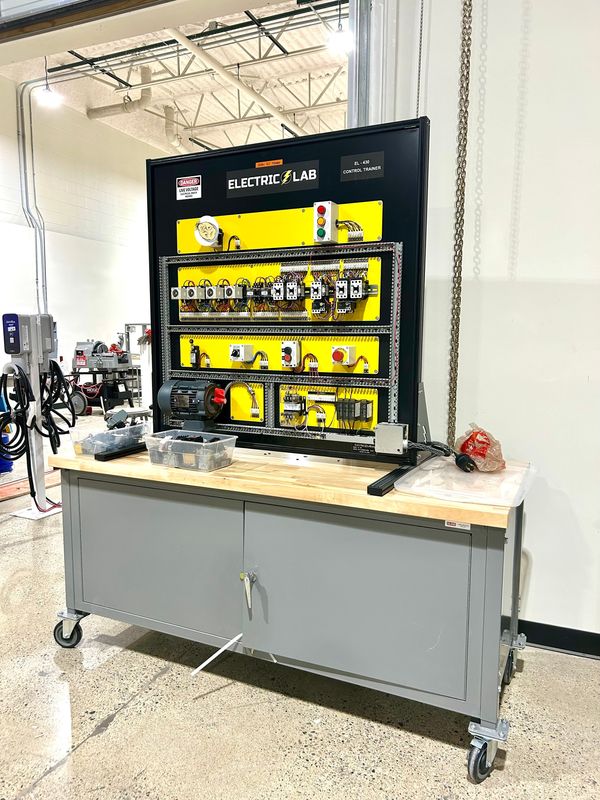
Associated Builders and Contractors of Michigan recently opened a 100,000-square foot facility in Sterling Heights to house the Southeast Michigan Construction Academy (SEMCA), the organization’s affiliate school.
Its state-of-the-art campus serves as the main hub, teaching critical trades like carpentry, welding, plumbing and electrical work to nearly 900 students ages high school and above annually.
Schoolcraft College recently launched a partnership with Nino Salvaggio International Marketplace to give students hands-on experience in tangible careers.
These are the kinds of scalable models and bold action the state should be partnering with, supporting and trying to see replicated.
At the same time, Michigan leadership must align education, industry and workforce systems to prepare talent for the rapidly evolving, AI-driven economy. Skills training, rather than training for a specific job, has become increasingly important.
But this won’t become a priority by accident. It requires long-term, strategic planning at the policy and regulatory level to ensure the atmosphere in Michigan encourages the kind of talent growth the state needs.
This article originally appeared on The Detroit News: Michigan must prioritize skills training, talent retention | Our View
Reporting by The Detroit News / The Detroit News
USA TODAY Network via Reuters Connect