The U.S. Department of Housing and Urban Affairs is demanding the city of Tallahassee reimburse $1.03 million in grant money it received for its troubled program to remove lead paint from low-income residences.
The move by HUD comes just weeks after the federal agency designated the city’s $4.4 million lead hazard based paint control grant as “high risk” over concerns including door replacement costs at a Holton Street apartment complex and said the city’s program was under audit.

Kennedi Rice, a government technical representative for HUD, wrote the city May 26 to say it had reviewed materials submitted by the city in response to the agency’s concerns about the grant, which was funded through the Office of Lead Hazard Control and Healthy Homes.
She said that “unfortunately,” HUD determined that the documents were “insufficient” to establish compliance with federal requirements, statutory eligibility standards, grant-specific requirements and program regulations.
“Accordingly, HUD has determined that costs associated with the Holton Street Project are ineligible for reimbursement under the grant,” Rice wrote. “As a result, the city is required to reimburse HUD all lead-based paint, lead-based paint hazard, and healthy homes hazard evaluation and control funds linked to the Holton Street Project and staff work time funds associated with the project.”
In an email Wednesday, May 27, Assistant City Manager Christian Doolin informed city commissioners and top city officials of the latest developments.
“Late yesterday afternoon, I received official notice from HUD deeming the work completed at Holton Street ineligible for reimbursement citing insufficient documentation and requiring the city to reimburse up to $1.03 million in funds used for lead abatement,” Doolin said.
He added that staff believes previously submitted documentation addresses HUD’s requests “and subject to further information from HUD, we intend to appeal the determination of ineligibility” to ensure a “full and comprehensive review.”
“We anticipate the appeal process may take some time as our appeal makes its way through review,” Doolin wrote.
Doolin suspended all city work related to the federal grant on May 8, after HUD filed its notice of the high-risk designation.
In a memo to the city, the agency said the designation was “based on multiple compliance, performance and monitoring concerns identified through ongoing grant oversight and the monitoring visit conducted on March 2-3, 2026.”
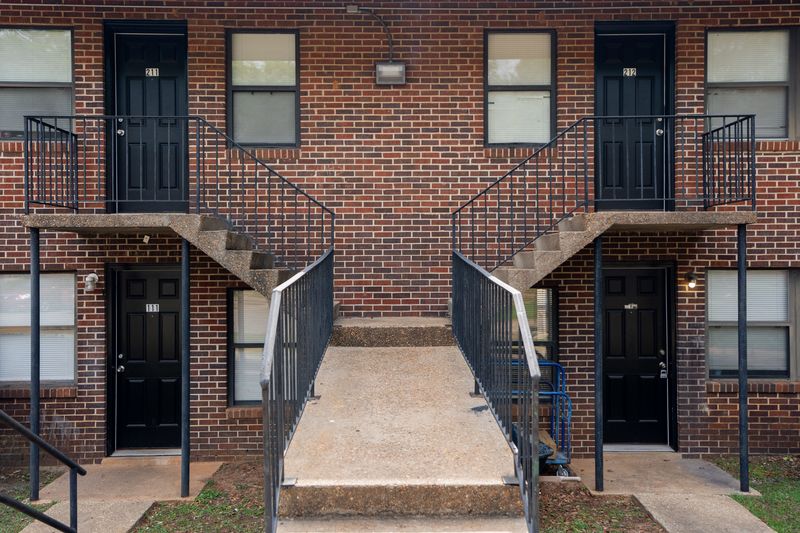
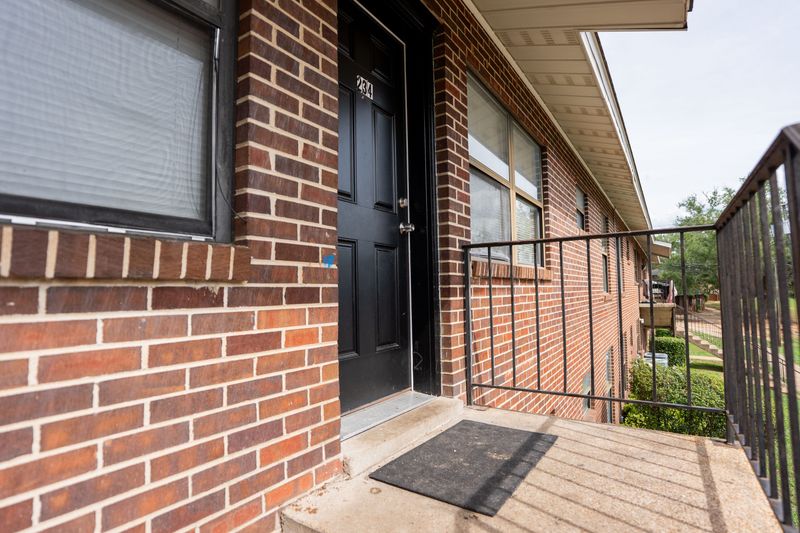
HUD complained that the city grant program was limited largely to a single multifamily property, Holton Apartments, 2500 Holton St., which didn’t align with agency guidance, and cited “questionable cost reasonableness,” including remediating and replacing lead contaminated doors at $8,400 a pop.
The HUD dollars are designed to be used to identify and remove lead paint from housing built before 1978 as part of an effort to prevent childhood exposure to lead, which can cause permanent brain damage.
Rice wrote in the letter that the main purpose of the grant is to “maximize the number of children under the age of six protected from lead poisoning” through comprehensive lead removal in eligible housing. She said grant recipients must “utilize cost-effective lead hazard control methods,” and “maintain qualified and properly certified personnel” in addition to implementing “meaningful outreach and affirmative marketing strategies.”
“Based on HUD’s review, the Holton Street Project did not sufficiently demonstrate compliance with these core program requirements and objectives,” she wrote.
Meanwhile, as previously reported by the Democrat, a former city housing employee filed whistleblower retaliation complaints with the city and HUD’s offices of inspector general alleging she was fired in February after reporting problems with the grant, from high costs to vendor work done without proper EPA certification.
The grant, which HUD awarded in 2022, included $4 million for lead-paint abatement and $400,000 to other household dangers like radon. The city pledged $865,000 in matching funds, which put the entire cost of the project at nearly $5.3 million.
The city planned to do lead-paint remediation at two south-side apartment complexes: Holton Apartments and Palm Beach Pointe Apartments, 635 Palm Beach St. Work began in September at Holton Street, a 100-unit complex, and was finished earlier this year. Work never started at the second location.
The HUD grant took center stage at the City Commission’s May 13 meeting, which came just hours after the Democrat broke news of the whistleblower allegations. Commissioners Jeremy Matlow and Jack Porter peppered staff with questions about the grant problems while Commissioners Dianne Williams-Cox and Curtis Richardson defended Chief Cornerstone Construction Company, the city vendor hired to replace lead contaminated doors.
Williams-Cox accused the media of “helping things go in a direction that maybe they should not go” and added that “what we should be doing is informing and not inciting.” She also downplayed the whistleblower complaint as something that “happens all the time.”
City Manager Reese Goad acknowledged then that while the city was working with HUD, it was in jeopardy of losing the grant and may have to repay the federal government.
The meeting ended on a dramatic note as Mayor John Dailey blasted Matlow for a Facebook post in which he confused a city employee in the housing department with Goad’s brother-in-law and blamed the two of them for the grant mess. Matlow apologized for the mistake.
On May 27, Matlow responded to Doolin’s latest email asking for more documentation on the city’s grant program, including procurement and competitive bid records.
“I see a change order that wasn’t competitively bid, but I don’t see documentation that included adequate market comparisons, independent cost estimates or other records to substantiate a price of $8,450 per door,” Matlow wrote.
Assistant City Attorney Wayne Tedder responded that staff would provide him with the detailed records, which he said the city uploaded to HUD’s grant administration portal. The city also gave a copy of its 126-page response to HUD to the Democrat.
“The city is committed to a successful implementation of this grant in a manner that satisfies HUD’s standards and compliance requirements,” the city said in its response.
Doolin, in his May 27 email, said the appeals process “may take some time” and that he and Kimball Thomas, director of housing and community resilience, were meeting the next day with HUD officials.
Rice, the HUD representative, wrote that the city’s grant will remain under the high-risk designation and related special conditions until all deficiencies have been adequately resolved “or HUD decides to take further grant enforcement action.”
Contact Jeff Burlew at jburlew@tallahassee.com or 850-599-2180.
This article originally appeared on Tallahassee Democrat: HUD demands Tallahassee return $1 million for troubled lead paint program
Reporting by Jeff Burlew, Tallahassee Democrat / Tallahassee Democrat
USA TODAY Network via Reuters Connect