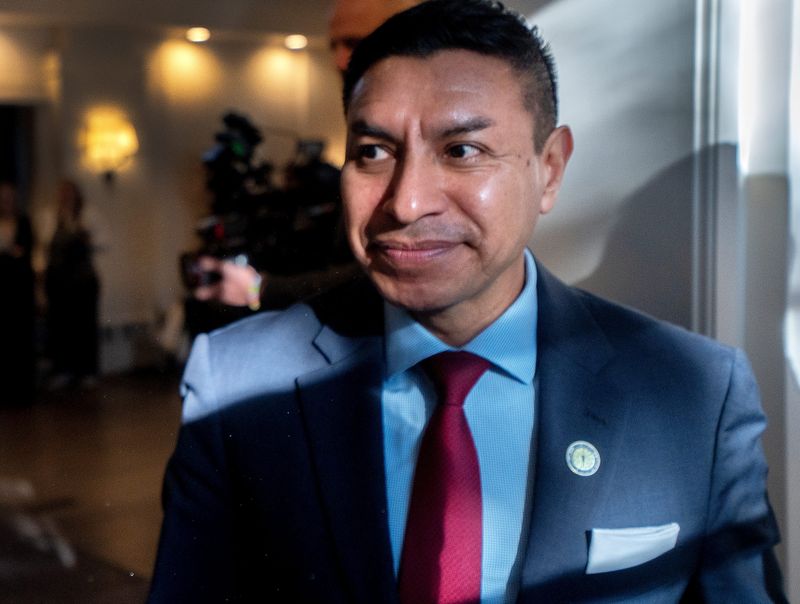
All was quiet on the Indiana Republican convention front, where incumbent Secretary of State Diego Morales was largely expected to nab the nomination to be on the ballot in November, until these last two days before the filing deadline.
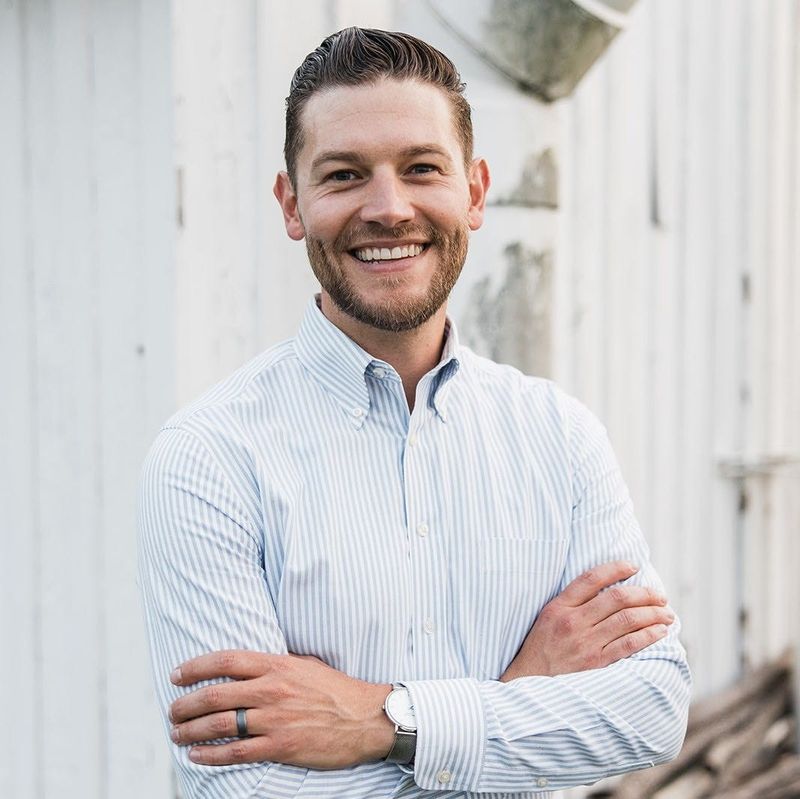
Suddenly the party was in shambles. Several names floated among insiders for contenders who could challenge Morales, besides the two who already were. The morning of May 20, the one who emerged was Max Engling, a staffer for U.S. Sen. Jim Banks who previously ran for Congress. The pressure then mounted through that evening, with post after post from Republican delegates publicly backing Engling, and one after another getting a re-post from Banks himself.

Finally Banks made a statement of his own May 21, alongside Attorney General Todd Rokita, in which they withdrew their prior endorsements of Morales. Banks backed Engling. Rokita called for Morales to suspend his campaign.
So what went wrong for Morales?
Rokita’s and Bank’s statements made the politics clear: They do not think Morales is a slam-dunk to win in November, potentially handing over the first statewide office win to Democrats in 14 years.
Other party leaders continued to pile on: U.S. Reps. Victoria Spartz, Rudy Yakym, Jim Baird and Erin Houchin have all endorsed Engling, urging the delegates to unify behind him. Spartz and Baird made clear the stakes, that November’s race is, as Baird put it, “too important to risk.”
Morales’ “self-inflicted wounds,” as Rokita called them on May 21, have been years in the making. He hired a brother-in-law for a lucrative job; he gave no-bid contracts to large campaign donors; he used taxpayer money to select a $90,000 state vehicle for himself.
And yet, until Engling was an option, many delegates continued to back Morales, including Mike Neal, a podcast host and former state employee. For Neal, this was in spite of the controversies. There was a bigger, more important picture: If Hoosier political heir Beau Bayh wins the Democratic nomination, he posed a real threat to Republicans’ control of the office, and would serve as Democrats’ stepping stone to 2028’s gubernatorial contest. (Bayh faces Bargersville small business owner Blythe Potter at the Democratic convention.)
Neal didn’t believe Knox County Clerk David Shelton or former gubernatorial candidate Jamie Reitenour were the candidates who could beat Bayh, if he’s the nominee.
“For those reasons, I was not incredibly excited about voting for Diego, but I was willing to hold my nose to beat Beau Bayh,” he said.
Former Indianapolis Republican Mayor Greg Ballard potentially getting into the race, maybe making it a four-way race in November, already affects the math and makes Morales’ odds more difficult. Ballard will run as a third-party candidate if he can gather enough signatures to earn a spot on the ballot. In a statement May 21, Ballard touted his campaign’s influence.
“This is what competitive elections do: create accountability where there hasn’t been any before,” he said. “Our presence has already changed the trajectory of this race. Both parties are now adjusting because of the Ballard campaign.”
But Neal thinks that recent allegations from a local news blog, not yet independently verified by IndyStar, that a highly paid chief of staff within Morales’ office who is a non-citizen attested to being a citizen on a decades-old voter registration application, was a “last straw” of sorts.
“You can’t be Diego Morales, the biggest drum banger on illegal immigration, America first, and then have that ― it’s just hypocritical,” he said.
He started hearing multiple names being thrown around the insider circuit. State Rep. Andrew Ireland, who was interested before ultimately backing Engling, was one of them.
When Engling filed, Mark Warner, another delegate, said he immediately thought it was a good decision. He’s young, a dynamic speaker, has experience working in Congress, and conservative.
Warner said he didn’t get pressure from any party leaders to endorse Engling.
“Nobody forced any of us into this,” he said. “We saw it, and we were like, ‘This is good.'”
State Rep. Kyle Pierce, R-Anderson, who’s also a delegate, is skeptical that there was one event that tipped the scales.
“With Diego there wasn’t one thing, it was just a little bit of everything,” he said.
He’s worked on convention campaigns for multiple cycles and has seen this song and dance before: In 2020, then-incumbent Attorney General Curtis Hill was facing sexual assault allegations against him long before his convention, but it wasn’t until late in the game ― in fact, less than a month before the convention, just like now ― that now-Attorney General Todd Rokita decided to challenge Hill.
In that instance, Rokita’s entry came not long after the Indiana Supreme Court suspended Hill’s law license in relation to those allegations.
But Pierce argues that the last-minute nature of these late entries have more to do with the election cycle than any sort of “last straw” catalyst. Everyone in the party was hyper focused on the primary until early May. Only after then do they turn their attention to the convention battles.
“This isn’t new,” he said. “This literally happened six years ago.”
A similar last-minute dynamic also played out in 2016. Former U.S. Rep. Baron Hill won the Democratic primary for one of Indiana’s U.S. Senate seats, but in July that year, he dropped out to let Evan Bayh, a candidate Democrats thought had a better shot, take his place on the ticket. Bayh ended up losing to U.S. Sen. Todd Young.
Fast forward a decade, and the new-generation Bayh camp is criticizing this being the reason for the pivot, rather than Morales’ past controversies.
“Now, insiders in DC and Indianapolis want to dictate how delegates should vote at the state GOP convention by throwing in a new candidate at the last minute,” campaign manager Jack Tormoehlen said. “Beau will continue to campaign on returning integrity to this office and moving beyond the ugliness of today’s politics.”
Morales has not responded to multiple requests for comment.
Contact Statehouse reporter Kayla Dwyer at kdwyer@indystar.com or follow her on X @kayla_dwyer17.
This article originally appeared on Indianapolis Star: Why pressure is mounting on Diego Morales to drop secretary of state bid
Reporting by Kayla Dwyer, Indianapolis Star / Indianapolis Star
USA TODAY Network via Reuters Connect