SHEBOYGAN – According to Native American legend and tradition, if you held an ear to the ground at the mouth of the Sheboygan River, you could detect a deep underground rushing or roaring of subterranean waters.
“Historic Sheboygan County” by Gustave W. Buchen explains Native American legends suggest the word “Sheboygan” means “the place where water runs underground” or refers to the sound of hidden waters. However, the meaning behind the name Sheboygan isn’t that simple.

What does the name Sheboygan mean?
Native American Joe Wisconsin, also known as Miaogistug or Sah-gah-que-je-ma, was born in 1833 in what is now Sheboygan Falls, and was a revered Potawatomi leader. He said through an interpreter in the 1920s that the original Native American term was “Sha-wa-wa-gon-ning,” meaning “through the drumming” or “going through the drumming.”
Buchen also reported that a Menominee word, “Chapewyaconnee,” was the original name and meant a rumbling subterranean sound or a spirit sound.
The location of that underground water passage is unclear. Two theories exist: One places it at the mouth of the Sheboygan River, and the other at the junction of the Mullet and Onion rivers.
How historians and Native American traditions explain Sheboygan
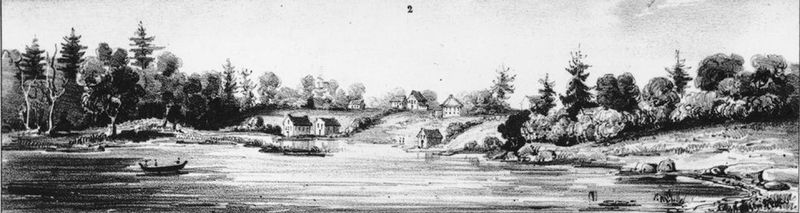
Before white settlement had a major influence on the area, while Sheboygan was being mapped and explored, government surveyor Nehemiah King noted several points of interest in his December 1835 notebook. He wrote that he listened to and learned from Native Americans, who said the river’s name was properly pronounced and divided as follows: “Sha-bo-wa-e-gan.”
Whether the word “Sheboygan” actually comes from the underground passage will likely never be fully proved, Buchen added.
Why the origin of the name Sheboygan is still debated
Buchen also noted that Cheboygan, Michigan, has a similar name and the same origin, meaning “a place of entrance, a portage, or harbor,” referring to the mouth of the Cheboygan River.
To add to the history and mystery of the city name, a 1920s Sheboygan city directory said the following:
“Joshua Hataway, an authority of some note, says ‘Sheboygan’ or ‘Cheboigan’ of the early maps is from the [Native American] name Shawb-wa-way-kum, half accent on first and full accent on the third syllable. The word or sentence, most likely Chippewa, expresses a tradition that a great noise, coming underground from the region of Lake Superior, was heard at this river.”
Adding confusion, another explanation from the same directory said the following:
“Father Chrysostom Verwyst, a Franciscan missionary among the Chippewas of Wisconsin and Minnesota, aided by Vincent Roy, a Chippewa merchant, and Antoine Gaudin and M. Gurnoe, two Chippewa scholars, agree that Sheboygan is derived from ‘jibaigan,’ meaning any perforated object, as a pipe stem. Louis M. Moran, a Chippewa interpreter, asserts that the term means a hollow bone, or perforated object.”
How Sheboygan Falls got its name
The naming of Sheboygan Falls had its own little set of twists and turns in the early years. While the meaning of the word Sheboygan was the same level as the city to the east, Sheboygan Falls didn’t have its current name at first.
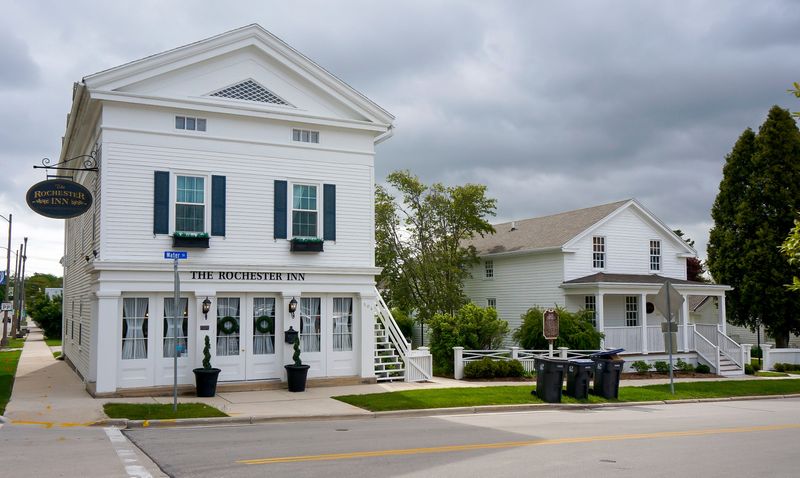
When the power of the falls at present-day Sheboygan Falls was discovered in 1835, Massachusetts pioneer and entrepreneur Silas Stedman decided to buy the surrounding land for village and industrial development, according to the Sheboygan County Historical Research Center. The following year, Stedman platted the Town of Rochester and built the first sawmill at the falls.
Unfortunately, the 1837 platted land was never recorded and was lost. Redone in 1846, the area was named Rochester, but duplicate names were frowned upon by the U.S. Postal Service as another Rochester existed in Racine County. The Postal Service officially changed the name to Sheboygan Falls in 1850 with the state Legislature confirming the change by statute the same year.
While today the name Sheboygan at times is fodder for comedians, the Native American legends were right in that there would be a bit of mystery underground in the name Sheboygan.
Gary C. Klein has written Throwback Thursdays since 2017, covering dozens of businesses, people, sports and events from the early days of the area to recent history. He has been a photographer for the Press since 1993. He can be reached at 920-453-5149 or gklein@usatodayco.com. Follow him on X (formerly Twitter) at @leicaman99. Check out his other work at www.sheboyganpress.com/staff/4383066002/gary-c-klein/.
This article originally appeared on Sheboygan Press: Sheboygan name origin tied to Native American legend, history and water
Reporting by Gary C. Klein, Sheboygan Press / Sheboygan Press
USA TODAY Network via Reuters Connect