As I was scrolling through today’s news, an article intrigued me enough to click and read more. The International Space Station has been in orbit for more than 25 years. It orbits the Earth once every 90 minutes and the crew sees 16 sunrises and sunsets every day. I learned that the space station is often visible to us as it speeds overhead at 17,500 miles per hour. I also learned the Spot the Station app is available that tells exactly where in the sky the space station will appear and how high in the sky it will be. As I write this, there are only 11 more hours until it passes over Yellowstone County, Montana. It appears as a solid bright light, and its orbit makes it appear that it is traveling from west to east.
Learning this made me wonder how astronauts navigate the impacts of so many sunrises and sunsets on their bodies’ natural 24-hour clock. The body’s natural 24-hour clock is also known as our circadian rhythm, which keeps us on a healthy sleep and awake cycle. The word circadian is Latin for “around or approximately” (circa) and “a day” (diem). Our circadian rhythms connect to an internal clock in the brain. Light influences this internal clock, which is why circadian rhythms align with day and night. A healthy circadian rhythm offers numerous benefits including better sleep, improved alertness during the day, easier weight management and a lower risk of depression. If our rhythm gets out of whack, we can experience short-term problems such as extreme fatigue, mood swings, impaired thinking and digestive issues. Long-term consequences include an increased risk of obesity, Type 2 diabetes, anxiety, depression, heart disease, cognitive decline and neurodegenerative diseases such as Alzheimer’s.

Our circadian rhythm changes throughout the life span. If you have teenagers in the house, be aware that due to natural changes in their bodies, they may stay up later, but they still need to sleep later in the morning. Teens need 9 to 10 hours of sleep every night. We may notice changes as we get older too. People over 60 may go to bed earlier but also wake up earlier.
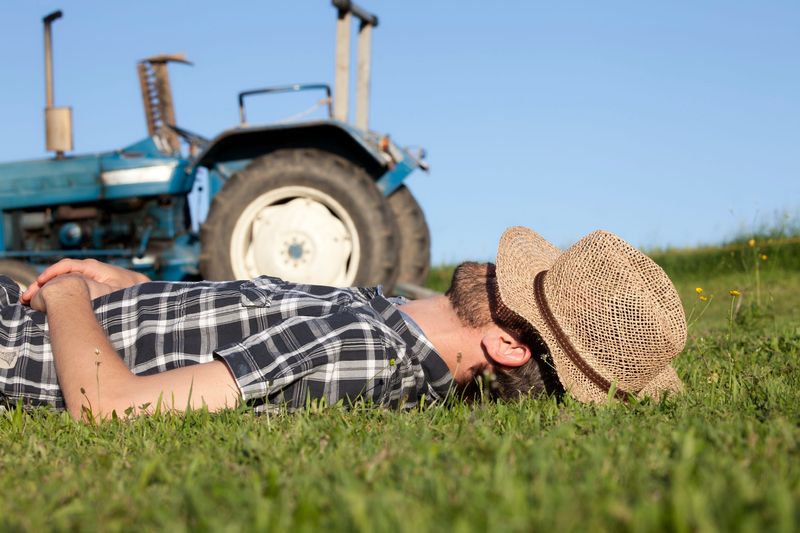
Many factors in everyday living can impact our natural sleep and wake cycle. Stress, poor sleep habits, travel, temperature and overnight or off-hour work shifts can throw us out of sync. For farmers and ranchers, this is especially true during the busy calving, seeding and harvesting seasons. One study found that on average, farmers and ranchers got 28 minutes less sleep during those busy seasons. One of the study’s authors said, “Half an hour less sleep in one night is no big deal … but when you start subtracting 30 minutes of sleep every night for four to six weeks during a busy season, that sleep deficit can become pretty significant.” Some people may say they’re too busy to sleep, but keep this salient point in mind: This study also found that getting less than 7 ½ hours of sleep increases the risk of injury by 61%. Can we afford to not keep our rhythms in balance?
The good news is that we can reset our rhythm and get back into our groove. As much as possible, try to stick to a daily routine. Easier said than done during the busy season but look for opportunities to keep on a schedule. If you feel the need to nap, do so for 10 to 30 minutes and do it before 3 p.m. Ideally, naps should take place in a sleep-friendly environment that is dark, quiet and cool. If that isn’t possible, then make sure all equipment is off or in safe mode, try a towel or dark cloth over your eyes, and use the air conditioner or fan for some white noise. I too love my coffee and caffeine, but we need to limit those and other stimulants, such as nicotine, in the late afternoon and evening. Be sure to intentionally build in breaks during the day too. To help keep our systems in alignment with our circadian rhythms, it’s recommended we spend about 90 minutes in a high-focus state of mind and/or high physical activity, then take a 10- to 20-minute break to hydrate, fuel and take a mental break from the task at hand. When it’s time for bed, try to limit screen time as the blue light can disrupt the sleep cycle. Instead, try gentle stretching, reading, exhaling and enjoying the night sky outside on the deck while perhaps seeing the space station zoom overhead.
Taking breaks is not wasted time. It is essential fuel for clear thinking, safer work, better health and emotional well-being. Sometimes the healthiest thing we can do is slow down long enough to let our bodies reset and ponder 16 sunrises and sunsets in a day.
Darla Tyler-McSherry is the founder and visionary of Ask in Earnest. Visit askinearnest.org for more information on the Ask in Earnest initiative.
This article originally appeared on Farmers Advance: Too busy to sleep? Why farmers need to prioritize rest
Reporting by Darla Tyler-McSherry, Farmers’ Advance / Farmers Advance
USA TODAY Network via Reuters Connect