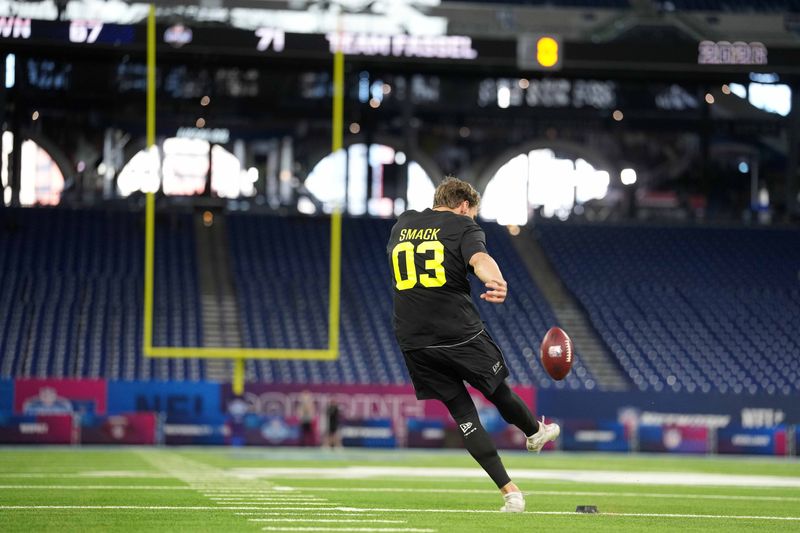
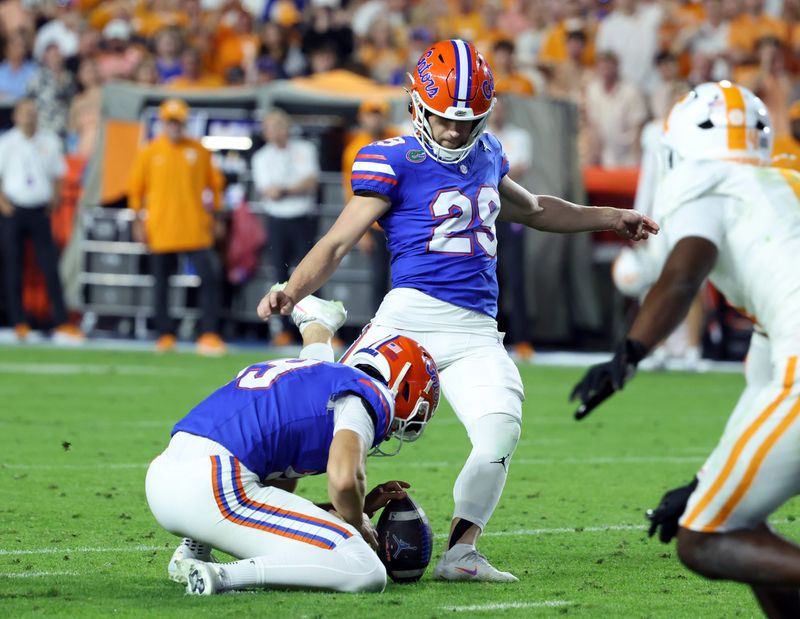
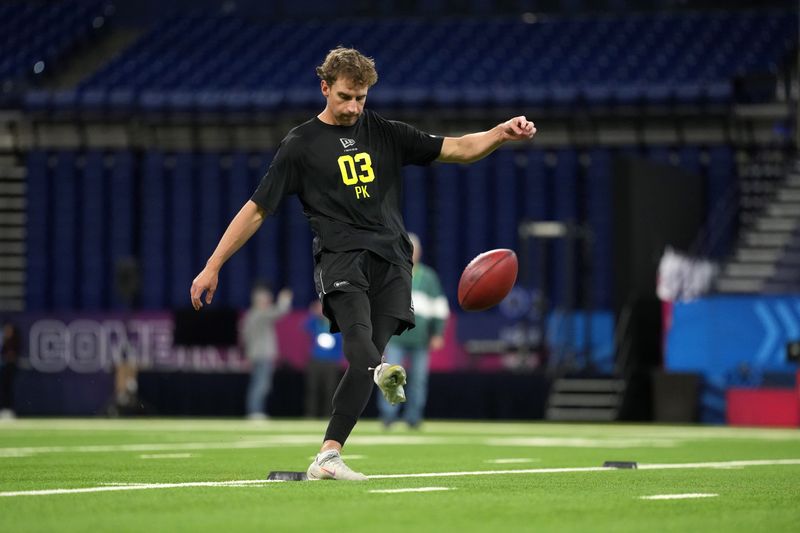
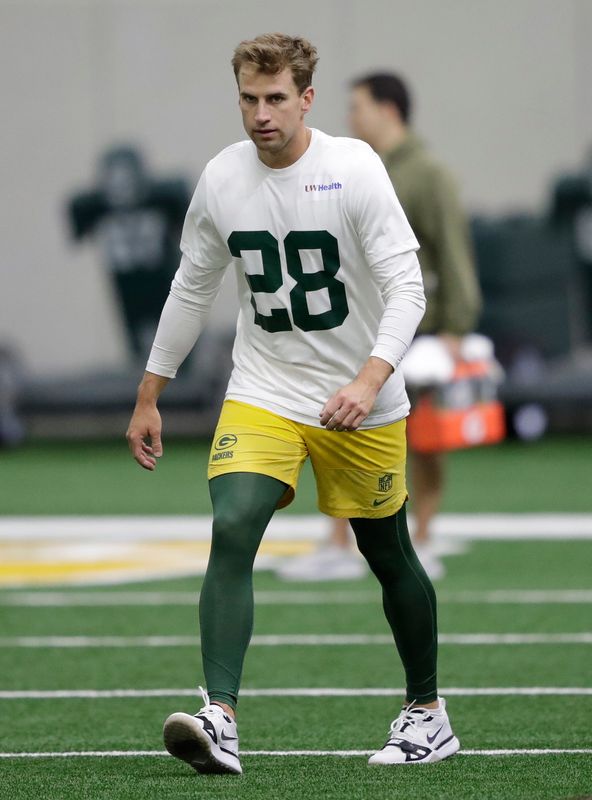
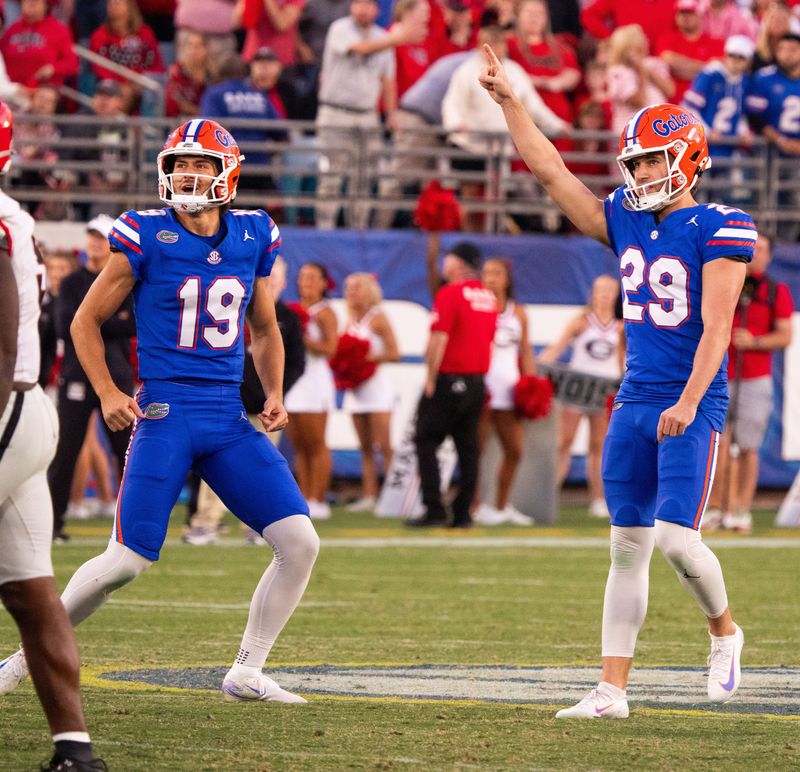
GREEN BAY – He’s asked the same question at least once a month. Of course he is. After a lifetime perfecting a craft few understand, a pursuit through 19 NFL seasons, one Super Bowl ring and an All-Pro selection in 2000, there’s always someone wanting Matt Stover to watch them kick.
On this fall day in 2019, the request came from Stover’s youngest son Joe. He had this lacrosse teammate Dad just had to see. After practice, Joe and his teammate wandered upon a football. His teammate punted it high in the air for no good reason, a rocket that seemed like it might never land. “Holy crap,” Joe said aloud. Then his teammate kicked it off a tee for good measure. Joe, barely old enough to drive, was convinced he’d discovered the next golden leg. Stover was less sure, but dads revel in pleasing their sons. He told Joe to have his teammate give him a call.

They met that week at an intermediate school in Towson, Maryland. Turf field. Goal posts. A kicking tee. Stover presented two options: a one-kick evaluation, or a set workout to warm up. Bordering on cocky, the kid chose to take just one swing. He didn’t even stretch. Stover watched the football launch, and by the time it descended, he was turning to Trey Smack’s mom nearby.
“Trey is done with lacrosse,” Stover told her. “At 16, he has got a pro leg. I’m not joking you.”
‘They can’t take down the field goal posts’
Stover might have been most surprised.
For all those monthly requests, he’d only seen a teenager with an NFL leg a handful of times, including a 13-year-old from Lubbock, Texas, named Mason. He’d later kick 16 seasons for the Green Bay Packers, becoming the franchise’s all-time scoring leader.
It had been almost 20 years since Stover first watched little Mason Crosby kick, but he recognized the same dumbfounding power. “It’s when you see a kid throw a 95-mph fastball,” Stover said. “It’s either you can do it or you can’t.” Smack had the 95-mph fastball. From there, Stover knew, he couldn’t be sure. There’s a canyon between having a pro leg and becoming an NFL kicker.
Smack closed the gap in hourlong lessons with Stover, spaced three weeks apart, ensuring he put in his own work. He’d kick 270 balls on his own between meetings, split into three days each week, 30 kicks per session. Each scripted to a specific yard line. “After those three weeks,” Stover said, “I’m going to know if he did it or not.”
Smack tweaked his upper body, learning how to stay square on approach, shoulders locked forward. He liked to pull left on contact, torquing more power into the football, but leaving a crooked trajectory. Over time, Stover wore on the kid, convincing him to keep his body straight.
Civilians judge a kicker on whether he splits the uprights. Stover didn’t even look at the goal posts.
“He humbled me a lot,” Smack said. “He’s like, ‘You need to do this right.’ I’m like, ‘I got you. I made it.’ And he’s like, ‘That was not good.’ And I’m like, ‘Thanks, appreciate it.’ So yeah, humbling.”
Smack may have continued lacrosse had the calendar not flipped to 2020. March came. A pandemic hit. Social sports were on hiatus. “They locked up all the lacrosse goals in Maryland,” Smack said. “So I was like, ‘Well, they can’t take down the field goal posts.’” Three days a week, he carried a football to those lonely uprights, kicking into the air because there was nothing better to do. When the world reopened, Smack was ready.
He dominated kicking camps across the country. Earned a No. 1 national ranking. His four-year college career at Florida intrigued Packers general manager Brian Gutekunst enough to trade not one, but two seventh-round draft picks last month, taking Smack at the end of the sixth round. Gutekunst released veteran Brandon McManus last week, clearing a path for Smack to win the job as a rookie.
He’s the third rookie kicker the Packers have tried in the past four seasons. Sink or swim.
“You’ve got to keep trying, right?” Gutekunst said.
Now, all Stover’s tough love might be especially useful.
Because it’s a hard life, being a kicker. And that’s if you kick under a roof. Stover’s two decades in the league took him through Cleveland and Baltimore, the worst outdoor climates imaginable. He didn’t know it then, but each humbling lesson prepared Smack for the hellscape that is Lambeau Field.
‘That just ain’t going to work here’
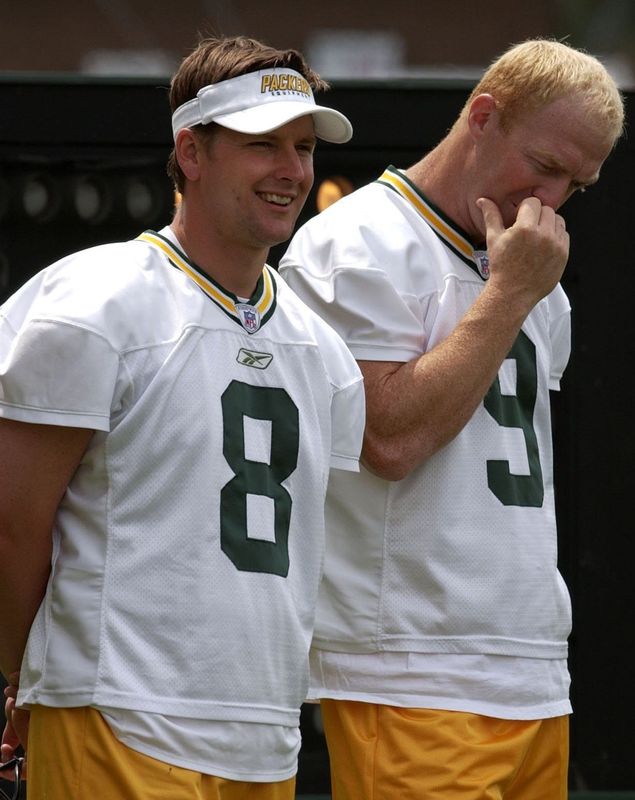
Three decades ago, Ryan Longwell got a rude awakening. He’d made his way onto the doorstep of an NFL career propelling footballs high into the air, the higher the better, hoping to maximize distance. Now he was standing on the sideline of his first Packers training camp in 1997, watching third-round draft pick Brett Conway do the same.
Only he noticed an unnerving trend. When Conway lofted his kicks skyward, the stiff August winds would carry them away, too often outside the uprights.
“I’d seen him at the [NFL scouting] combine,” Longwell said, “and we kicked against each other. I just knew how high he hit the ball, and our first practice I saw him hit his normal ball, and it blew all over the place. I’m like, ‘That just ain’t going to work here.’”
When it was Longwell’s turn to take a rep, holder Craig Hentrich leaned the football forward, nose downfield. Longwell told him to lean it more. And more. And a little more. The tilt helped him connect with the meat of his foot, rather than closer to his ankle, driving his kicks low. Safely under wind gusts whipping around the practice field. “All the sudden,” Longwell said, “I started to hit a ball that just wouldn’t go left.” It’s how he not only beat the third-round pick Ron Wolf drafted to be the Packers’ long-term kicker but held onto the job for nine seasons.
That first camp practice laid the dividing line in Longwell’s mind between kickers who make careers in Green Bay, and those greeted by Lambeau Field like a plane colliding into a mountain. For 33 seasons, three people held the title of Packers kicker: Chris Jacke, Longwell, and that kid from Lubbock named Mason. Each kicked a low cut, keeping it straight through the elements. Outside the lineage, Conway, Dave Rayner and, more recently, Anders Carlson and Brayden Narveson kicked a traditional high hook, exposing the ball to wind.
When McManus briefly stabilized the Packers’ kicking carousel in 2024, he hit the same low cut. His kicks stayed straight. After returning from a quad injury on his kicking leg midway through last season, Longwell noticed, McManus’ kicks pulled left. His timing was off. His confidence soon followed.
McManus missed three kicks in the Packers 4-point wild-card playoff loss at Chicago, a pair of field goals and an extra point. His first two misses were wide left. On the third, he overcompensated and missed wide right.
“It shakes your confidence,” Longwell said. “Because everything you’ve ever seen is now, ‘whoa, wait a second, how do I aim this thing?’ When McManus came back from injury and his leg wasn’t reacting the same way and the ball wasn’t reacting the same way, and the ball is starting left of where you’re used to, well then you aim a little further right to save it, and then you spray it right. That one thing by the ball not starting where you’re aiming, not even if you make the kick or not, but if it doesn’t start where you’re aiming, it really messes up how you go about your business.”
Smack didn’t get drafted for his low cut. Scouts dig the long ball, and kickers maximize distance with a high apex. From the moment they enter kicking camps, they’re taught to scrape the sky, extending length. Higher the apex, the better chance kickers have of getting noticed.
“The camps are trying to win the Instagram battle,” Longwell says, “of, oh, this kid hit it from 65. In the NFL, 65 is a nice to have; 38 is a must have.”
Young kickers sell out on contact, connecting so forcefully their inertia carries them downfield. Longwell looks for the kicker who makes contact and stands still, balanced, not trailing the football. He calls it predictable contact. More reliable when grass becomes muddy slop, calm air is replaced with swirling winds, and a kicker must overcome those elements while dealing with raw nerves.
In his nine seasons with the Packers, Longwell learned how to kick consistently with only 85% of his power, a habit Crosby continued. Because maintaining a long career in Green Bay is different. Power is nice to have. Accuracy is a must.
It’s an adjustment Smack wouldn’t need to make if he were drafted to Detroit or Minnesota, divisional opponents who play indoors. In Green Bay, kicking the low cut is necessary to survive. Longwell, who now consults college programs and scouted Smack out of high school, said the Packers rookie has every tool required for a long NFL career. Working with Stover at a young age started Smack ahead of the kicking curve. He is not only talented but technically sound. After Stover finally talked him into kicking through the ball, not torquing around it, the flaw in Smack’s swing is gone.
The Packers drafted Smack because they believe his “straight ball” will be accurate in all weather.
“His ball doesn’t move a lot,” special-teams coordinator Cam Achord said. “I don’t need a guy who can kick it 65 yards, personally. I want the guy who is going to put it through consistently from 58, 55. Because we’re playing in Green Bay. We’re going to play in elements.
“You’re not going to need the 60-yard ball all the time. You’re going to need the 45-yard ball with a 14-mph crosswind. So his ball not moving and stuff like that is definitely a big part for me.”
Smack has strength to spare. He stands firm after his kick. His contact is predictable. He made 10 of 13 field goals from at least 50 yards in college, lofting high trajectories because he could in the sanctuary of Florida weather. Automatic inside 50 yards through hazardous conditions means low, not high.
With a swing path already tuned to deliver straight, Smack won’t need to change how he kicks. The modification, Longwell said, comes from planting a couple of inches closer to the hold, which is tilted even further downfield. Those adjustments are manageable for a rookie kicker, but mastering his apex is only the start.
There’s much more to a successful kick than the kick itself.
‘Up to the winds and the gods.’
An NFL kicker has a lonely existence. Stover likens it to being the team’s sniper. They spend most of their time in solitary, out of sight, ignored until they’re crucially needed. With everything on the line, they’re called into action for one shot. No second chances.
Their preparation before the moment of truth can determine whether that shot is successful. Kickers, like snipers, scout locations before they ever pull the trigger. They must know the landscape, the weather conditions, how each factor influences their range. After pregame warmup, it’s their job to communicate all essential information to coaches who are more preoccupied with game plans, whether offense or defense.
The coach’s job is to listen, trust and remember boundaries set before kickoff.
“Trey will be on that sideline waiting to kick a field goal at any length,” Stover said, “but does he have enough communication with the coaches to know when the best opportunity is to take that shot? That’s going to be where in Green Bay, in December, January – even in November – you better understand and be on the same page on what yard line they need to get to.
“It’s very important, especially for a young kicker because they haven’t gotten that rapport yet with the coaches, they just expect him to make whatever they tell him to. Sometimes that’s not fair. It’s just not. If you go into Green Bay in November, December, January, you better know what your limitations are so you don’t put your team at risk.”
Harmony between veteran kickers and coaches is hard enough. For rookies, the balance can feel impossible. Stover was drafted by the Browns in 1991 after four seasons at Louisiana Tech, which must have felt like landing on a different planet. His first NFL coach was Bill Belichick. If his team needed 3 points, Belichick didn’t so much care about field conditions. He expected his kicker to make the damn kick.
Stover converted fewer than 75% in each of his first three seasons. It wasn’t until his fourth year, when Stover made 92.9% of his field goals, that he started holding firm in his convictions. He had a better grasp of the ground beneath his feet, learning how to approach contact on a bad field. More trust in his trajectory. A future All-Pro career finally had legs.
“I had to basically tiptoe through, the Fred Flintstone,” Stover said, “and get to the ball and just make sure it went straight.”
Smack won’t encounter the same shoddy field conditions Stover overcame in the 1990s, but he’ll have to navigate the transition from southeast to the frigid north. In time, he’ll learn what Packers kickers before him discovered. The cold and wind create a formula that changes a kick’s chances. A football’s bladder hardens exponentially as it gets colder, providing less spring off a foot. For Longwell, his kicks lost 5 yards of distance every 10 degrees the temperature dropped. With less velocity, the kick is more susceptible to wind.
Longwell made 80.9% field goals in his nine seasons with the Packers. His conversion in northern, outdoor stadiums, including trips to Chicago, dropped to 77.8% after October. Starting from 30 yards, his percentages decreased at every depth. Of his 13 field goals made from at least 50, none came in cold weather. He attempted only two 50-yard field goals outdoors late in a season.
“You tend to have control of the ball on the way up to its apex,” Longwell said. “From its apex on its way down, you have no control over it. That’s all up to the winds and the gods. So when you are expecting it to move from right to left on the way down, and it either catches a gust or it doesn’t, it’s going to move a lot more than you think. If you can hit a straight ball, that’s where it becomes a better weapon, because on the way down at least you know it’s tracking straight.”
To combat the uncertainty, kickers tend to regiment everything within their control. Their life is a constant ritual. Three days per week. Thirty kicks each session. Specific yard lines. Same number of steps on approach. They live in the world of 1.28 seconds from snap to kick, quick enough to send the football downfield before the defense gets a third step in the ground, but enough time to not rush the most important part.
Live outside those 1.28 seconds, and kicks get scary. Timing is everything.
The minutia serves a purpose. There’s an invisible maze between a kicker and those uprights inside Lambeau Field. The template on how to kick through it has been set. Smack will learn it in time. For now, his focus is on the one shred of familiarity he knows.
“It’s just a different place,” Smack said, “but it’s the same uprights.”
This article originally appeared on Packers News: Packers rookie Trey Smack must master ‘low cut’ to succeed in Lambeau
Reporting by Ryan Wood, Green Bay Press-Gazette / Packers News
USA TODAY Network via Reuters Connect