Joann Stach never signed anything. Yet there was her name on a petition for Effie Phillips-Staley, a Democratic candidate in New York’s 17th Congressional District primary race.
Last month, Rep. Mike Lawler, the Rockland County Republican incumbent, sued the Phillips-Staley campaign in an attempt to have her petitions invalidated.

Justice David Fried of the New York State Supreme Court in Rockland County confirmed that besides Stach’s signature, as many as 500 additional signatures on Phillips-Staley’s petitions were also fraudulent.
Fried even referred the fraud to each of the district attorneys in the four counties that comprise the 17th Congressional District — Westchester, Rockland, Putnam and Dutchess — for criminal investigation and possible prosecution.
500 fraudulent signatures? Not a problem
Dion McBean, a contractor for Bartholomew Strategies, appears to be at the center of fraudulent signatures. Phillips-Staley’s campaign or Bartholomew Strategies were given a clear sign that the signatures weren’t legit when McBean turned in 127 signatures in one day. Anyone who has spent a day collecting signatures knows that it is an impossible number to achieve.
What Fried did not do is invalidate the petition for being permeated with fraudulent signatures.
I’m OK with that. I didn’t want to see Phillips-Staley tossed out of the Democratic primary. She has established an important progressive lane in the race that deserves to be represented.
And I don’t like to see Republicans meddling in Democrats’ primaries.
Lawler would have benefited from knocking Phillips-Staley off the Democratic line since she has the far-left Working Families Party line.
That would have forced Democrats to split votes between the WFP and Democrat lines in the general election.
I have been told that the WFP line plans to replace Phillips-Staley on their line with the Democratic primary winner if she doesn’t come out on top.
No clear standards for judges to follow
Fried is not alone in setting a very high threshold for invalidating petitions. Judges are loath to disenfranchise voters whose signatures are legitimate. Along with the bogus signatures, Phillips-Staley submitted 2,100 legitimate signatures, far above the 1,200 minimum required by state law.
Judges are more critical of invalid signatures that were collected and witnessed by a candidate themselves or a close family member.
On April 28, in another petition fraud hearing, Democratic Assemblyman Gary Pretlow of Mount Vernon challenged the signatures of his Republican challenger Brandon Neider. In an assembly race, 340 valid signatures are required. Neider submitted 532 signatures. Out of those 532 signatures, 38 were found to be invalid, leaving 494 valid.
State Supreme Court Justice William J. Giacomo in Westchester County tossed Neider’s petitions based on fraud permeation.
The fatal flaw in Neider’s petitions was Neider himself was the subscribing witness to the signatures. In most instances voters signed not just their own name but the name of family members as well.
A husband signing for his wife seems less egregious to me than handing in 500 signatures of people who have never heard of the candidate on whose petitions their name appears.
A logical and reasonable solution is at hand
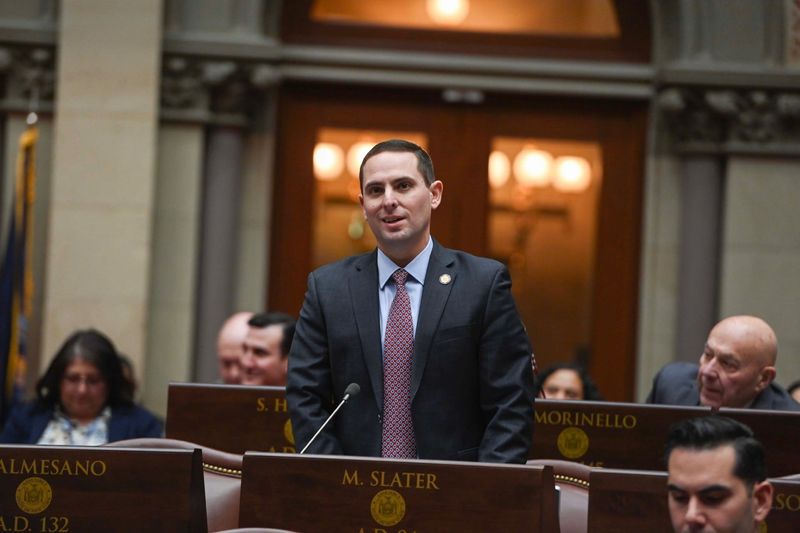
Republican Assemblyman Matt Slater of Yorktown and Republican State Senator Bill Weber have offered a very simple and fair cure to the judicial ambiguity.
They have introduced A.11218, which would amend New York Election Law by establishing a clear statutory threshold for petition fraud. Under the bill, when a court determines that 25% or more of the signatures on a designating or nominating petition are fraudulent, the court shall issue a final order declaring the entire petition invalid.
In interview last week, Slater, who is also the ranking member on the elections committee in the Assembly, told me why this legislation is important.
“This is a very serious issue that deserves a serious solution,” Slater said. “The petition process has evolved significantly, especially over the last number of years and campaigns are relying more and more on paid canvassers.”
His fix of establishing a 25% limit for fraudulent signatures is hardly onerous.
The whole point of the petitioning process is that a candidate can demonstrate to their respective party that they are able to rally enough grass roots support and organization to mount a credible campaign.
If a campaign cannot meet the signature minimums with volunteers, then they must be held accountable for the actions of the unscrupulous paid canvassers they hire.
“This legislation simply and I think deliberately sets the bar for permeation of fraud. This will allow judges to understand and recognize in the law that if someone submits a petition that is permeated with fraud then that person should not appear on the ballot,” Slater told me.
Judge puts Albany on notice
In his decision on the Phillips-Staley petitions Judge Fried stated plainly it is up to Albany to bring clarity to the murky standards set through various court cases. “The issues relevant to paid canvas operation oversight and or standards, if at all, is a policy matter reserved to the Legislature,” Fried wrote.
Weber took the Judge’s statement to heart.
“Justice Fried put it plainly: the Legislature has the power to fix this, and it is our responsibility to act” Weber said in a statement. “Petition fraud is not a partisan problem, and this common-sense bill should pass with a large majority. I am proud to carry this bill in the Senate alongside Assemblyman Slater, and I urge my colleagues in both parties to move it without delay.”
Ballot security is volatile issue at both the local and national level.
I understand the contradicting positions on voter ID and it’s potential to disenfranchise people who don’t have proof of citizenship.
But this is not a complicated bill. It is not a partisan bill. It should not be a controversial bill. It is common sense.
A.11218 was referred to the Assembly Committee on Election Law after its introduction on May 1. It should not languish there. Committee chairs should move it promptly. The full Assembly and Senate should pass it. And Gov. Kathy Hochul should sign it before New York’s next petition season.
Matt Richter, a veteran Hudson Valley journalist, is local news and regional opinion manager for lohud.com and The Journal News. He can be reached at mrichter@usatodayco.com.
This article originally appeared on Rockland/Westchester Journal News: NY has a voter petition fraud problem. Here’s an easy fix | Opinion
Reporting by Matt Richter, Rockland/Westchester Journal News / Rockland/Westchester Journal News
USA TODAY Network via Reuters Connect